Rabeya Begum is the Executive Director of SDS- (Shariatpur Development Society) (www.sdsbd.org), a national organization with a strong grassroots presence in the disaster and climate risk-exposed areas of the lower Ganges-Brahmaputra-Meghna (GBM) river basin. For years, she has been playing a pivotal role in raising localized vulnerability and adaptation needs to the national and international policy processes. She also has an amazing track record of campaigning and activism toward ending gender-based violations and child marriage.
Dr. Shafqat Munir Ahmad is Deputy Executive Director (Policy) and Head of the Sustainability and Resilience Programme at the Sustainable Development Policy Institute (SDPI), Pakistan. With regional experience at ActionAid, Oxfam GB, and UNDP in Bangkok, he specializes in climate policy, disaster risk reduction, resilience, and sustainable development. His work bridges research, policy, and practice on climate risks, urban resilience, and SDGs. A long-time CANSA member, Dr. Munir leads projects integrating humanitarian, development, and policy approaches to advance sustainability and risk-sensitive development.
Shakeb Nabi is the Country Director of Welthungerhilfe Nepal, with over two decades of experience in inclusive, sustainable, and resilient agri-food systems. He specializes in strategic program management, change leadership, and systems thinking. Shakeb holds advanced degrees in International Development Management (UK) and Humanitarian Action (Uppsala University, Sweden). He has worked across South Asia, focusing on how mountain communities adapt to climate change through traditional knowledge and cross-border collaboration.
Ajmal Shirzai, Ph.D., is the Country Director of Future Generations Afghanistan with 30+ years of experience in rural development, renewable energy, and NGO leadership across Afghanistan, Nepal, and Pakistan. He recently completed a Ph.D. at Erasmus University Rotterdam on the diffusion of solar energy in conflict-affected settings. Ajmal previously served as a Strategic Planning Advisor at the Ministry of Rural Rehabilitation and Development, as Head of the Afghanistan Institute for Rural Development, and as a scholar at Kabul University. His work focuses on locally led climate solutions, governance, and inclusive energy access.
Dr. Archana Shukla Mukherjee is the CEO and Executive Director of Change Alliance Pvt. Ltd. (CAPL), effective August 2025. With over 15 years of experience, she specializes in workplace diversity, gender equality, safe migration, and sustainable supply chains. Her work focuses on empowering women and marginalized communities across sectors such as garments, mining, tea, and cotton. A certified trainer on gender and CSR, she holds a Ph.D. in Social Anthropology from the University of Delhi and has led award-winning initiatives on gender equality and responsible business practices.

Biraj Gautam serves as the Chief Executive Officer (CEO) of the People, Energy and Environment Development Association (PEEDA), a Kathmandu-based non-governmental organization. In this role, he leads initiatives that emphasize the localization of climate action while promoting sustainable solutions. His professional expertise is rooted in renewable energy technologies and technology services. A trained energy professional, he has worked extensively on rural energy services, research and development of low-head hydro and biofuel technologies, and community electrification projects across Nepal, Bhutan, and India.
Dr. Janaka Hemathilaka is the CEO and Executive Director of Janathakshan Guarantee Limited, bringing over 25 years of experience in the development sector. A development sociologist, he has contributed to community governance, rural development, disaster risk reduction, climate change adaptation, and resilience building. He collaborates with national and international organizations and lectures at the University of Kelaniya. His work influences development efforts across Sri Lanka and South Asia. Dr. Hemathilaka holds a Ph.D. in Sociology and serves on advisory boards, including the Sri Lanka Preparedness Partnership and CANSA Sri Lanka.
Julie Gurung is the Programme Quality and Innovation Director with over 18 years of experience promoting the rights of women, girls, and marginalized groups in Nepal. She specializes in Gender Equality and Social Inclusion (GESI), and community mobilization. Her work focuses on embedding gender equality and strengthening social accountability to foster dialogue between service providers and communities. She holds a Master’s in Social Work from Bangalore University, specializing in human resources and labour rights. Before joining Plan, she worked with ActionAid Nepal and CARE Nepal, leading initiatives to end early and forced marriage.
Manisha Subedi, a passionate climate justice advocate and development practitioner, served as Co-Chair of the Nepal Chapter of CANSA and Secretary General at the Nepal Water Conservation Foundation. She has experience in climate risk and vulnerability assessment with a focus on inclusive policy provisions, building community resilience, and advocating for climate justice. She has contributed to addressing non-economic loss and damage and urban climate vulnerability, especially among displaced and socially disadvantaged groups. Her work reflects a strong commitment to amplifying marginalized voices and advancing equitable, locally led climate solutions.
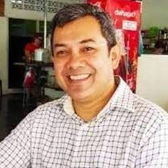
Md Shamsuddoha is the Chief Executive of Center for Participatory Research and Development –CPRD (www.cprdbd.org), a policy think tank in Bangladesh. Being a marine scientist by training, over the last two decades, Md Shamsuddoha has turned to a development enthusiast with his progressive involvement in research, advocacy and activism. He is conversant with the UNFCCC process and actively involved in influencing global and national policy discourse to make them just and rights based.
Tamanna Rahman is the Climate Resilience Thematic Lead at Practical Action in Bangladesh; where she leads the work on DRR,CCA, and people-centered early warning systems. She provides technical support to key initiatives, including the flagship global Climate Resilience Programme. Trained as an Architect and Urban and Regional Development Planner, Tamanna brings over a decade of experience in development planning and management.
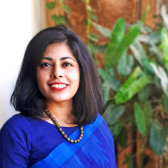

Anubhav Sharma is an expert in advanced computing. He is Director of Engineering – Cloud platform with Talend, Germany. He was also Founder of Adeece GmbH. He has been nominated by the Board as Non-Voting Board Member.
Wendel Trio is a Climate Change Science and Policy Analyst. Prior to his present role as Member of Bankwatch Executive Committee, he was Director of Climate Action Network (CAN) Europe for ten years and has also held positions as Head of the Political Unit of Greenpeace International, Campaign Director at Greenpeace Belgium, political coordinator of Oxfam in Flanders and was the co-founder and director of the first Flemish Support Group for Indigenous peoples and then the European Alliance with Indigenous Peoples. He has been nominated by the Board as Non-Voting Board Member.