


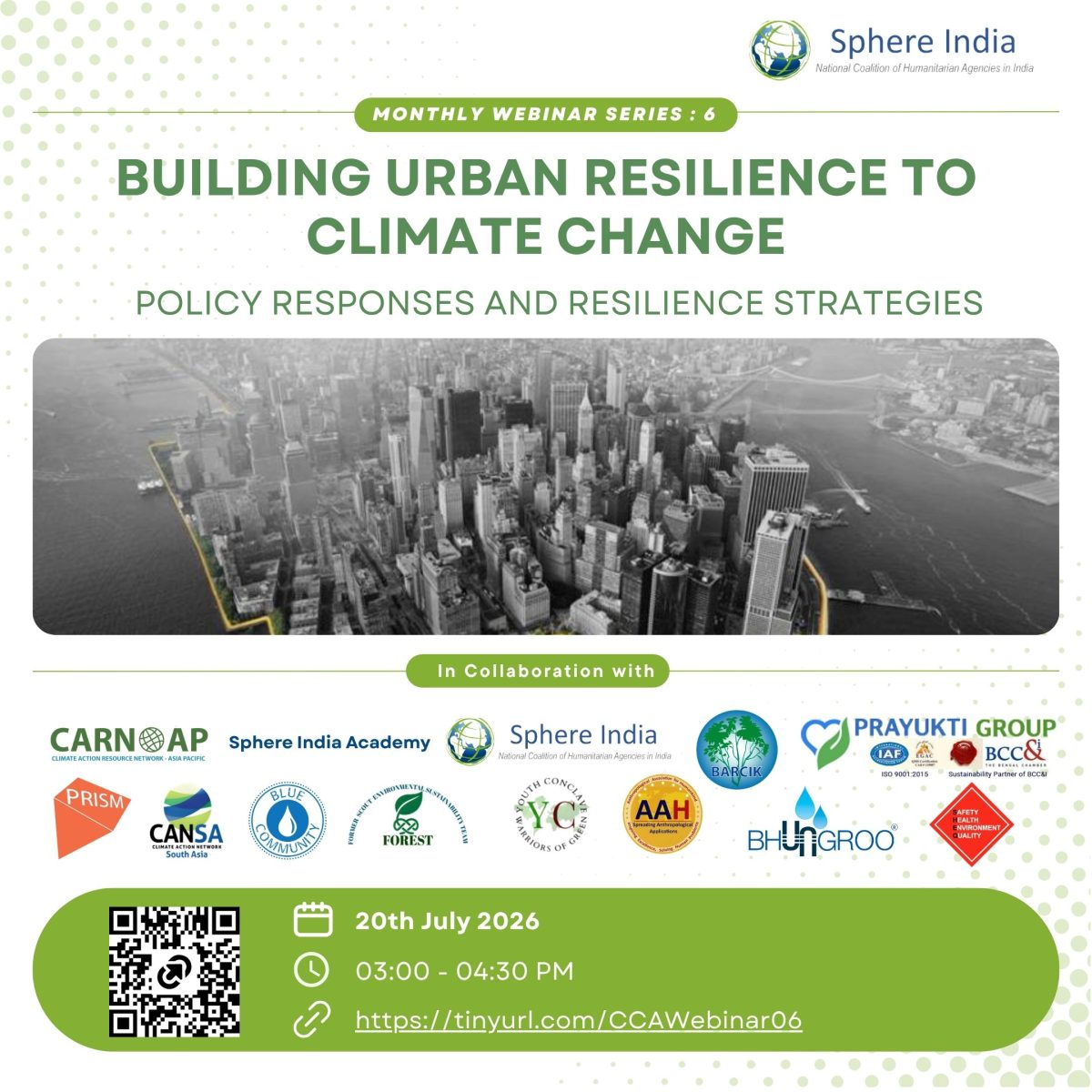
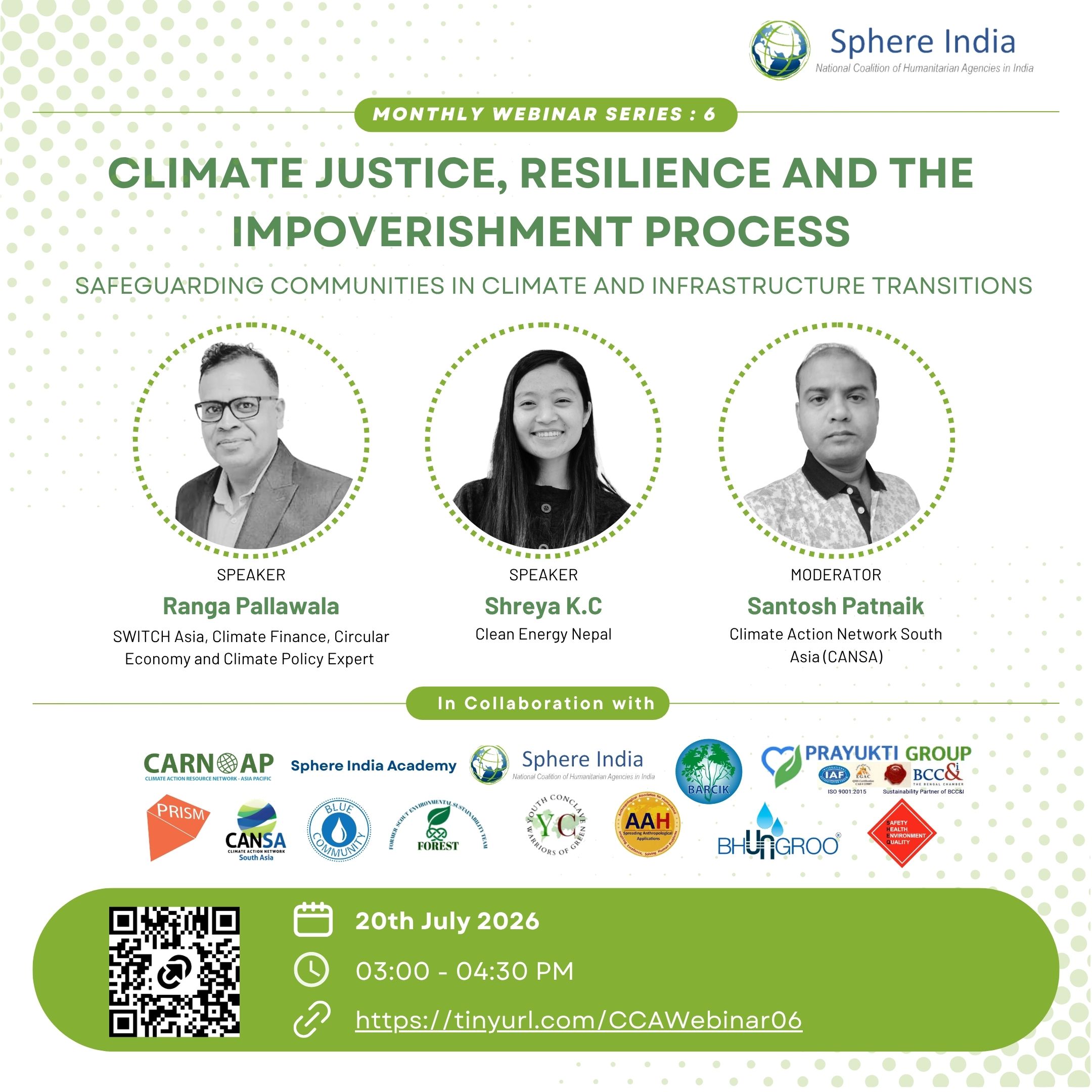
Webinar 6 of Monthly Webinar Series: Advancing Climate Action, Community Resilience & Knowledge Collaboration in Asia Pacific
Background:
Increasing pace of unplanned urbanisation and associated environmental challenges coupled with serious climate related impacts make cities increasingly on the frontlines of climate change. It exposes the inherent vulnerabilities and chronic stresses that constitutes over decades of unpreparedness, lack of planning and implementing right policies into practice. Cities, being the economic drivers have the opportunity to provide better quality of living with better infrastructure and access to services. However, floods, heat waves, and other extreme events diminish the experience of quality of daily lives.
The world has become predominantly urban as evident from the fact that in 2025, 45 per cent of the world’s 8.2 billion people lived in cities, 36 per cent lived in towns, and the remaining 19 per cent lived in rural areas. The cities account for the bulk of global greenhouse emissions. Although urban areas only cover 3 per cent of the earth’s surface, they are responsible for around 71 per cent of the global energy-related carbon emissions. Most of the future growth of the world’s population will occur in cities. Cities are expected to account for two thirds of the projected growth of the world’s population by 2050. However by 2022, 1 billion urban dwellers live in informal settlements without basic amenities such as clean water, sanitation and durable
housing, resulting in poor living conditions, health risks and insecurity. Moreover, as populations continue to increase rapidly, resources deplete and exposure and risks of assets to common urban disasters such as hurricanes, heat waves, and flooding increase with it. Rapid, unplanned urbanization can lead to heightened informality which indicates unplanned urban growth and inadequate policy response. Managing these dynamics requires integrating land-use planning, infrastructure investment and environmental management under cohesive urban policies.
As a response to this complex issue, urban areas and their stakeholders have adopted resilience frameworks that help reduce the impacts of disasters, prepare for the effects of climate change, and recover faster and stronger after climate related setbacks. Renewable energy particularly solar photovoltaics, energy efficiency, electric vehicle fleet public transport including safer cycling infrastructure that reduces Green House Gas (GHGs) emission, creation of green spaces improving air quality and cool neighbourhoods are some of the resilience measures to improve peoples’ lives in cities. Cities around the world are creating
shading systems, green roofs and natural cooling solutions to enhance resilience to rising temperature that benefits women, children, older and sick people. Nature-based solutions such as wetland restoration and green infrastructure offer sustainable flood mitigation options.
Though resilience options galore, lack of integration into urban planning frameworks limits allocation of finance and implementation. Additionally, absence of multi-hazard frameworks, governance challenges, including fragmented institutional coordination and weak enforcement of policies exacerbate climate impact in urban setting. Therefore, cities of all sizes and regions and their stakeholders need to work together to integrate climate change adaptation and socioeconomic considerations into an overarching resilience strategy which is context specific and custom-made. The global climate outcomes including UNFCCC led climate negotiations need to be reflective of priorities of resilience, equity, and sustainability agenda in cities. Cities could move faster in their ambition if provided with adequate, timely and need based support especially high affinity towards access to finance and technical expertise. Many local authorities and department officials lack skills and resources to identify, develop and
implement climate projects at the necessary scale. Capacity building and training to enable resilience building in urban setting is of high priority.
National governments increasingly recognise the potential of urban areas to drive progress on climate change. Mayors and leaders in urban areas understand that the most successful climate policies are those that people can see and feel in their everyday lives – cleaner air, lower energy bills, last mile connectivity, clean urban public transport, healthier homes and better protection against temperature spike and flooding.
This webinar will raise some of the pertinent questions on urban resilience and delve deeper into the policy responses and strategies deployed to deal with climate impacts in urban areas to build resilience. As with right support, urban resilience could be a reality and this webinar will contribute in strengthening the narrative.
This session forms part of our ongoing webinar series on Advancing Climate Action, Community Resilience & Knowledge Collaboration in Asia Pacific, in collaboration with PRISM, CARN-AP, CANSA, Blue Community, Forest, Anthropological Association for Humankind, BARCIK, Universal EHS Global, Prayukti International Private Limited, Naireeta Services
Private Limited, Youth Conclave and other knowledge partners.
Registration Link:
Zoom : https://zoom.us/meeting/register/fDKPrseUSY60GvpO2ttg9Q
Tinyurl : https://tinyurl.com/CCAWebinar06


