


Dear Friends and Colleagues,
As we close the final quarter of 2025, I am proud to reflect on a period of intense engagement, learning, and action across South Asia. This quarter saw our network welcoming new Board Members for 2025–2027, strengthening our governance and collective capacity.
Our annual regional conference in Colombo brought together members from six countries to advance a just and inclusive climate transition, focusing on critical issues such as loss and damage, adaptation finance, climate-induced migration, and urban resilience. These discussions reaffirmed South Asia’s shared call for fair, accessible, and grant-based climate finance, and emphasized the need for stronger coordination across the region to ensure our collective voice is effective at COP30 in Belém, Brazil, and beyond.
As highlighted in our post-COP debrief, the negotiations were marked by procedural hurdles and complex dynamics, including disagreements on mitigation work programmes and challenges in finalising key texts. While South Asia achieved political wins, fragmented positions weakened the region’s leverage on crucial issues such as fossil fuel phase-out, adaptation finance, and just transitions. Insights from experts emphasized the importance of early pre-COP engagement, strategic coordination, and evidence-based advocacy to ensure that the region’s priorities are clearly represented on the global stage.
Beyond high-level negotiations, CANSA continued to advance climate action through knowledge, research, and community engagement. With a refreshed website, new member organizations, and ongoing advocacy initiatives, CANSA is committed to empowering communities, amplifying youth voices, and driving regional cooperation.
As we move into 2026, our focus remains on turning collective knowledge, experience, and ambition into tangible climate solutions, ensuring a just, resilient, and sustainable future for South Asia.
In solidarity,
Dr. Sanjay Vashist
Director, Climate Action Network South Asia
ANNOUNCING
THE NEW CANSA BOARD 2025–2027
More about them on our website here
CANSA GENERAL ASSEMBLY & SOUTH ASIAN REGIONAL CONFERENCE COLOMBO 2025
ROUNDTABLE
Towards a Just, Resilient & Sustainable Future: Building South Asian Positions on Loss and Damage, Adaptation, Climate Finance and Urban Climate Resilience | 15-16 October 2025
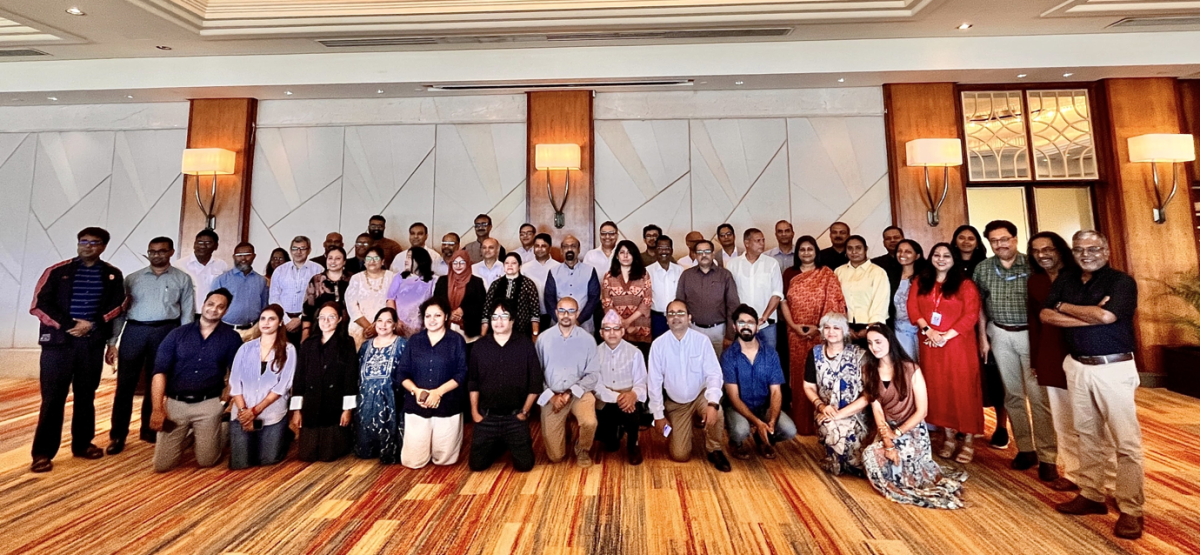
CANSA held a regional meeting on 15–16 October 2025 in Colombo, uniting members from six South Asian countries to advance a just and inclusive climate transition. Discussions focused on equity, loss and damage, climate-induced migration, and regional cooperation, reaffirming South Asia’s shared call for fair climate finance and stronger ambition ahead of COP30. Details here.
South Asian Regional Conference Report
PRE-COP30 PARLIAMENTARIANS MEET
South Asia, Brazil, Latin America and Caribbean Parliamentarians’ Meeting on COP30: New Avenues for Climate and Energy Cooperation 16th October 2025, Colombo, Sri Lanka
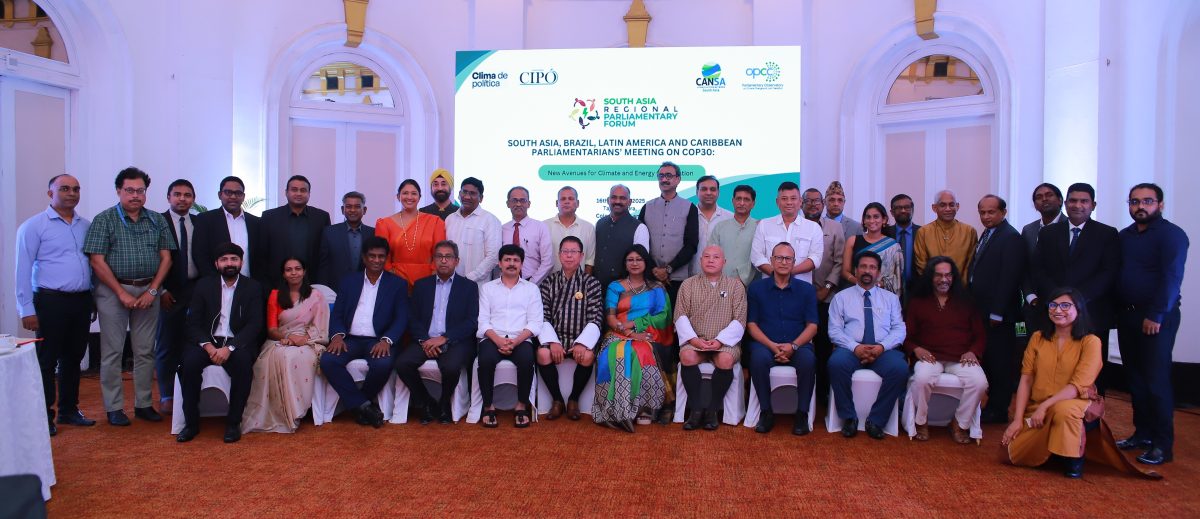
Over 35 parliamentarians from South Asia, Brazil, Latin America, and the Caribbean met in Colombo on 16 October 2025 to advance South–South cooperation ahead of COP30. Convened by SARPF with civil society partners, the dialogue underscored just transitions, adaptation, and climate finance. The meeting adopted two landmark outcomes: a South Asian parliamentary roadmap for climate and energy cooperation, and a joint Global South statement calling for scaled-up, grant-based climate finance and stronger parliamentary engagement at COP30.
The event was organised by South Asia Regional Parliamentary Forum on Climate, Energy and Environment (SARPF). It received support from Climate Action Network South Asia (CANSA), Plataforma CIPÓ, the Parliamentary Observatory on Climate Change and Just Transition (OPCC), and Climate de Política. The discussions among participating parliamentarians, dignitaries, and policymakers culminated in two landmark documents: The Action Agenda: South Asia Parliamentarians’ Roadmap for Regional Cooperation for Climate Action and Energy Transition, and the Joint Statement by South Asia, Brazil, Latin American and Caribbean Parliamentarians on COP30.
PRE-COP30 CONSULTATIONS
Pre-COP30 Session 15th and 16th October
Towards a Just, Resilient and Sustainable Future: Building South Asian Positions on Loss and Damage, Adaptation, Climate Finance, and Urban Climate Resilience.
Click here for details
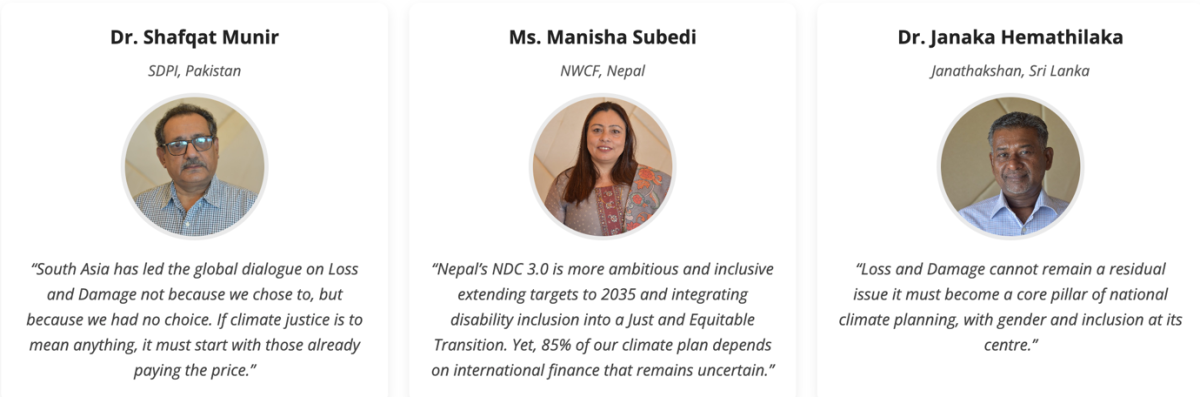
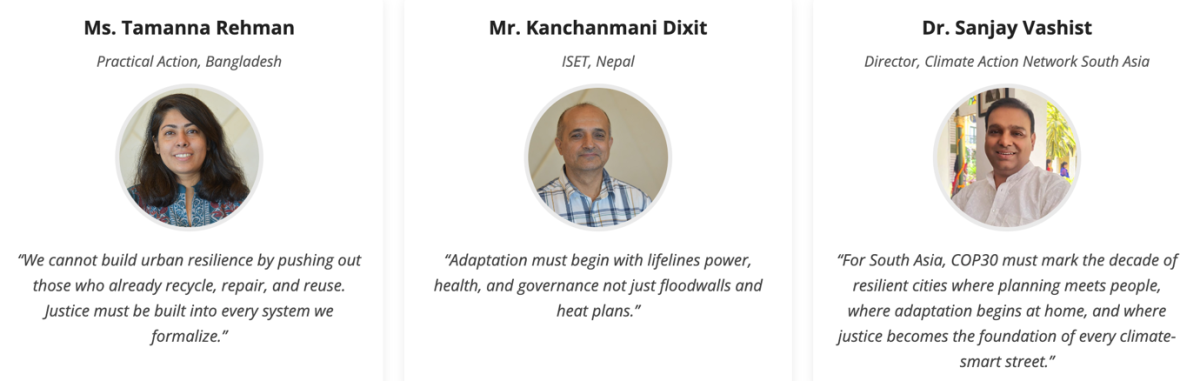
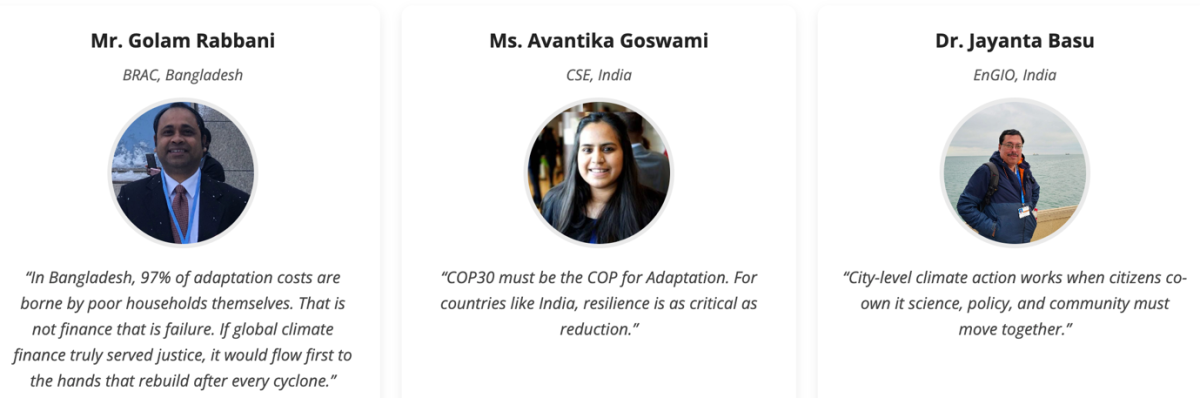
Pre-COP30 Voices & Insights
CANSA AT COP30 in Belem
From 10–21 November 2025, global delegates gathered in Belém, Brazil, for COP30 — the first UN Climate Conference held in the Amazon. CAN South Asia actively contributed to discussions on climate finance, adaptation, and just energy transition, reiterating the region’s call for equitable and grant-based finance to achieve the 1.5°C goal and build resilient, sustainable communities.
See the
CANSA at COP30 webpage
here
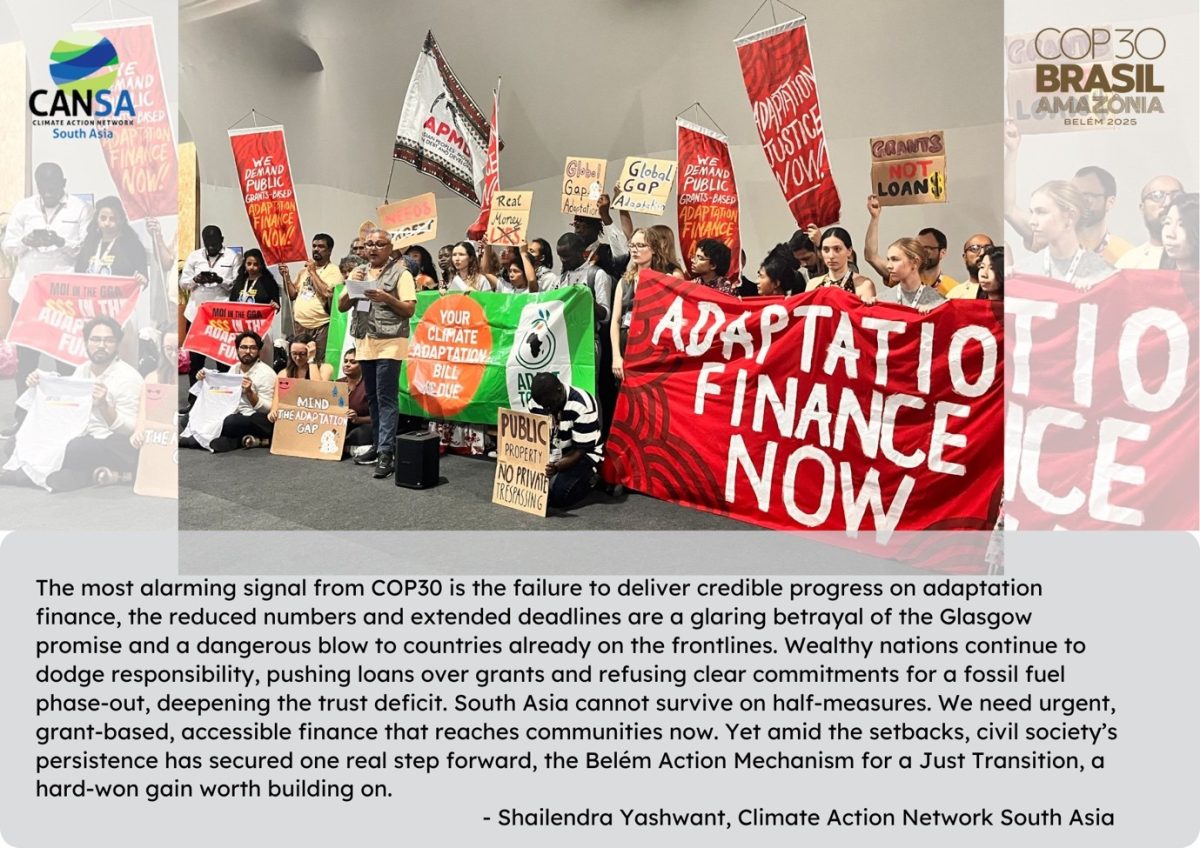
CANSA’s Demands at COP30
Ahead of COP30 in Belém, CANSA stressed that South Asia’s climate reality demands ambitious, equitable action rooted in CBDR–RC. Highlighting the Global Stocktake and the 2025 ICJ Advisory Opinion, CANSA called for scaled-up adaptation finance, a Just Transition mechanism, strengthened Loss and Damage funding, rights-based nature protection, and circular economy integration — urging COP30 to restore trust and keep 1.5°C alive.
Read CANSA’s complete list of demands here
COP30 SIDE EVENTS
Enabling Adaptation: Leveraging Renewable Energy as a Cross-Sector Driver for Resilience-Building and Development | November 10, 2025
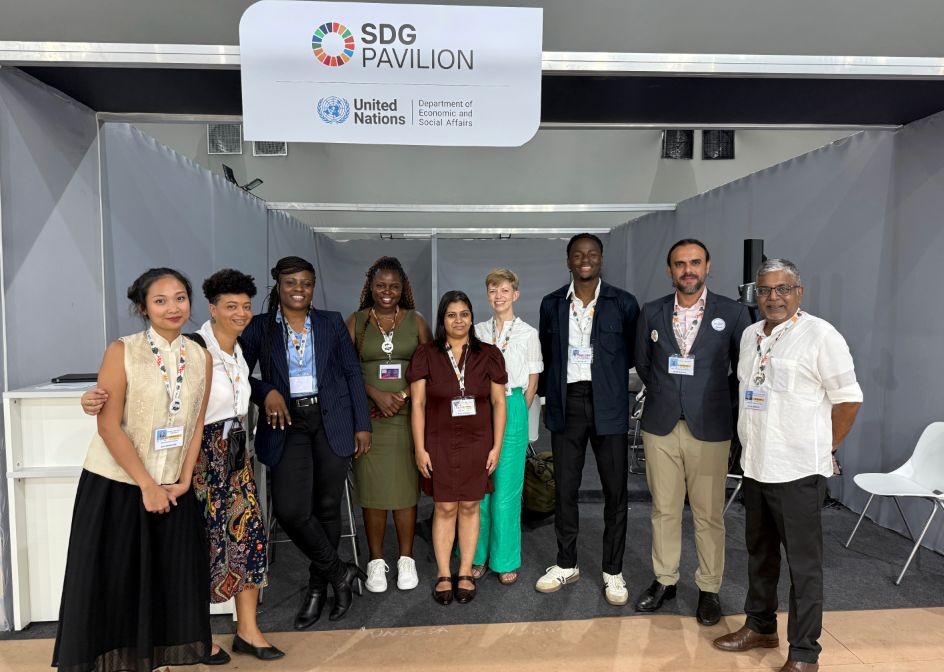
This session highlighted how renewable energy can drive adaptation and resilience across sectors. Hosted by CAN International, GCHA, Action Against Hunger, CANSA, and CAN Africa, it explored the role of clean energy in advancing the Global Goal on Adaptation and key SDGs. Panelists stressed that integrating renewables into adaptation planning can reduce vulnerability and strengthen health, food and water security. The discussion also outlined policy enablers, financing priorities, and collaboration pathways to scale renewable solutions globally. Details here .
Global Deadlock or Decisive Action? Facing the NDC Challenge Together | November 11, 2025
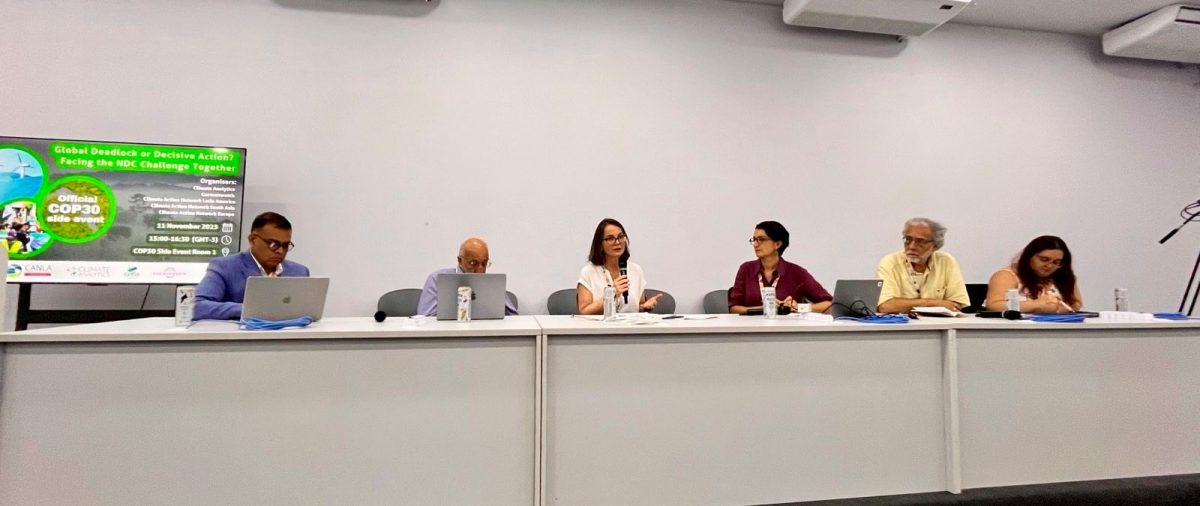
The side event brought together CAN regional networks and partners to reflect on the global state of NDC ambition ahead of 2025 submissions. Speakers highlighted political realities, ambition gaps, and opportunities for stronger cooperation across regions. The session provided timely insights during COP30. The event was organised by CAN Europe, CAN Latin America, CAN South Asia, Germanwatch & Climate Analytics. Details here .
LLA FRAMEWORK FOR THE GLOBAL FINANCE MECHANISM | November 12, 2025
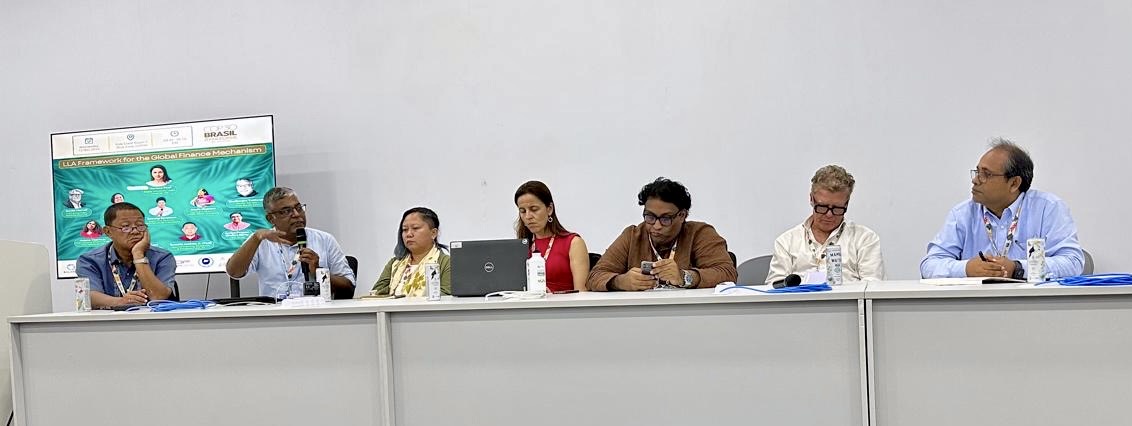
The session was moderated by Mariana Paoli, Global Adaptation lead at Christian Aid, and the speakers were Daniel Morrell, CEO & Founder of Balance Eco Ltd; Mynabel Pomarin, Programme Coordinator NTFP-EP Asia; Soesung Saroorun, Executive Director, NFO Forum on Cambodia; Roufa Khanom, Assistant Director, C3ER, BRAC University; Shailendra Yashwant, Senior Advisor, CAN South Asia; Helena Voorhuis, International Affairs Chair, YAC Netherlands; Dr Md. Golam Rabbani, Associate Director, Climate Hub, BRAC & BRAC International; Euseblo Jacinto Jr. (Ted), Head of Training, Research & Advocacy Unit, R1; Amiya Prapan Chakraborty, CEO, DYDF.
The event was organised by REN21, Climate Action Network International (CAN International), Balance, BRAC, CANSA, Renewables Grids Initiative, IUCN, Lighthouse, GUK, CWT, Dhrubotara Youth Development Foundation.
PRESS CONFERENCE
Role of Sustainable Consumption & Production and Circular Economy for Climate Action | November 13, 2025
The Missing Link in Climate Action: Time to Tackle How We Produce and Consume
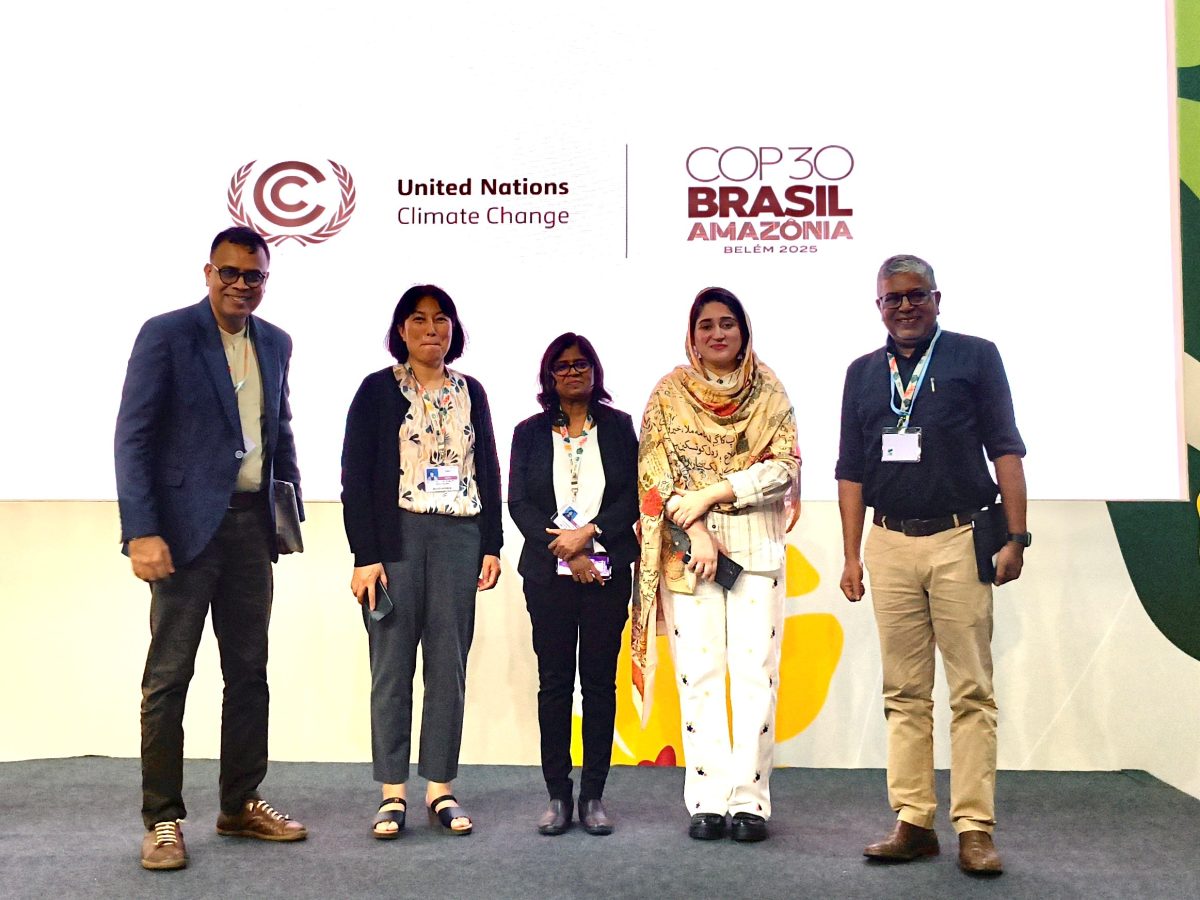
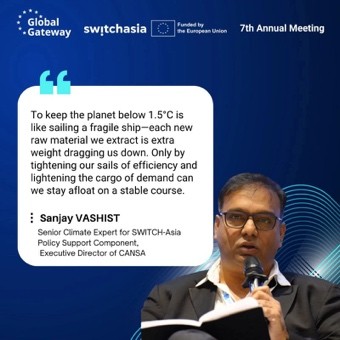
CANSA and SWITCH-Asia hosted a press briefing at COP30 highlighting that the climate crisis is also a crisis of consumption and waste. Speakers stressed that Sustainable Consumption and Production and Circular Economy solutions are vital for cutting emissions, strengthening resilience, and ensuring climate justice. The discussion emphasised the responsibility of developed countries to lead on shifting consumption patterns, while outlining how South Asia can leverage circularity for equitable, low-carbon growth. The event featured experts from Sri Lanka, SWITCH-Asia, and SDPI Pakistan.
Speakers: Ms. Kumudini Vidyalankara, Director of Economics and Environmental Planning, Ministry of Environment, Government of Sri Lanka; Mr. Ranga Pallawala, Climate Change Policy Expert, SWITCH-Asia; Dr. Zainab Naeem, Head of Programme, Ecological Sustainability and Circular Economy, SDPI, Pakistan. Moderated by Shailendra Yashwant, Senior Advisor, CANSA. The event was organised by CANSA & SWITCH-Asia.
See details
here
.
For Recording of Press Conference,
click here
.
BLOG
By Dr. Sanjay Vashist,
Director, Climate Action Network South Asia (CANSA)
The article highlights how material use and circular economy approaches are vital to achieving climate goals beyond energy transition. It urges systemic changes in production and consumption to cut emissions, boost resilience, and promote sustainable growth—calling COP30 a turning point for embedding resource efficiency and climate justice into global action. Read the blog here .
For GLIMPSES OF COP30 access our photogallery here .
NEW REPORTS
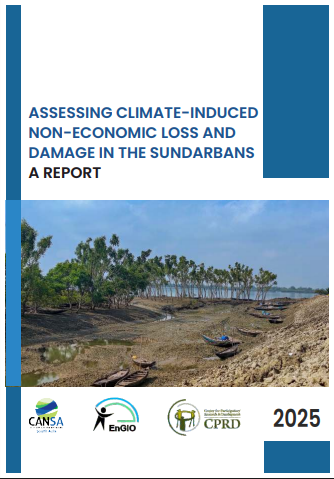
This new report released by CANSA, together with EnGIO and CPRD, highlights how these hazards cause profound non-economic losses beyond monetary damage, including impacts on health, education, cultural identity, heritage, and ecological stability. Drawing on household surveys, focus groups, and key informant interviews, the report aligns with UNFCCC’s NELD framework, and provides evidence-based insights and policy recommendations to place the voices and lived realities of Sundarbans communities at the heart of climate action and Loss and Damage negotiations.
Download report here .
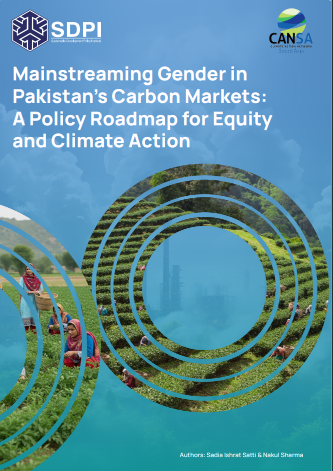
As international climate finance weakens, particularly following the USA’s withdrawal from the Paris Agreement, carbon markets have regained prominence as tools to cut emissions and support sustainable development. Under Article 6, they assign value to emissions reductions, incentivising investments in renewables, reforestation, and low-carbon solutions. However, their impact remains limited by persistent inequities, especially gender disparities, with women accounting for nearly 80% of people displaced by climate-related disasters.
Details here .
The latest CANSA Biannual Report highlights a period of transformative action and collective strength across South Asia. From championing climate justice at global forums like COP28 and COP29 to empowering youth, journalists, and communities, CANSA continues to turn challenges into opportunities. With renewed partnerships, bold advocacy, and grassroots innovation, the network is shaping a more resilient, equitable, and climate-positive future for the region and beyond. Download report here .
SPECIAL PAGE ON NON ECONOMIC LOSS & DAMAGE (NELD)
View the page here .
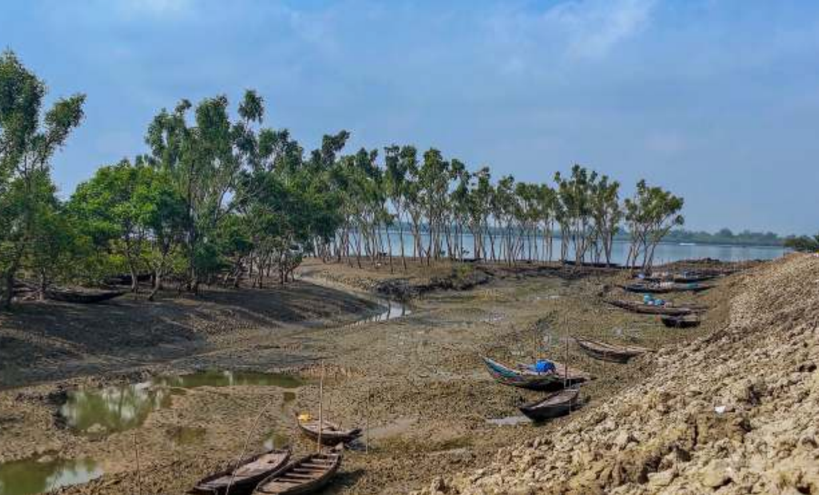
The new Sundarbans page captures the human stories behind climate loss in the world’s largest mangrove delta where rising tides erode not just land, but identities, cultures, and memories. It’s a moving reminder that some losses cannot be rebuilt, only remembered and respected. The page also features the new report and policy recommendations, offering deeper insights into how communities in the Sundarbans are navigating the non-economic dimensions of climate loss.
NEW MEMBERS THIS QUARTER
AFGHANISTAN
Environment Protection Trainings and Development Organization (EPTDO)
https://www.eptdo-evn.org/
Nejat Center Social Development, Drug Rehabilitation and Medical Services Organization (NDRC)
https://nejat.org.af/
Samsoor Watan Organization for Environment
https://samsoorwatan.org/
Welfare Organization Rehabilitation Livelihood and Development (WORLD)
www.world.org.af
Human Management and Leadership Organization (HMLO)
https://hmlo.org.af/
Community Integration and Solidarity Organization (CISO)
No website link no logo
Regrowth Community and Public Awareness Organization (RCPAO)
www.rcpa.org.af
NEPAL Youth Alliance for Environment (YAE) https://yae.org.np/
PAKISTAN
Human Organization for Peaceful Environment (HOPE)
www.hopepk.org
Human Development Society (HDS)
www.hds.org.pk
Policy Research Institute for Equitable Development (PRIED)
https://www.priedpk.org/
BANGLADESH
World Vision Bangladesh (WVB)
www.wvi.org/bangladesh
Community Development Centre (CODEC)
https://codec.org.bd/
Reliant Women Development Organization (RWDO)
https://rwdo.org/
Jagrata Juba Shangha (JJS)
https://www.jjsbangladesh.org/
SKS Foundation
www.sks-bd.org
Bulbul Samaj Kallyan Sangstha (BSKS)
Website not available
CBM Global Disability Inclusion
https://cbm-global.org/
INDIA
Orissa State Volunteers and Social Workers Association (OSVSWA)
https://osvswa.org/
Environment Conservation Society
https://www.switchon.org.in/
Brahma Kumaris World Spiritual University
www.eco.brahmakumaris.org
Humanitarian Aid International
www.hai-india.org
Karra Society for Rural Action
https://www.karrasociety.org
We wish our new members a warm welcome to the CANSA family!
PRESS RELEASES COP30 SPECIAL
For all Press Releases: Click here
COP30 Takes a Hopeful Step Towards Justice, But Does Not Go Far Enough
22 November 2025
Reaction to Latest Draft COP30 Text: Launch the BAM, fund Adaptation and commit to justice
21 November 2025
COP30 Just Transition Mechanism within reach
20 November 2025
CAN COP30 Media Brief – Analysis of President’s Draft Text
18 November 2025
Just Transition Text: Don’t Stand in the Way of Progress
18 November 2025
State of Play from Belém – COP30 Midway Media Brief
16 November 2025
Global Marches Call On Government at COP30 to Deliver Climate Justice
15 November 2025
COP30: Critical First Step Forward for Fund for Responding to Loss and Damage
11 November 2025
COP30: CAN Rejects Belém 4X Pledge on Sustainable Fuels as Credible Pathway to Just Transition
10 November 2025
1,000 organisations call for a people-centred Just Transition at COP30
10 November 2025
COP30 Must Deliver Justice or Risk Credibility
10 November 2025
MEMBER ACTIVITIES IN THE SPOTLIGHT
Prakriti Resources Centre has released two papers and a policy brief highlighting why Non-Economic Loss and Damage (NELD) must be central to disaster governance in Nepal.
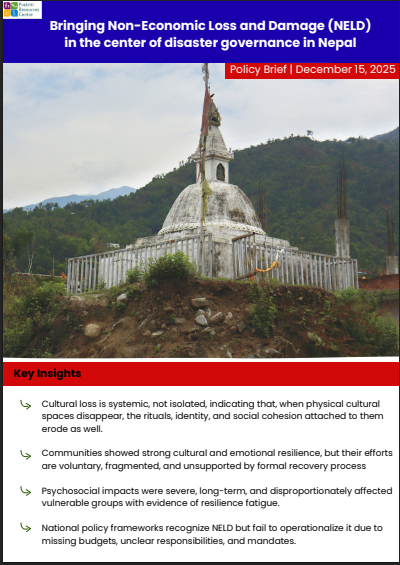
Bringing Non-Economic Loss and Damage (NELD) at the Centre of Disaster Governance in Nepal
The research shows that cultural loss is systemic—when temples, riversides, and communal spaces disappear, rituals, identity, and social cohesion erode with them. While communities display remarkable emotional and cultural resilience, recovery efforts remain voluntary, fragmented, and unsupported by formal systems.
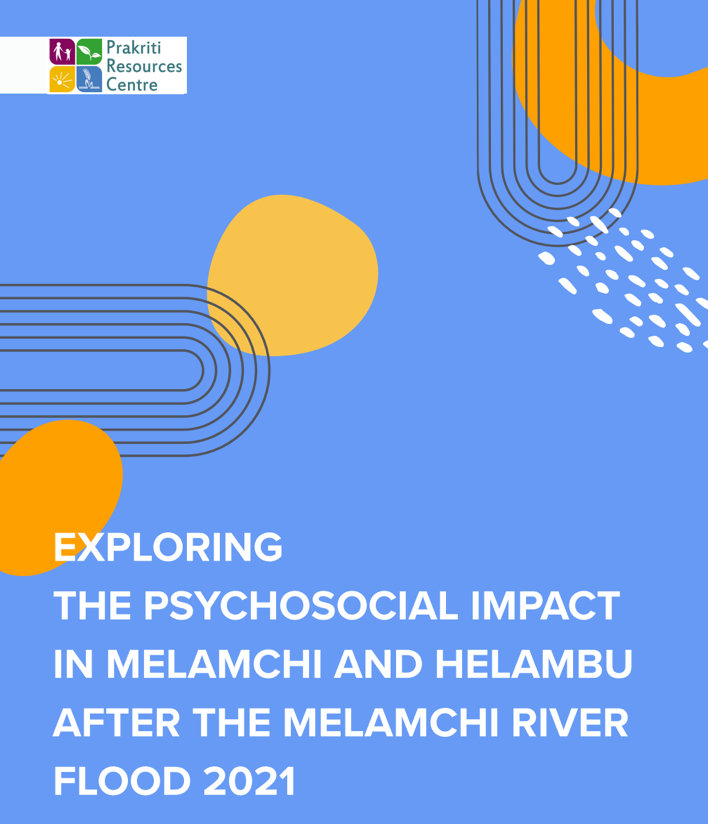
Exploring the Psychosocial Impact in Melamchi and Helambu After the Melamchi River Flood 2021
A companion study on Melamchi and Helambu after the 2021 floods reveals how trauma lingers: the sound of monsoon rain still triggers fear, anxiety, and sleeplessness. These invisible wounds often remain unspoken due to stigma. The findings reinforce a critical message—recovery is not just about rebuilding infrastructure, but about restoring psychological wellbeing.
In late 2025, Future Generations Afghanistan (FGA) made significant strides in strengthening climate resilience across Wardak and Kabul. Over 20 hectares of degraded land were restored and 10,000 native, climate-resilient saplings planted, improving soil stability, water retention, and biodiversity—while reducing risks from floods and droughts.
To sustain these gains, 50 community members were trained in watershed management and disaster risk reduction, equipping them to protect restored landscapes and livelihoods through climate-smart practices.
At the national level, Afghanistan’s Meteorological Department was upgraded with modern monitoring systems and staff training, enabling more accurate forecasts and early warnings. These improvements are already helping communities prepare for extreme weather—saving lives, livelihoods, and infrastructure.
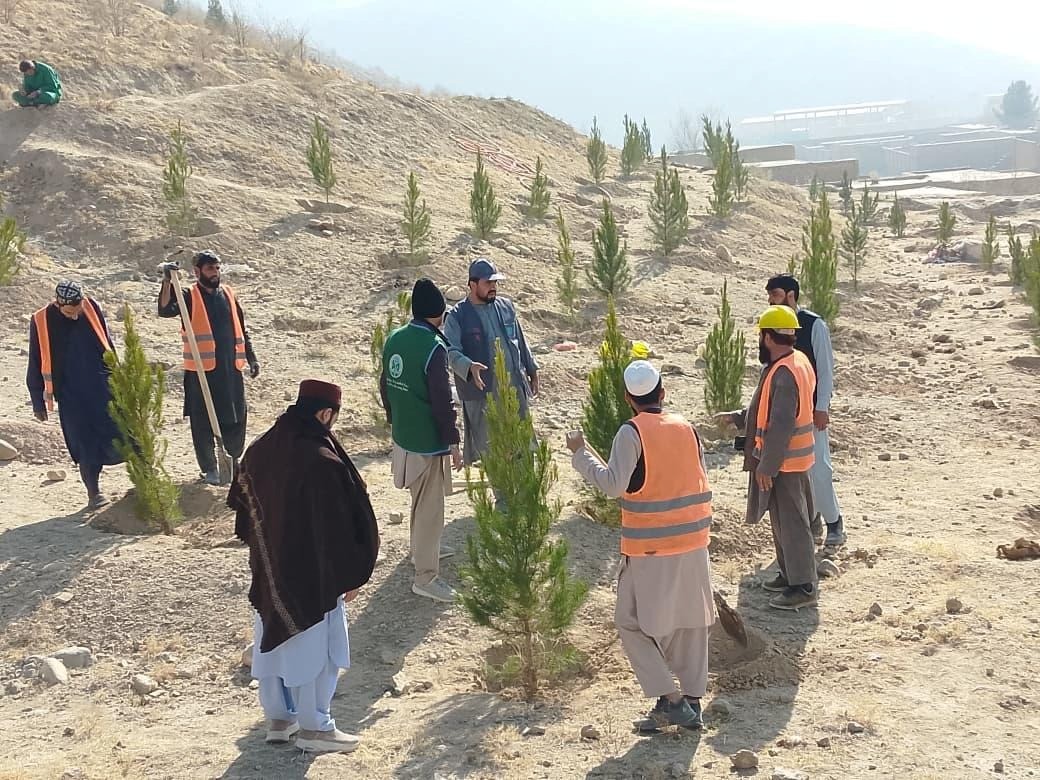
Afforestation in Kabul
Jitendra Sada’s “Jhatpat Jhola” — Small Bag, Big Impact
Living along the flood-prone Khando River in Saptari, Jitendra Sada has faced annual floods that damage homes, food, and vital documents — often striking at night.
Change began when Mercy Corps Nepal and Aasaman Nepal helped form the Dinabhadri Community Disaster Management Committee, where Jitendra, now Chairperson, learned about the “Jhatpat Jhola” — a simple emergency GO bag for floods.
Jitendra prepared his own bag with laminated documents, dry food, medicines, cash, a torch, phone numbers, and family mementos, keeping it by the door. The preparedness brought peace of mind — and momentum. By sharing his experience, he inspired neighbours and CDMC members, and today many families in Sadatole Pakari have their own GO bags.
“The river hasn’t changed,” Jitendra says. “But we have.”
His small action shows how simple preparedness can protect families and strengthen community resilience.
REGIONAL – NEPAL,BANGLADESH, INDIA, PAKISTAN
Advancing Local Climate Resilience:
Delivering Climate Risk Assessment
(LAPA/PACDR)
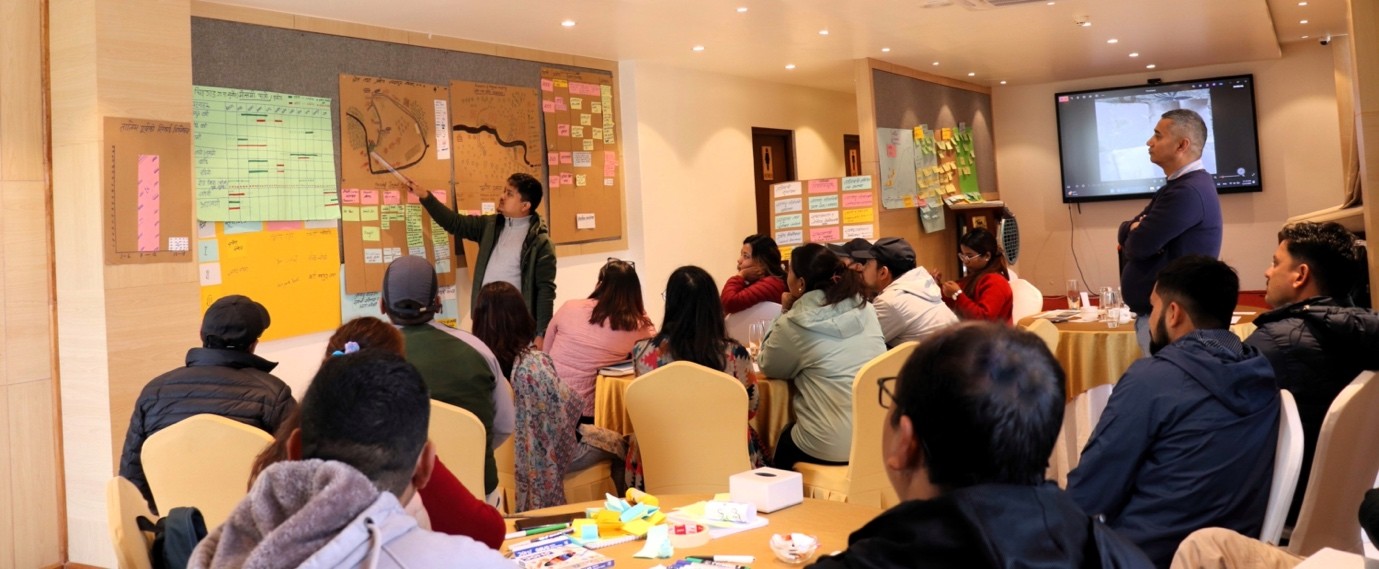
Training in Kathmandu, Nepal
Under the RECAP programme, PEEDA conducted a four-day
capacity-building training in Kathmandu on Local Adaptation
Plans for Action (LAPA) and Participatory Assessment of Climate
and Disaster Risk (PACDR). The training brought together 18
representatives from nine Nepal-based CSOs, strengthening
skills in climate risk assessment, vulnerability analysis,
hazard mapping, and participatory adaptation planning.
The programme emphasised alignment with Nepal’s LAPA framework and reinforced locally led, inclusive adaptation, reaffirming RECAP’s commitment to building climate-resilient institutions across South Asia.
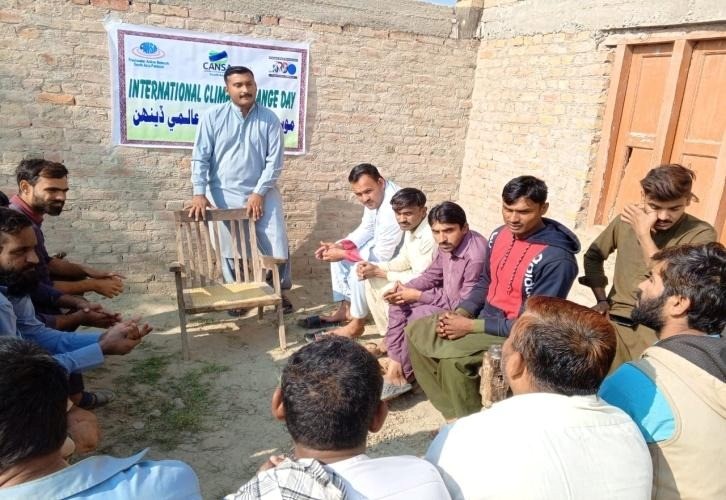
A climate change session held on 4 December 2025 in Village Mahessar Wada, Khairpur, highlighted the urgent need for collective climate action. Volunteer Mohammad Ibrahim emphasized sustainable practices, renewable energy, and climate-resilient infrastructure, underlining the shared responsibility of governments, businesses, communities, and individuals.
The discussion stressed collaboration with organizations, and sharing knowledge and technology as essential pathways to reduce emissions and drive meaningful climate solutions.
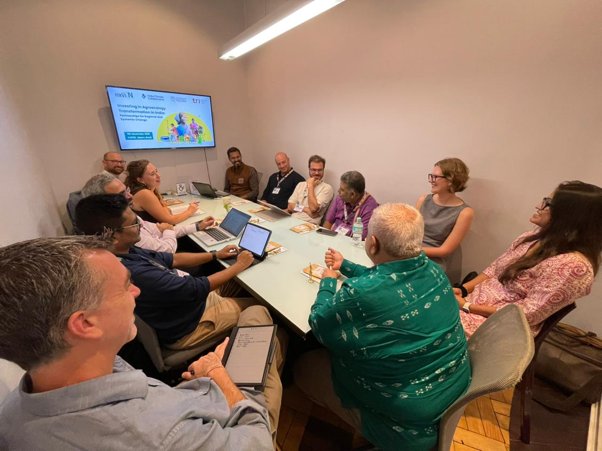
Rooted in the need for landscape-based, agroecological transitions, the Vasudha Dialogues are a global dialogue series advancing climate-resilient food systems in India. Convened in New York and Brazil, with an upcoming edition in Mumbai, the Dialogues bring together funders, CSR leaders, and ecosystem actors to address why capital often fails to reach early-stage agroecological solutions.
Through collective inquiry, they advance blended finance models, shared funding principles, and pathways for patient, collaborative capital to support grassroots-led climate resilience.
The South Asia Heat Health Information Network (SAHHIN) is a multi-stakeholder initiative advancing heat-resilient South Asia. Established in 2020 by IRADe, with support from IDRC, APN, GHHIN, NDMA, IMD, IIPH-Gandhinagar, and NRDC, SAHHIN serves as a platform for heat science, communication, knowledge-sharing, and capacity building.
The network supports interdisciplinary collaboration to strengthen heat preparedness, mitigation, and planning across South Asian countries.
SAHHIN’s fortnightly news digest can be accessed here:
1–15 October 2025
,
16–31 October 2025
,
1–15 November 2025
,
16–30 November 2025
We hope you enjoyed this edition. Thanks to all those who submitted their stories. We look forward to hearing from more of you for our forthcoming issues.