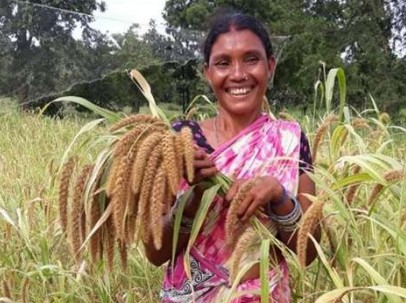
The fact that the weather risk has ruined rainfall agriculture. The uncertainty in weather conditions has put at risk the crop output, production and yield which contributes to the growing distress among the rain fed farmers in general and the marginal, small and resource poor farmers in particular resulting distress migration. Therefore, there is a […]
By Senashia Ekanayake
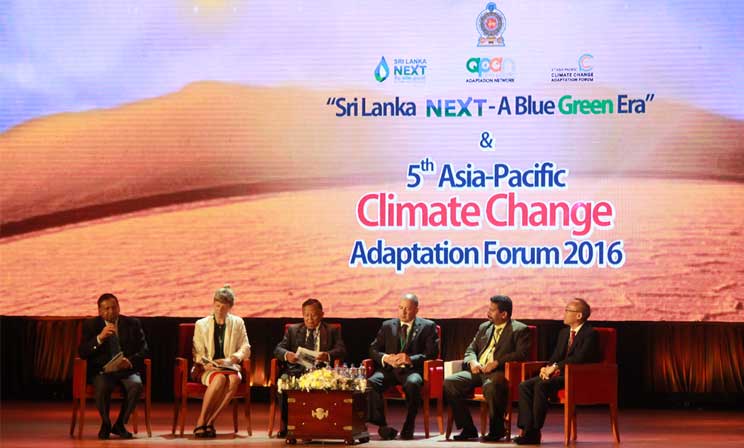
Sri Lanka was selected to be the first country in South Asia to host Asia Pacific Adaptation Network’s prestigious 5th Asia-Pacific Climate Change Adaptation Forum (APAN 2016) from October 17-19, 2016 that was hosted by the Ministry of Mahaweli Development and Environment as a side event of their own Sri Lanka NEXT Conference and Exhibition.
By Senashia Ekanayake
Climate change decision-making can be manoeuvred by policymakers no doubt, however, in a world where everything and all disciplines becomes linked to one another, it is not only important, but also imperative that all stakeholders are brought in to and made a part of this decision-making process.
By Anam Zeb
At the APAN 2016 conference in Colombo, speakers from Asia and throughout the world highlighted the costs of climate change globally, and then specifically for Asia. In particular, experts from the UNEP have suggested previous estimates may have been inaccurate, and up to 500 billion USD per year will be the cost of adaptation globally.
By Anam Zeb and Farshad Usyan
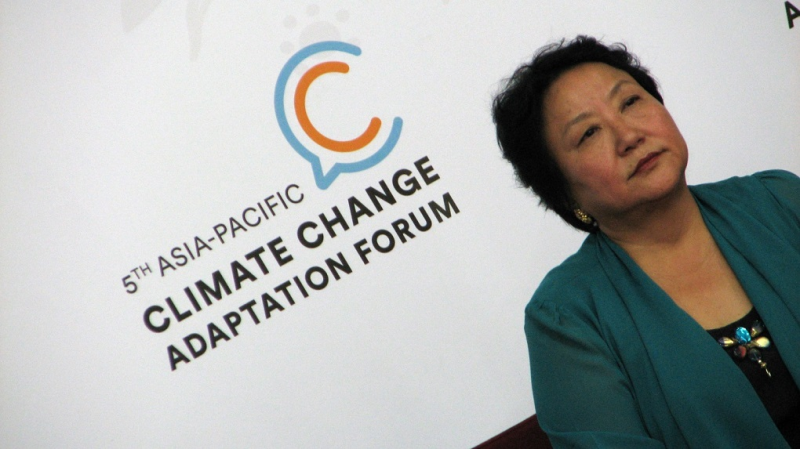
There has been a shift in the way women are considered in climate change discussions. We are being urged to stop thinking of women as victims of climate change, but as a valuable resource, capable of contributing to local, national, regional and global efforts to counter climate change.
By Anam Zeb
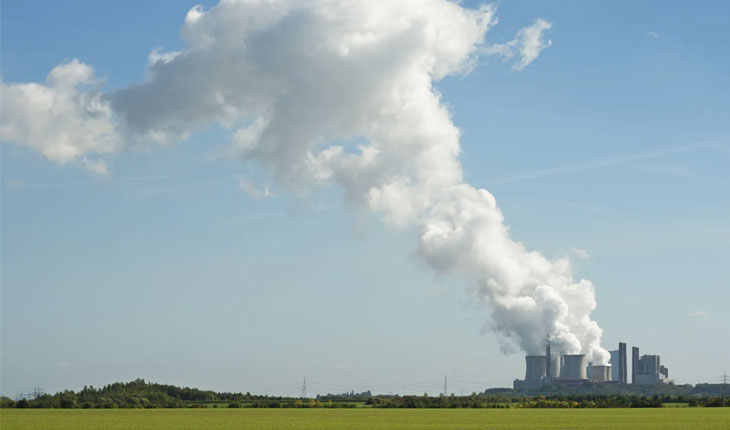
As the 22nd Conference of Parties (COP) gear up to meet in Morocco this November to chart out the rules of play for the Paris Climate Agreement, agreed at COP 21 last year, it is disturbing to note that the conference itself has been funded by corporate institutions responsible for more than 200 million tonnes of greenhouse gases.
[27 September 2016, Thiruvananthapuram]: “Environment and #ClimateChange must be imbibed and imbued in every development program and project of the state. The Haritha Keralam program announced last week is driven by interventions in three key sectors, sanitation, #Agriculture and water conservations. Decentralization is central to the success of any such programs as it is the panchayats […]
It is, without doubt, difficult to compare India and Germany as the cultural and socio-economic differences are striking. With this paper, Germanwatch and CANSA seek to introduce some of the backgrounds to the different climate policy approaches of India and Germany with a view to the ambitious and equitable implementation of the Paris Agreement.
Download Here Bilateral Indo-German cooperation has proven to build mutual understanding and trust in finding solutions in international negotiations. Bilateral cooperation experience has provided learning and confidence for various negotiation items at UNFCCC. A fruitful implementation of the Indo-German Solar Partnership would build further evidence for healthy bilateral cooperation and would support implementing the Paris […]
Download Here PDF The Potential of Creating Low-Carbon Development Strategies Together.Indo-German cooperation on low-carbon development can reach far beyond should dialogue on and provision of German support for an Indian low-carbon energy mix. Germany, in turn, should seek inspiration from India as well. An Indo-German dialogue on low-carbon development should therefore allow exchange in partnership […]