


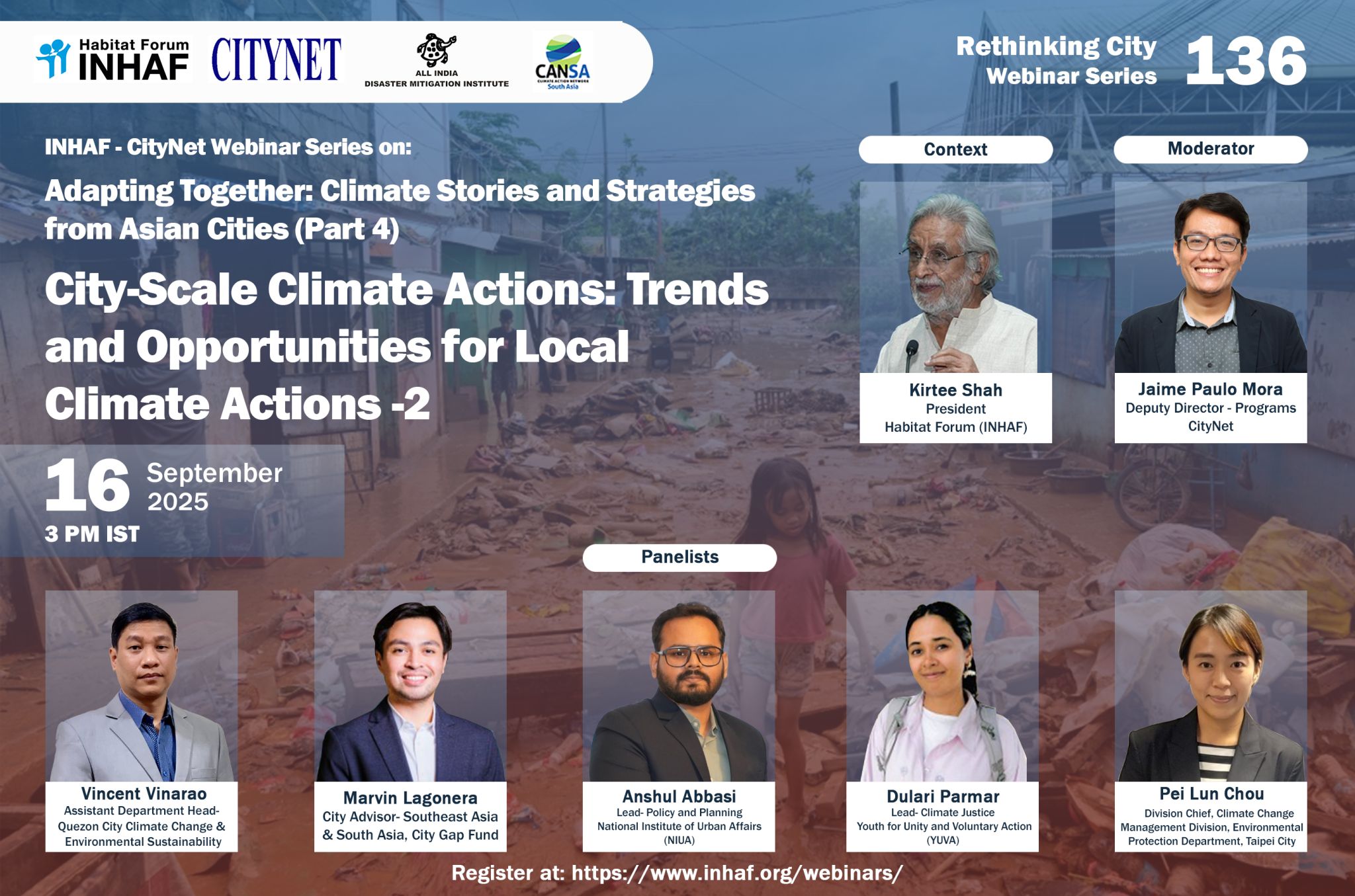
Building on the discussions from the second webinar, this session continues to explore city-scale climate actions with a particular emphasis on the financial enablers and barriers to implementation. As cities across Asia transition from planning to operationalizing climate resilience and mitigation strategies, questions of funding, budgeting, and financial sustainability, technical and governance capacity have become central. Presentations in this session will spotlight how cities are mobilizing resources, through climate funds, green bonds, blended finance, and international cooperation, to scale up their efforts.
The session will also examine how local governments are building institutional and technical capacity to design bankable projects, engage with donors, and integrate climate finance into broader urban governance. Through case studies and dialogue, speakers will unpack successes and constraints, highlight innovative financial mechanisms, and offer insights into how different actors, from city departments to private partners and civil society, are collaborating to unlock and sustain finance for meaningful climate action.
While many cities now have climate action plans, implementation remains a major challenge. Bridging the gap between ambition and action requires strong institutional capacity, clear mandates, sustainable financing, and consistent coordination across departments and levels of government.
Access to finance remains one of the most significant determinants of how quickly and effectively cities can implement their climate strategies. While larger cities may tap into green bonds or climate funds, many others cannot write viable proposals, meet donor requirements, or co-finance projects.
Finance is not just about money; it’s about enabling governance, accountability, and long-term planning. Cities that embed climate finance into budgeting and institutional processes tend to show more sustained progress.


