



The CANSA Annual Regional Meeting 2024, held in Colombo, Sri Lanka, was a pivotal moment for climate action in South Asia, with over 40 delegates, including an inspiring number of youth leaders from across the region, gathering to address key issues like loss and damage, urban resilience, and climate finance. Marking a shift towards youth-driven activism, this year’s meeting emphasised intergenerational solidarity and the importance of youth in leading climate solutions. Key discussions included #ModernSlavery‘s connection to #ClimateChange, the ongoing execution of the CANSA #ColumboStrategy, and the significance of ensuring climate justice and equity for marginalised communities.
At the CANSA Annual Regional Meeting in Colombo, five remarkable youth climate activists took the stage to share their inspiring work, highlighting their unique contributions to climate action across South Asia.
Upama Acharya’s Leadership in Nepal’s Youth Climate Action
Organisation- Nepalese Youth for Climate Action (NYCA)
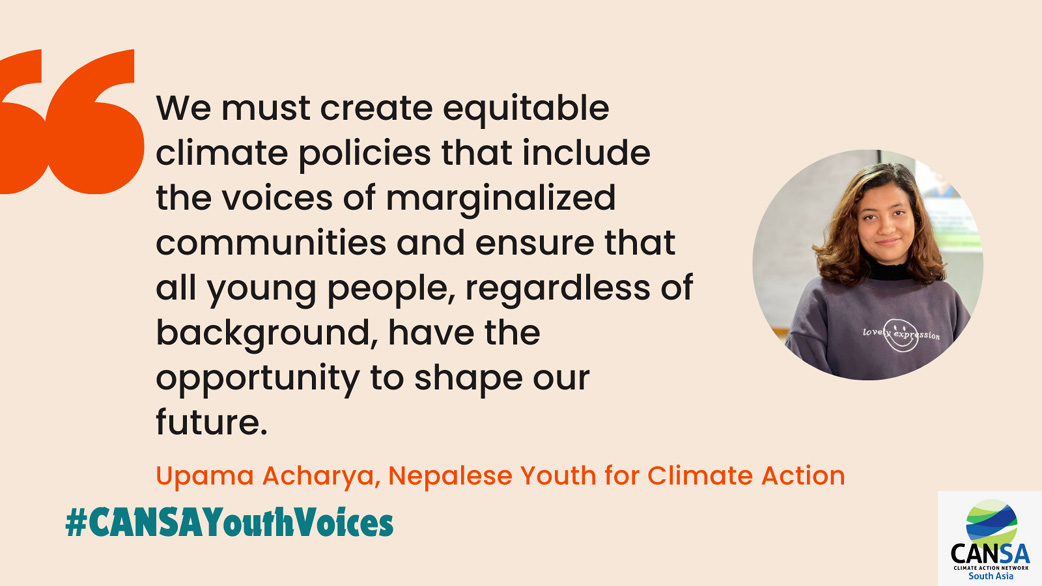
Upama Acharya, a dedicated advocate for Nepalese Youth for Climate Action, recently served as a panellist at the CANSA annual workshop in Colombo, Sri Lanka. During her participation, she highlighted significant gaps faced by Nepalese youth in the context of climate change, emphasising the urgent need for equitable policies that address the disproportionate impacts on #Marginalised communities. Upama pointed out the absence of clear, actionable plans that include diverse groups, such as the poor, indigenous peoples, and those with disabilities. She underscored the importance of promoting traditional practices and ensuring meaningful representation of youth from various backgrounds.
Furthermore, Upama called for national platforms to amplify these voices and advocated for support mechanisms for young entrepreneurs, such as tax breaks, to foster community innovation and #Resilience. The ongoing government instability has intensified these challenges, making it essential for #Stakeholders to prioritise the active engagement of youth in climate action. Through her efforts at the workshop, Upama aims to inspire collaborative initiatives that ensure all young people’s voices are heard and valued in the fight against climate change.
In addition to advocating for equitable policies, Upama emphasised the role of education in equipping youth with the necessary skills and knowledge to tackle climate issues effectively. She proposed the integration of climate education into school curriculums, aiming to raise awareness and empower the next generation to take proactive steps toward sustainability. By fostering partnerships between youth organisations, government bodies, and local communities, Upama envisions a more inclusive approach to climate action that harnesses the potential of young leaders. Her unwavering commitment and passion for uplifting marginalised voices are pivotal in driving meaningful change and ensuring a #Sustainable future for all.


