


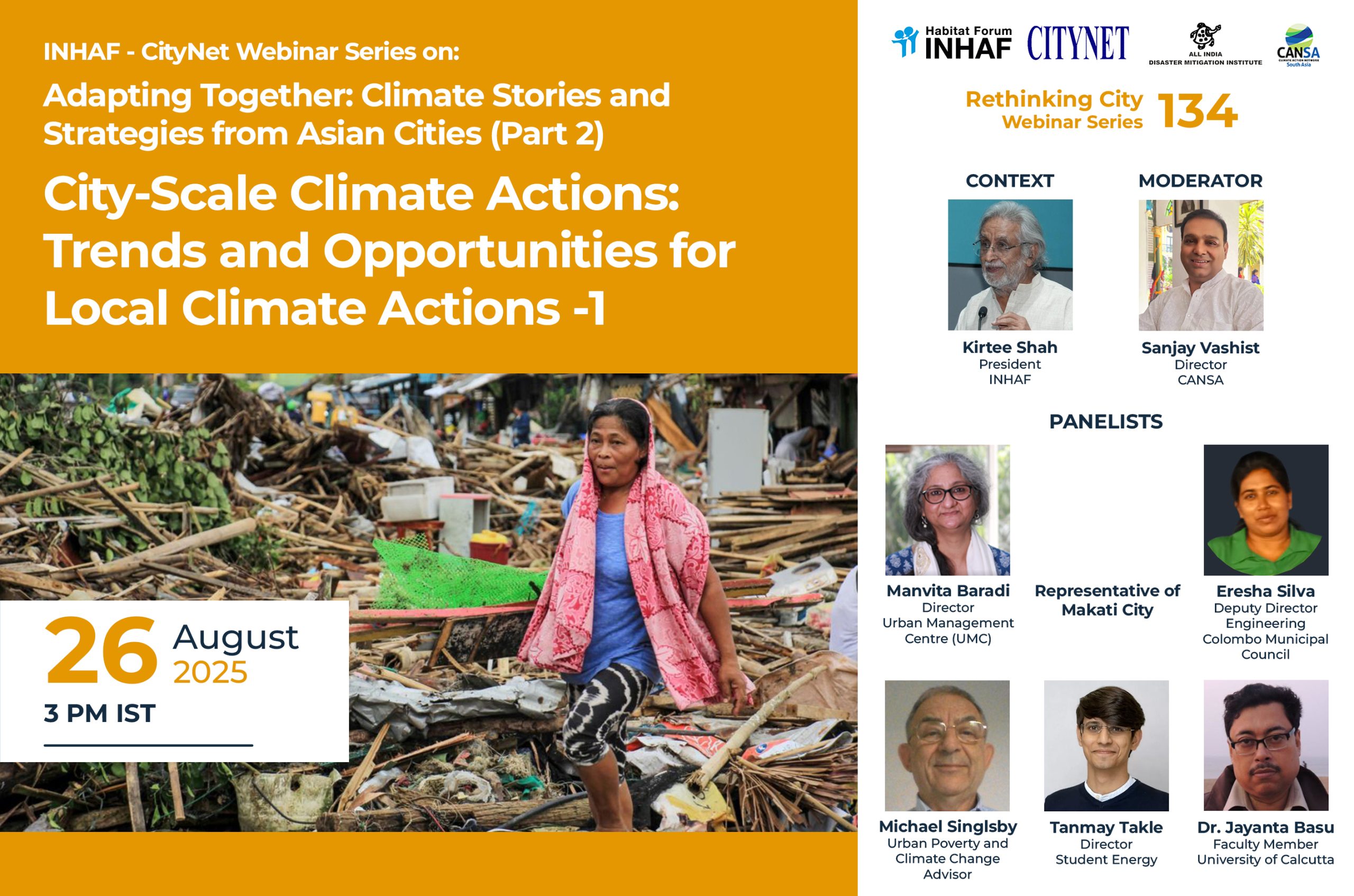
The second webinar focuses on city-level case studies that illustrate the diverse and evolving ways urban areas across Asia are responding to climate change. As cities contend with increasingly severe impacts—such as flooding, heatwaves, air pollution, and resource stress—this session will explore how they are adapting their planning frameworks, infrastructure, and service delivery systems to build resilience and reduce emissions. Presentations will feature both formal municipal strategies and grassroots-led efforts, highlighting a wide range of approaches to local climate action.
Alongside these actions, the session will consider the broader systems that support or constrain progress, including governance structures, inter-agency coordination, stakeholder participation, and access to finance. A particular focus will be on how local strategies align with national climate goals, especially through the lens of Nationally Determined Contributions (NDCs). By drawing lessons from both high-capacity and resource-constrained contexts, the webinar will surface practical insights that other cities can learn from as they pursue their climate pathways.
Cities are central to climate action, both as major emitters and as sites of rising risk. Their choices on energy, infrastructure, and planning shape national and global outcomes.
Urban areas are adopting climate action plans, resilience strategies, and emissions targets, but with wide variation in depth, capacity, and enforcement.
Success often depends on multi-level governance, local leadership, and public participation. Yet many cities face political fragmentation and weak coordination.
Financing remains a key bottleneck. Larger cities tap green bonds or climate funds, while others struggle to access capital or even write viable proposals.
Cities play a crucial role in national emissions goals, yet many are left out of NDC planning, monitoring, and reporting.
This session highlights what enables real climate progress at the city level—governance, financing, partnerships—and what continues to hold cities back.


