


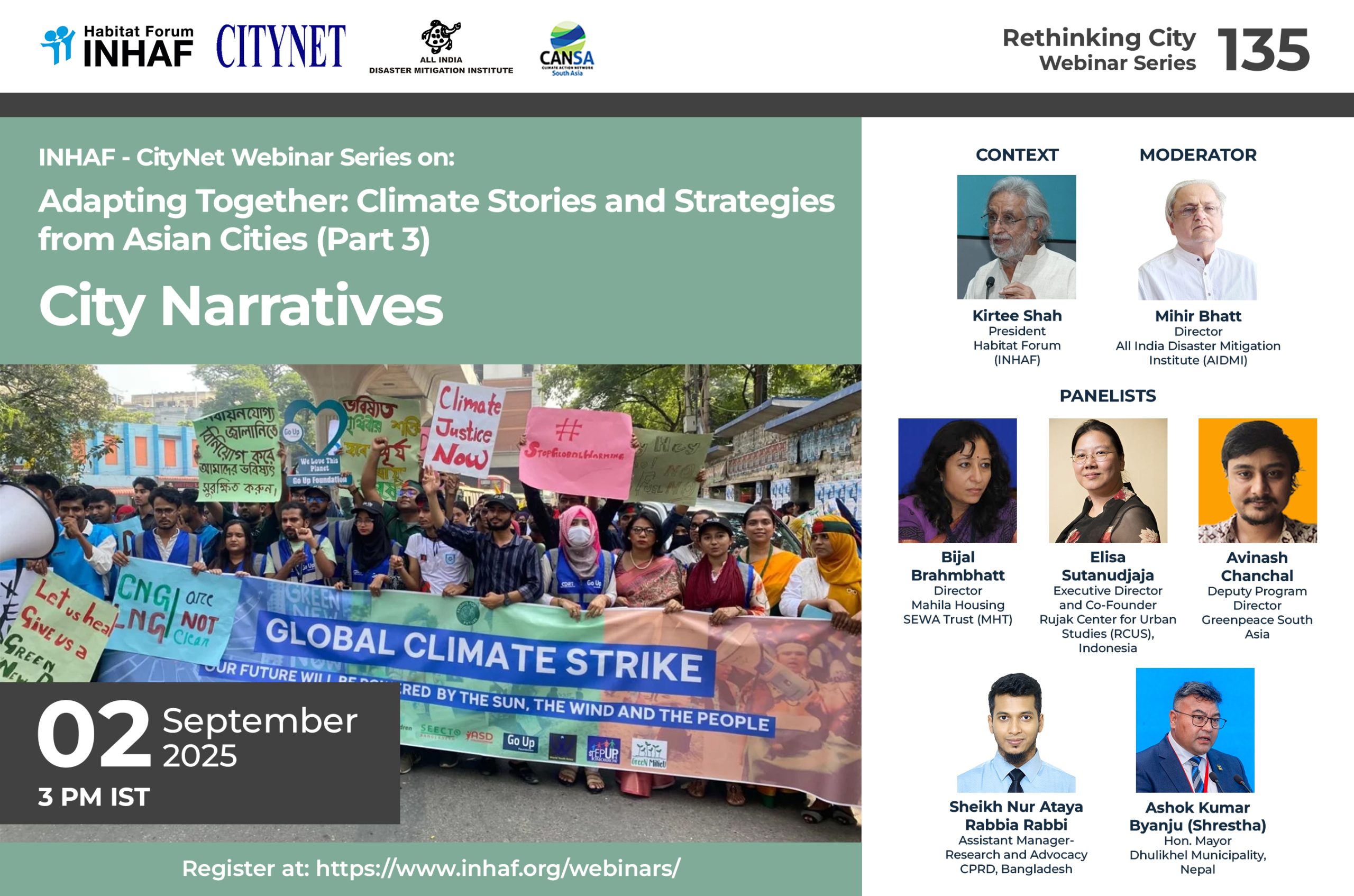
The third webinar turns its focus toward the lived experiences of climate change from the perspective of vulnerable urban populations—women, children, youth, informal settlers, and unorganized workers—who often bear the brunt of climate impacts while having the fewest resources to respond. As cities across Asia experience rising temperatures, flooding, and other intensifying hazards, this session will explore how adaptation strategies can be shaped to address not only physical risks but also the deeper social, cultural, and non-economic losses that climate change brings. From the erosion of community networks and displacement of informal livelihoods to the loss of place-based identities and urban heritage, these impacts are often invisible yet deeply felt.
Presentations will showcase efforts that prioritize equity in resilience-building through community-driven planning, inclusive policy, and localized interventions that center those most at risk. The session will also examine how civil society, community networks, and private actors are stepping in where state capacity may be limited. In addition, the discussion will touch on how climate finance mechanisms can better account for social vulnerability and support adaptation efforts that are participatory, context-sensitive, and just. By spotlighting these multifaceted experiences, the session aims to inform a more holistic, inclusive vision of climate adaptation in cities.
The effects of climate change are uneven and often fall hardest on those least equipped to cope. In urban areas, vulnerable groups—women, children, informal workers, persons with disabilities, and communities in informal settlements—face disproportionate exposure to heat, flooding, disease, and displacement. But beyond physical damage, climate change also threatens community cohesion, cultural heritage, and social identity.
Many city strategies lean toward infrastructure or technology-led solutions. While necessary, these don’t address deeper issues of livelihood insecurity, housing precarity, or mental health distress that climate impacts intensify. Building genuine resilience means targeting these social and structural vulnerabilities directly.
When formal systems fall short, civil society organizations, community leaders, and grassroots groups step in. These actors bring critical local knowledge and trust, co-creating solutions and offering early warning, service delivery, and accountability.
As cities face climate-induced migration, the loss of place, identity, and connection is profound, especially for informal and low-income communities. These losses rarely get accounted for in policy or finance frameworks, but they are real and growing.


