


Five years ago, I stepped into the climate space not as a policy expert, but as a young activist trying to make sense of the chaos unfolding around me. South Asia’s disappearing forests, melting glaciers, and rising seas were alarming to me. I arrived full of urgency, at my first international climate meeting—the UNFCCC Subsidiary Bodies (SB) session in Bonn, driven by the smog I had grown up with and the seasonal floods that had started to feel less like disasters and more like routines.
I still remember walking into those conference halls, overwhelmed by the scale of it all—country flags, technical jargon, and delegates debating percentages while real people were already losing homes, crops, and clean air. That meeting taught me my first real climate lesson: the crisis wasn’t just scientific or political—it was deeply personal, and it was already here.
South Asia, my home, is a region of staggering contrasts. We are home to nearly a quarter of the world’s population, squeezed into a small slice of the planet’s land. The pressure this places on natural resources is immense. Our #CarbonFootprint is amplified not just by our numbers, but by our role as the manufacturing hub for wealthier nations—a reality that leaves us with the pollution, but not the profits. And while millions here live with the impacts of climate change daily, climate literacy remains low, and urgent action is too often treated as an academic concern rather than a community priority.
In those early days, I believed that if each country focused on its own climate plans, things would get better. But that illusion quickly faded. #ClimateChange does not respect borders—and neither should our solutions.
Through attending climate meetings in Sri Lanka, Bangladesh, and at the UNFCCC COPs and SBs, and by listening to communities from Nepal to Pakistan, I’ve come to one clear conclusion: South Asia is one climate system—from shared rivers and winds to overlapping monsoons and melting mountain ranges. And we are failing it by trying to fix it in isolation.
That realization hit me again recently in Kathmandu at a regional dialogue organized by CANSA, AirClim, Plan International, and Prakriti Resources Centre. It was one of the few spaces where civil society, youth leaders, and even SAARC representatives spoke the same language—not English or Hindi, but the language of shared climate urgency.
And here’s what we know: South Asia is burning, #Flooding, and #Melting all at once. Himalayan glaciers are disappearing. Monsoons are becoming unpredictable monsters—drowning Pakistan while skipping over India. #HeatWaves don’t ask for passports. Cyclones don’t stop at checkpoints. If the problem is regional, why do our solutions remain stubbornly national?
At the dialogue, two ideas stayed with me.
First, the proposed Human Climate Observatory—a vision of combining satellite data with local wisdom to create a regional early warning system. I remembered my visit to flood-prone areas in southern Nepal, where people told me how warnings came too late, if they came at all. A regional system could have saved lives.
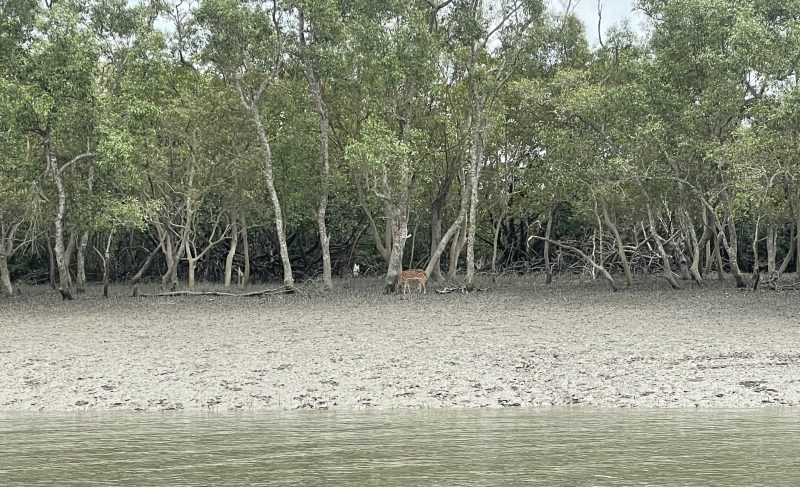
Second, the idea of a SAARC Climate Resilience Pact—a binding agreement to protect shared ecosystems like the Himalayas and Sundarbans. Not another declaration, but a decision. A commitment. A signal that we will act not just as countries, but as neighbors.
People often say geopolitics makes this impossible. But I’ve seen otherwise. I’ve seen youth from India and Pakistan co-design climate solutions. I’ve seen Sri Lankan and Bangladeshi activists co-author reports. In fact, the most powerful stories I heard in Kathmandu came from people—not institutions. ICIMOD’s Neera Shrestha Pradhan spoke about rivers from her childhood that are now dry. SAARC’s Shahiya A. Manik urged us to stop treating climate as a “standalone issue” and integrate it into health, social protection, and education. These weren’t statistics. They were memories. And warnings.
And yes, the tragedy in Kashmir’s Pahalgam during the same week reminded us how fragile peace still is. It cast a heavy shadow over our dialogue—a stark contrast between the hope we were building and the heartbreak unfolding just across the border. It was a painful reminder that in South Asia, the human cost of division is still unbearably high. But if we wait for perfect politics, we will never act. Our ecosystems can’t afford our egos. Regional climate cooperation must not be held hostage by conflict. That’s not idealism—it’s survival.
So here’s what I’ve learned after five years in this field: we don’t suffer from a lack of knowledge—we suffer from a lack of cooperation. We have the science, the solutions, and even the stories. What we’re missing is the political will to work together. It’s time to update the SAARC Climate Action Plan. It’s time for cross-border climate finance, clean air partnerships between cities, regional green job training, and a media narrative that reflects our shared climate reality, not just our political divisions.
Kathmandu wasn’t just another meeting. It was a turning point. A mirror showing the cracks in our systems—and a map pointing toward a different future. One built on solidarity, not silos. One where #Resilience is not just engineered, but rooted in relationships, trust, and regional purpose.
The only question is: after five years of watching the region suffer, connect, and resist—am I ready to stop hoping and start demanding? I am. Are you?


