


Publications
Download Here
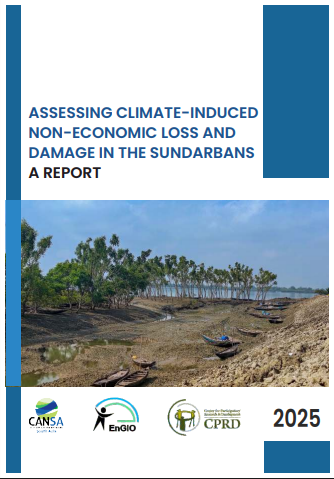
Spanning over 19,000 sq km across southwest Bangladesh and southern West Bengal, India, the Sundarbans is the world’s largest contiguous mangrove forest and unique habitat for the Royal Bengal tiger. Known for its rich biodiversity and cultural heritage, this transboundary region is one of the planet’s most climate-vulnerable zones. Its low-lying geography, dense population, and ecological sensitivity expose communities to frequent cyclones, tidal surges, riverbank erosion, salinity intrusion, flooding, and sealevel rise. These hazards, amplified by unsustainable human practices and governance gaps, cause not only economic damage but profound Non-Economic Loss and Damage (NELD), including loss of life, mental health, cultural identity, education, and ecological stability.