COP30: A Defining Moment for Climate Justice and the Principle of Common but Differentiated Responsibility
As the world heads to COP30 in Belém, South Asia stands at the epicentre of escalating climate impacts from heatwaves and floods to vanishing water sources and collapsing ecosystems. Millions of lives and livelihoods hang in the balance.
Ten years after the Paris Agreement, the latest Global Stocktake shows the world dangerously off track. The International Court of Justice’s 2025 Advisory Opinion reaffirmed that 1.5°C is not a political aspiration but a legal obligation and that national commitments (NDCs) must reflect the highest possible ambition guided by the principle of Common but Differentiated Responsibilities and Respective Capabilities (CBDR–RC).
At COP30, governments must deliver a fair, finance-backed plan grounded in CBDR–RC:
COP30 is a test of global credibility.
The 30th United Nations Climate Change Conference (COP30) must
catalyse enhanced global ambition to close the emissions gap and safeguard the 1.5°C threshold. Failure to
act decisively and equitably will erode trust, deepen injustice, and push 1.5°C out of reach.
Read CANSA’s
complete list of demands
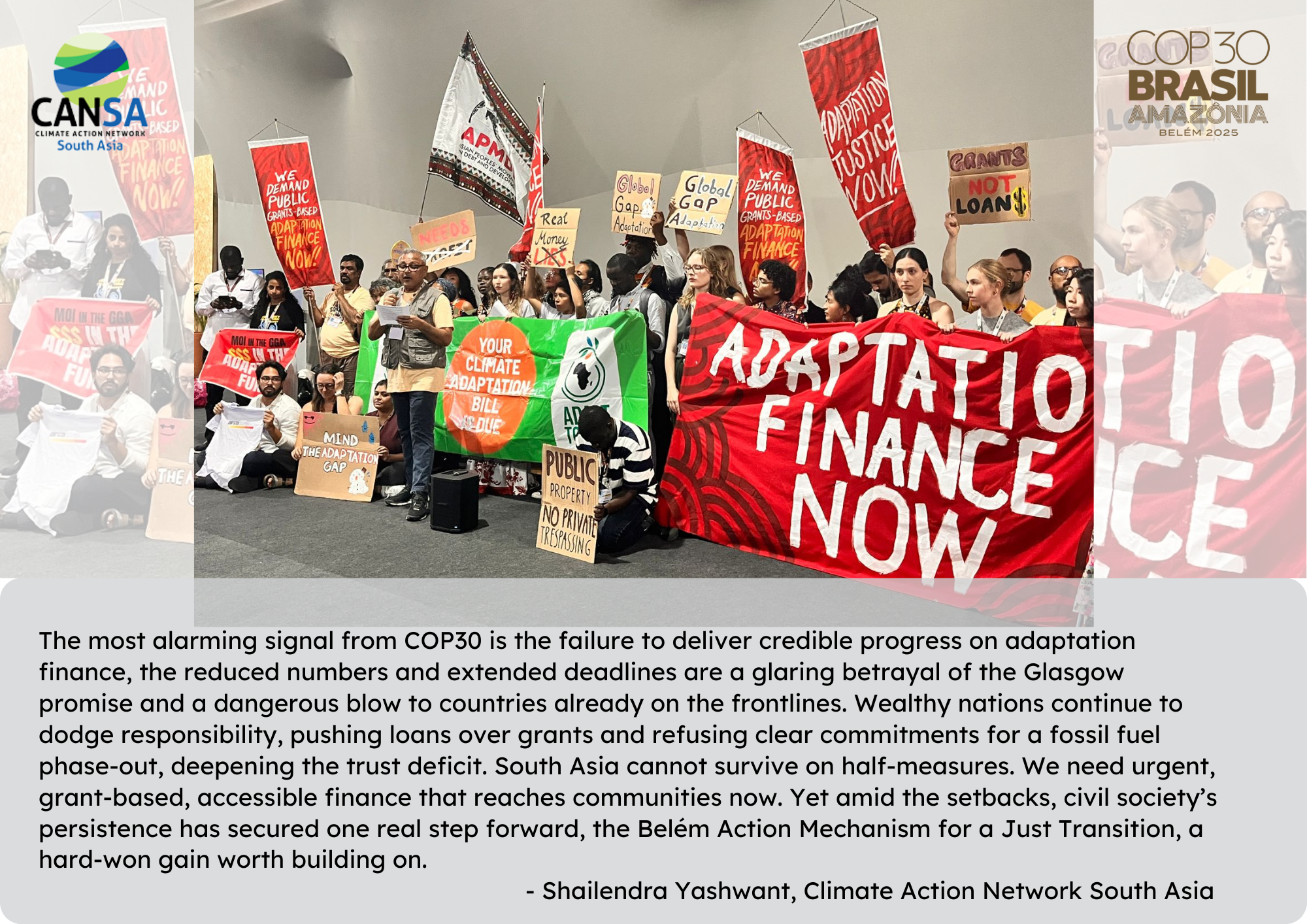
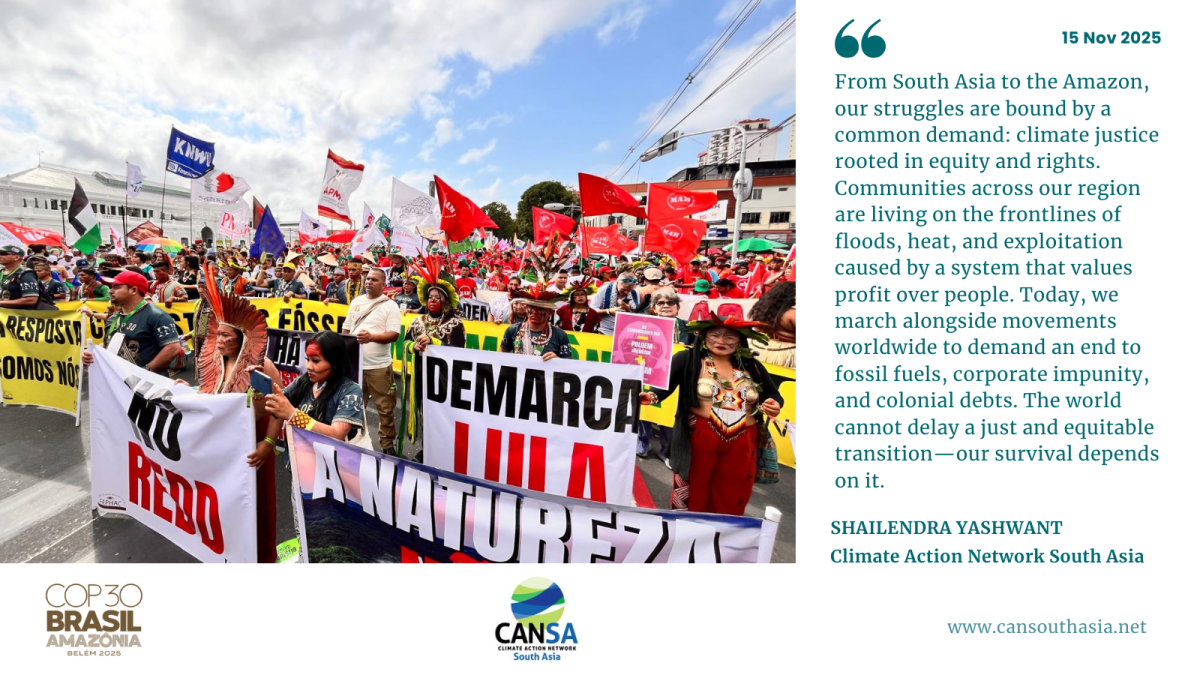
March for Climate Justice | 15 November, Belem
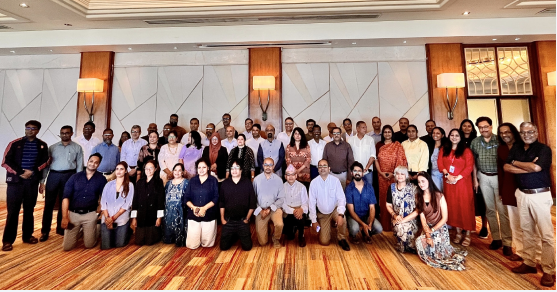
Towards a Just, Resilient and Sustainable Future: Building South Asian Positions on Loss and Damage, Adaptation, Climate Finance, and Urban Climate Resilience
Curtain raiser on United Nations Climate Summit at Belem, Brazil COP30: what it means to world, India and West Bengal

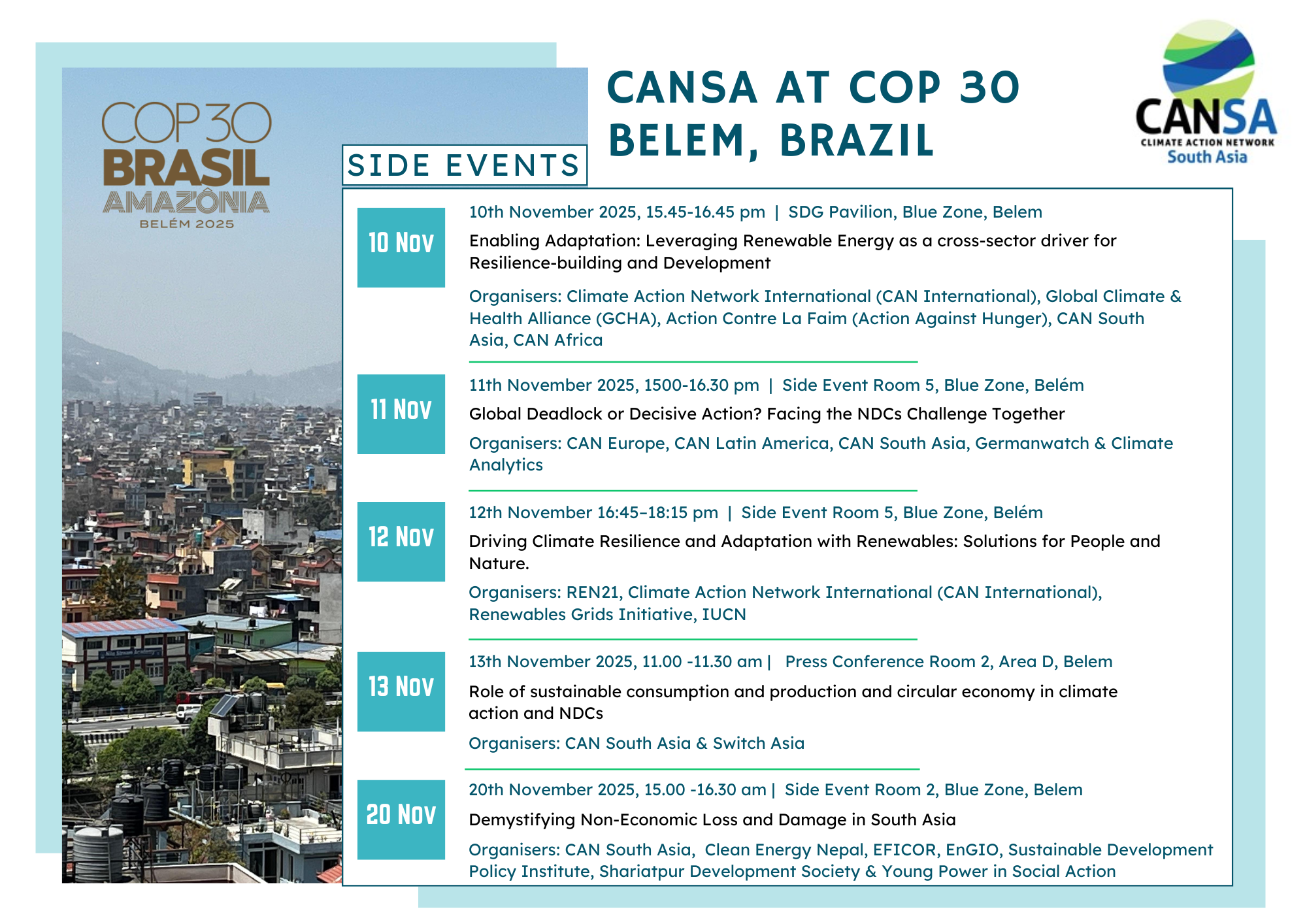
Global Deadlock or Decisive Action? Facing the NDC Challenge Together Click Here
Demystifying Non-Economic Loss and Damage in South Asia Click Here