It is widely established that unemployment, political dissatisfaction among youth, lack of quality education and better payment in wages abroad are major factors that drive migration in Nepal, however, climate change is insufficiently recognized as one of the push factors driving migration in South Asia although there is evidence that it is happening.
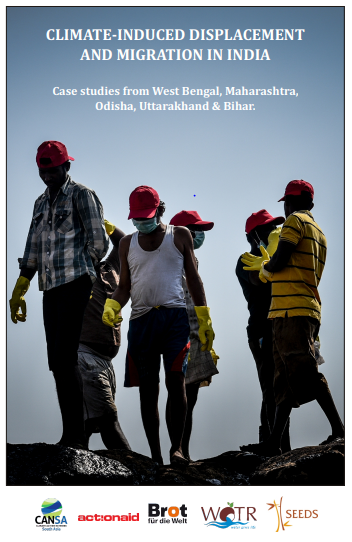
India is a large country, spread across several climatological and ecological zones, making its population particularly vulnerable to the worst impacts of climate change. 67% of India’s population of 1.3 billion people live in rural areas and depend on climate-sensitive sectors such as agriculture, fisheries, and forestry for their livelihoods.
Download Here PDF Climate change has deepened the severity and frequency of climate related hazards, pushing people to migrate at any cost, and subjecting them to the matter of humanitarian crisis. Migration has been a historic important feature of all communities across South Asia, but when migration is forced and migrants are asset less, they […]
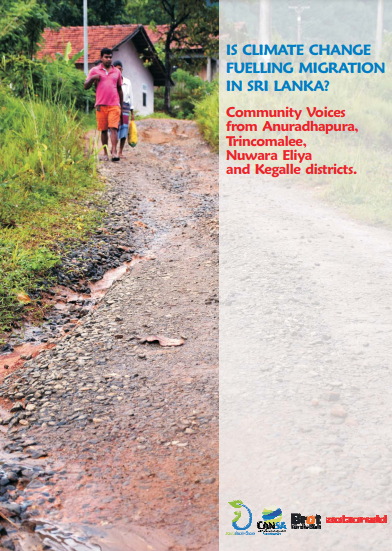
Climate change in Sri Lanka may lead to higher temperatures, storm surges and increased rainfall variability. These in turn impact agriculture and food security, water resources and human health. Extreme weather events and sea level rise lead to coastal erosion and loss of land, threatening livelihoods and forcing migration. “Is Climate Change Fueling Migration in Sri Lanka” report’s primary objective […]
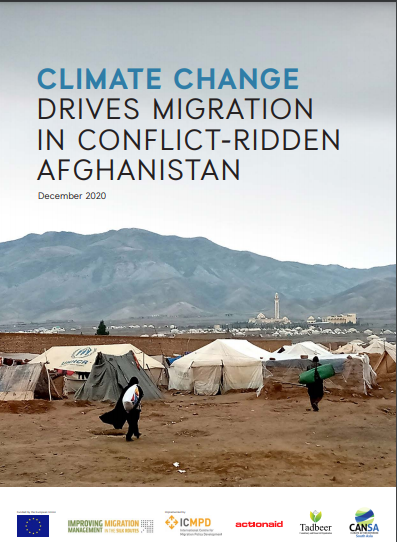
Download Here The climate change predictions for Afghanistan reveal an increase in temperature that will dramatically impact the country’s agricultural production, water availability, and food security. Increased temperature, earlier snowmelt, and lower precipitation lead to large population movements, including out-migration and significant internal displacement. Climate-induced migration usually does not get the attention it deserves in […]
Download Here Pakistan is listed among the most vulnerable countries that are experiencing both slow and fast-onset climate change events. The effects of climate change are now well evident in Pakistan. Long spells of droughts and frequent floods have led to a decline in farm productivity, increased livestock mortality, and large-scale unemployment. Climate-induced displacement and […]
The project is part of the global movement to push for a complete ban on the use or extraction of fossil fuel and shift to non- fossil fuel based energy source. As part of the global initiative, CANSA is leading the preparation of a common South Asian Advocacy strategy that can be used as a […]
Following five years of cooperation, and much longer individual experiences, the project takes Eco-Village Development concept to new areas and on new levels for wider implementation. The project seeks to maximize results in the intervention area by combining local activities with capacity building to involve more actors, and with advocacy to increase political support, nationally […]
The current project is a test run of viability of Eco Village Development concept and experiences gained from previous 2 projects in a larger and different geographical areas with solutions beyond household energy. Scaling up being the driving force, the project attempts to turn EVD solutions into a social enterprise model. Objectives Contact Person Santosh […]
Local level planning is indispensable to address climate risks, vulnerabilities and resulting impacts. Better planning through mainstreaming of climate change guidelines is necessary to meet future challenges. District Climate Resilience Plan (DCRP) attempts to do the same by integrating climate resilience requirements and approaches into the district-level planning framework. The DCRP formulation is backed by […]