By Divyanshi Yadav
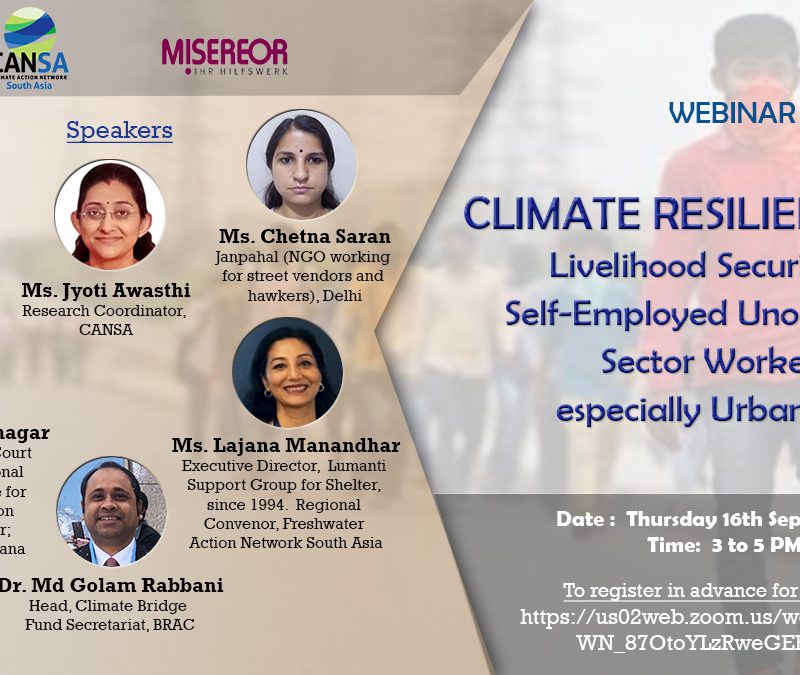
The webinar Climate Resilient Cities – Livelihood Security for self-employed unorganized sector workers, organised by CANSA on 16th September,is the third of four webinars touching upon….
By Divyanshi Yadav
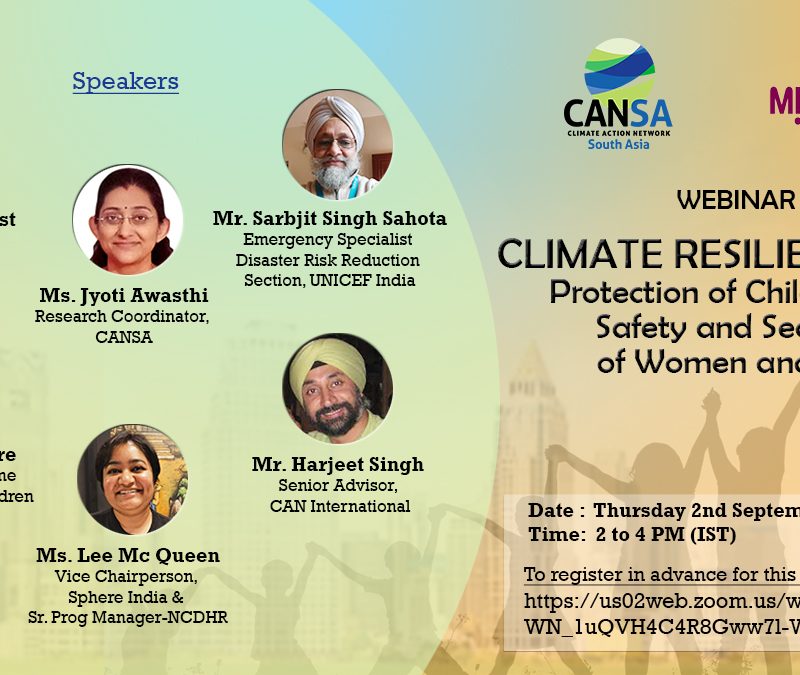
The webinar Climate Resilient Cities – Protection of Child Rights, Safety and Security of Women and Girls […]
By Divyanshi Yadav
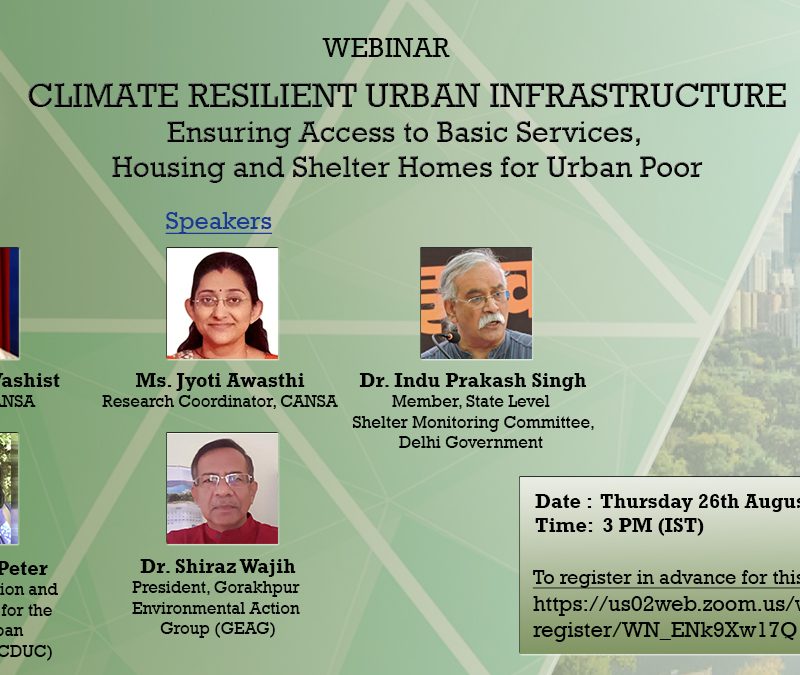
The webinar Climate Resilient Cities – Ensuring Access to basic services, housing and shelter Homes […]
By Senashia Ekanayake
The world we live in is fast depleting and dying in front of our eyes. 15-year olds take centre stage while 70+ year olds gamble their remaining

By Alokya Kanungo
No country be it developing or developed is spared from the brunt of disasters. During the month of May, Indian states including Odisha, Andra Pradesh, West Bengal
Report by Shailendra Yashwant
One of the most worrying insights from UNFCCC 23rd Conference of Parties (COP23) in November 2017 is that despite the efforts to date, the window to avoid large-scale climate change has closed.
Report by Shailendra Yashwant
One of the most worrying insights from UNFCCC 23rd Conference of Parties (COP23) in November 2017 is that despite the efforts to date, the window to avoid large-scale climate change has closed.
The historical social structures in India have left women and children, as the most vulnerable to some of the biggest risks facing the country today.
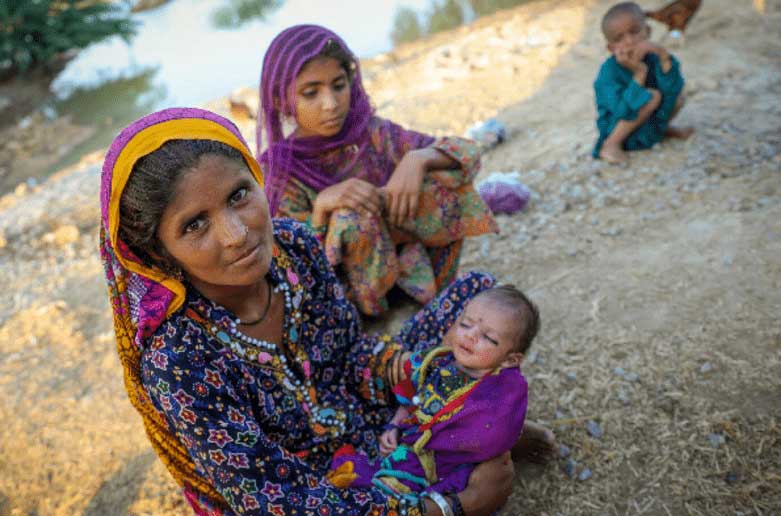
By Patricia Espinosa
Climate change is at its heart about people and how to shape a future for humanity that promotes well-being while ensuring that the natural and nature-based services upon which we all depend—including our precious atmosphere—continue to function and support sustainable development for all.

By Shailendra Yashwant
With global heat records reaching new highs, extreme weather events and other natural disasters becoming more deadly, everyone is equally vulnerable to climate change.