The South Asia region is one of the fastest growing regions of the world in terms of energy consumption. With No South Asian economy (India, Bangladesh and Pakistan) being a major energy producing nation, Their current and forecasted dependence on international markets and domestic coal ( especially for power generation) to meet their energy requirements […]
Download Here Bangladesh has a unique topography. Situated on the Bay of Bengal Bangladesh’s topography and geographical location make it particularly vulnerable to extreme weather events including floods, cyclones and sea level rise. Its vulnerability is caused not only by its biophysical factors , but also its socio-economic factors such as high dependence on agriculture, […]
It is widely established that unemployment, political dissatisfaction among youth, lack of quality education and better payment in wages abroad are major factors that drive migration in Nepal, however, climate change is insufficiently recognized as one of the push factors driving migration in South Asia although there is evidence that it is happening.
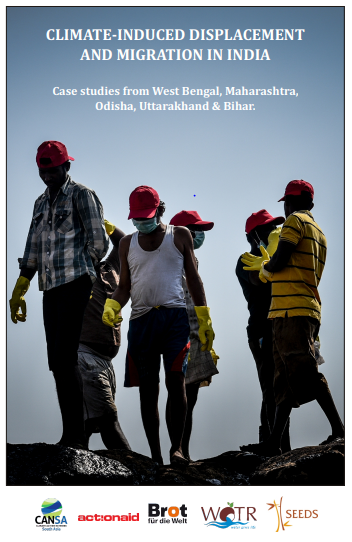
India is a large country, spread across several climatological and ecological zones, making its population particularly vulnerable to the worst impacts of climate change. 67% of India’s population of 1.3 billion people live in rural areas and depend on climate-sensitive sectors such as agriculture, fisheries, and forestry for their livelihoods.
RISE INFINITY FOUNDATION (RIF), Lewis Institute and Babson Innovation Lab,USA are organising The RISE World Summit 2021on 28, 29 January 2021 (RWS2021). The theme of the summit is “Beyond Boundaries, Search UNITY, Find OpportUNITY” which is based on the backdrop of the pandemic with the aim to search for interventions and innovations that will truly make this the Decade […]
The dominance of fossil-fuel needs to end to give way for renewable energy and other sustainable economic activities. It involves end of fossil fuel subsidies and phasing out coal while delivering access to energy in a socially just and equitable manner. In India, the change will have economic, social and employment impacts on communities dependent […]
CANSA urges all countries to submit ambitious climate action plans, as UN deadline for Paris Agreement submissions approaches 25 December 2020, Dhaka/New Delhi: Climate Action Network South Asia (CANSA), a coalition of about 300 non-governmental organisations and networks, made an urgent appeal today to all countries to submit ambitious climate action plans as per their […]
Download Here PDF Climate change has deepened the severity and frequency of climate related hazards, pushing people to migrate at any cost, and subjecting them to the matter of humanitarian crisis. Migration has been a historic important feature of all communities across South Asia, but when migration is forced and migrants are asset less, they […]
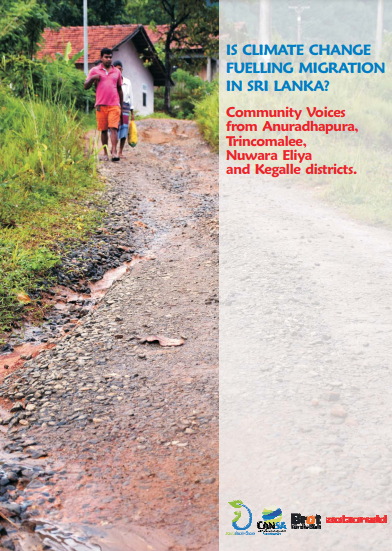
Climate change in Sri Lanka may lead to higher temperatures, storm surges and increased rainfall variability. These in turn impact agriculture and food security, water resources and human health. Extreme weather events and sea level rise lead to coastal erosion and loss of land, threatening livelihoods and forcing migration. “Is Climate Change Fueling Migration in Sri Lanka” report’s primary objective […]
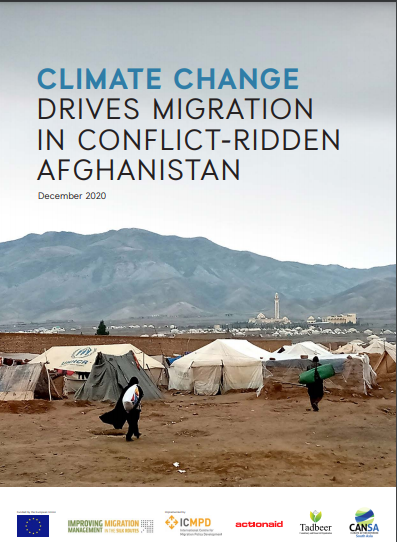
Download Here The climate change predictions for Afghanistan reveal an increase in temperature that will dramatically impact the country’s agricultural production, water availability, and food security. Increased temperature, earlier snowmelt, and lower precipitation lead to large population movements, including out-migration and significant internal displacement. Climate-induced migration usually does not get the attention it deserves in […]