


Dear Friends and Colleagues,
As we move from COP30 towards COP31, the past quarter has reinforced a simple truth: meaningful climate action must be rooted in justice, equity, and regional solidarity.
From the SAARC Civil Society Dialogue in Kathmandu to the SB64 climate negotiations in Bonn, CAN South Asia has continued to amplify the voices and priorities of our region. Our advocacy has remained focused on securing adequate and accessible climate finance, advancing a just transition, strengthening adaptation, and ensuring that the needs of vulnerable communities remain central to global climate action.
This newsletter also acknowledges the inspiring work of our members across South Asia. From locally led adaptation and climate resilience to protecting workers from extreme heat, empowering women and youth, and promoting sustainable livelihoods, these initiatives demonstrate that lasting climate solutions are built in and with communities.
We are equally encouraged by the growing engagement of young climate leaders through Youth4COP and by expanding our digital outreach, including the launch of CANSA’s Instagram platform, helping us connect with new audiences and share stories of resilience and hope across the region.
The climate crisis knows no borders, and neither should our response. As we look ahead to COP31, CAN South Asia remains committed to working with our members, partners, and allies to advocate for ambitious, equitable, and people-centred climate action.
Thank you to all our members, partners, supporters, and friends for your continued dedication and collaboration. Your work inspires hope and strengthens our collective voice.
As you scroll these pages, I invite you to explore the many ways our members and partners are advancing climate action across South Asia—from influencing international negotiations to empowering communities on the ground. Together, these stories remind us that meaningful climate action is built through solidarity, persistence, and collective effort.
In solidarity,
Dr. Sanjay Vashist
Director, Climate Action Network South Asia
SB64 BONN
SB64 Bonn: Setting the Stage for COP31
As the world moves from COP30 towards COP31 in Antalya, the SB64 climate talks in Bonn provided a critical opportunity to advance negotiations on Just Transition, adaptation, and climate finance. For South Asia and other climate-vulnerable regions, these discussions will shape whether global climate action becomes more equitable, inclusive, and responsive to the realities on the ground. CAN South Asia organised pre- and post-SB64 webinars (details given later in this newsletter), and closely followed the negotiations to track key developments and their implications for the region. See our page on the website here.
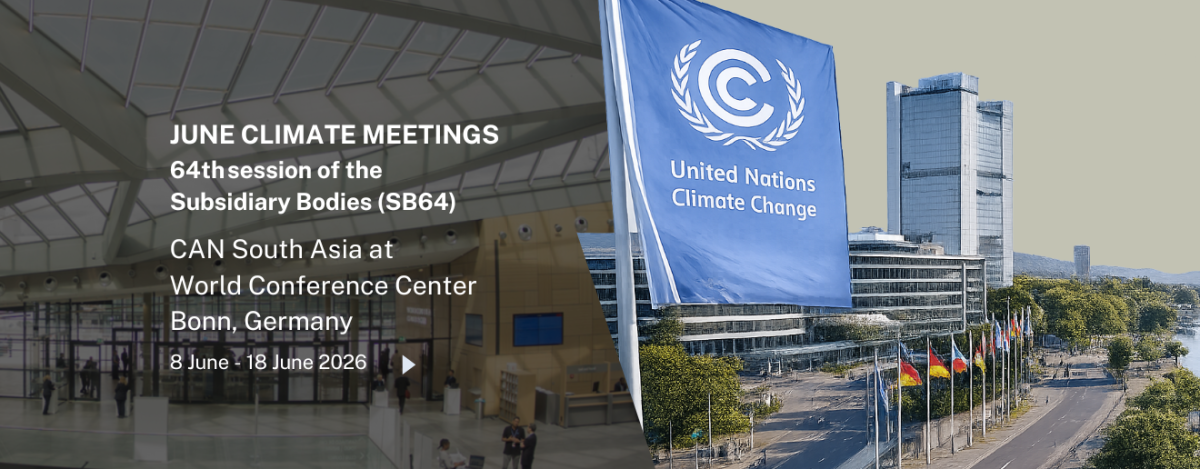
HIGHLIGHTS FROM SB64
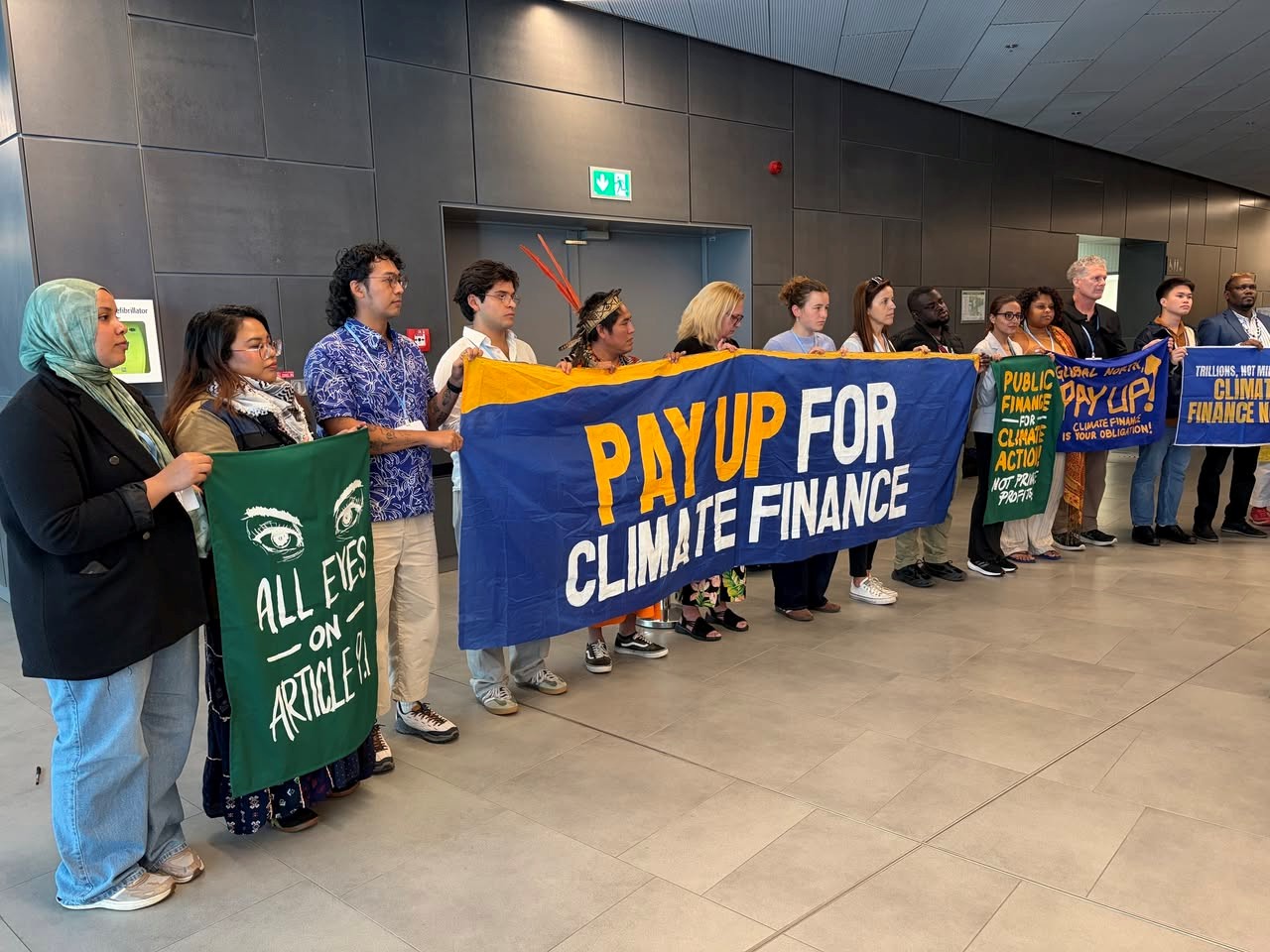
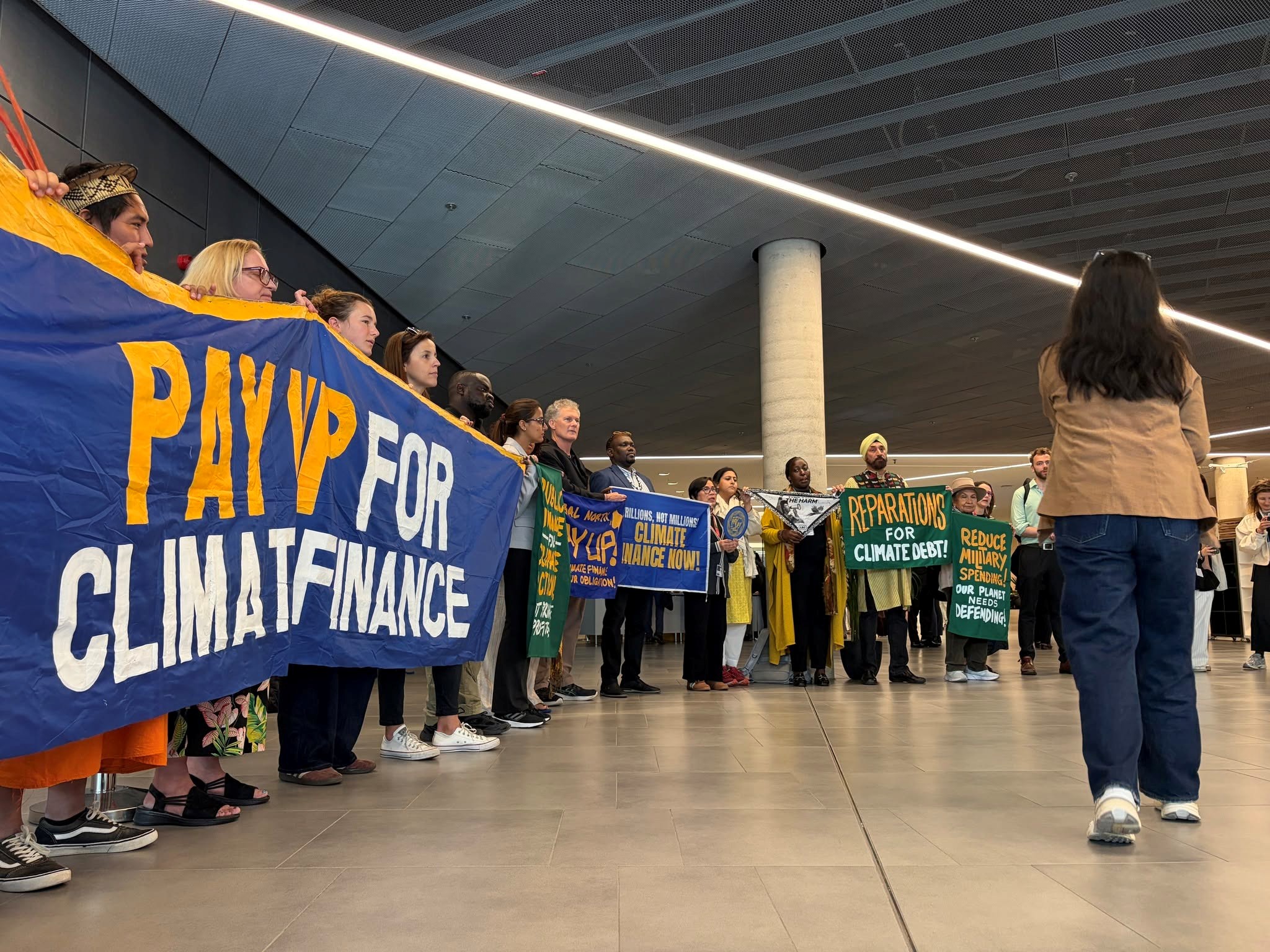
Pay Up for Climate Justice
The meeting of the Nepal chapter of Climate Action Network South Asia (CANSA) focused on advancing key national and regional climate priorities. Members agreed to develop the third iteration of the Citizen Assessment Report and a dedicated Just Transition paper, both of which will contribute to shaping the South Asian narrative and advocacy on the road to COP31 and beyond.
Shifting Finance Towards Agroecology
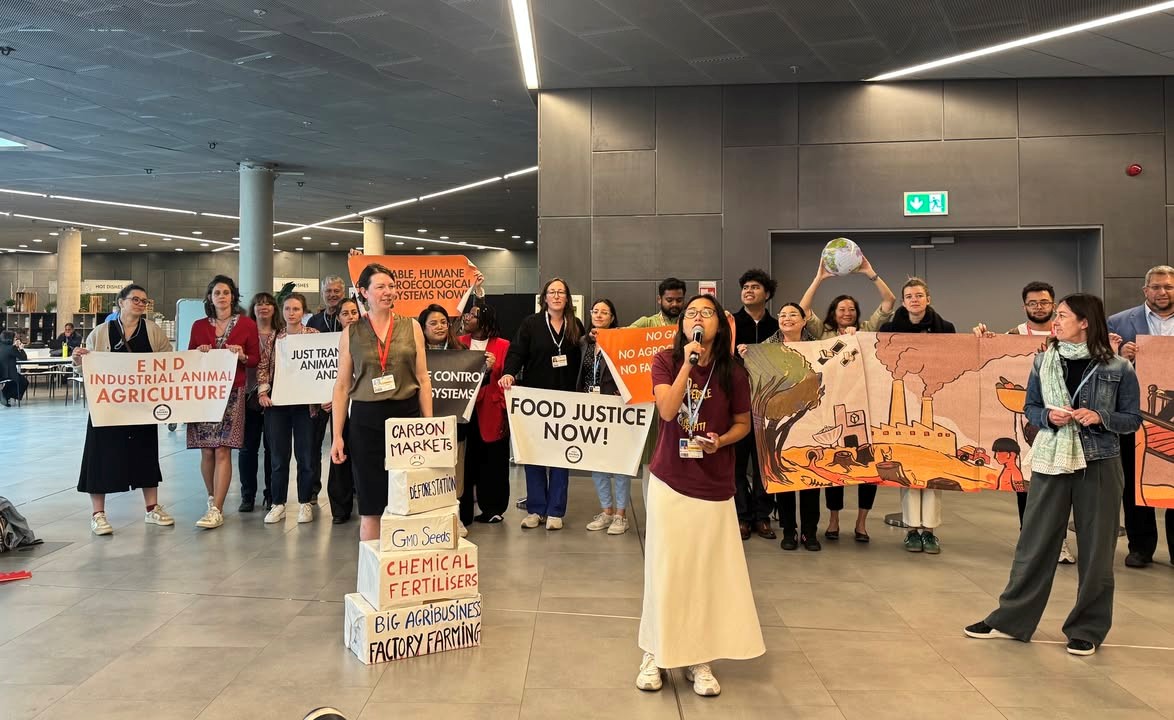
A key conversation at SB64 centred on transforming agricultural finance. Current funding mechanisms often fail to reach smallholder farmers, fisherfolk, and pastoralists despite their vital role in resilient food systems. Growing momentum is building around directing public investment towards agroecology, agroforestry, and community-led approaches that strengthen livelihoods while promoting sustainable food systems. A just transition in agriculture must benefit both people and the planet.
Just Transition: Built with People
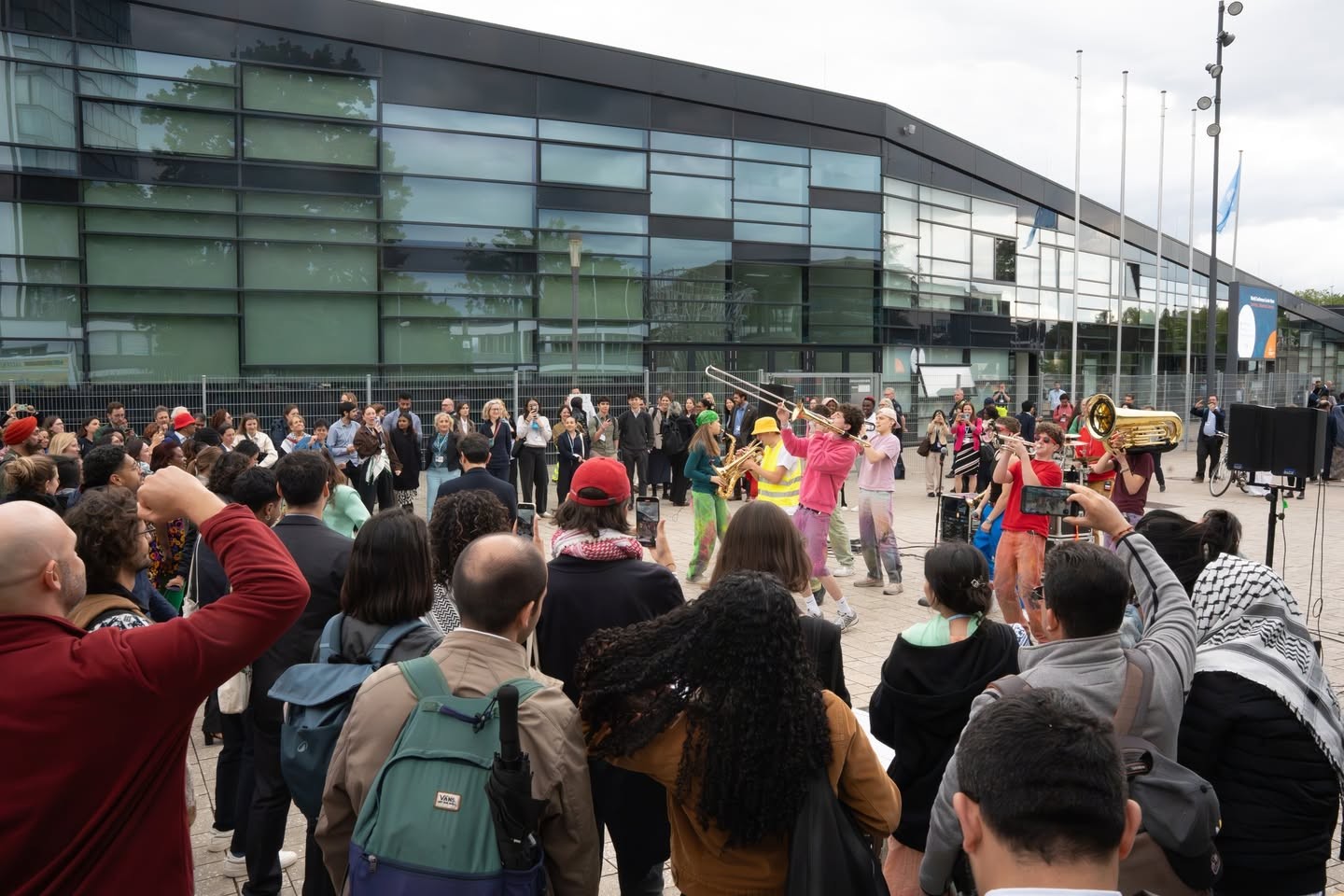
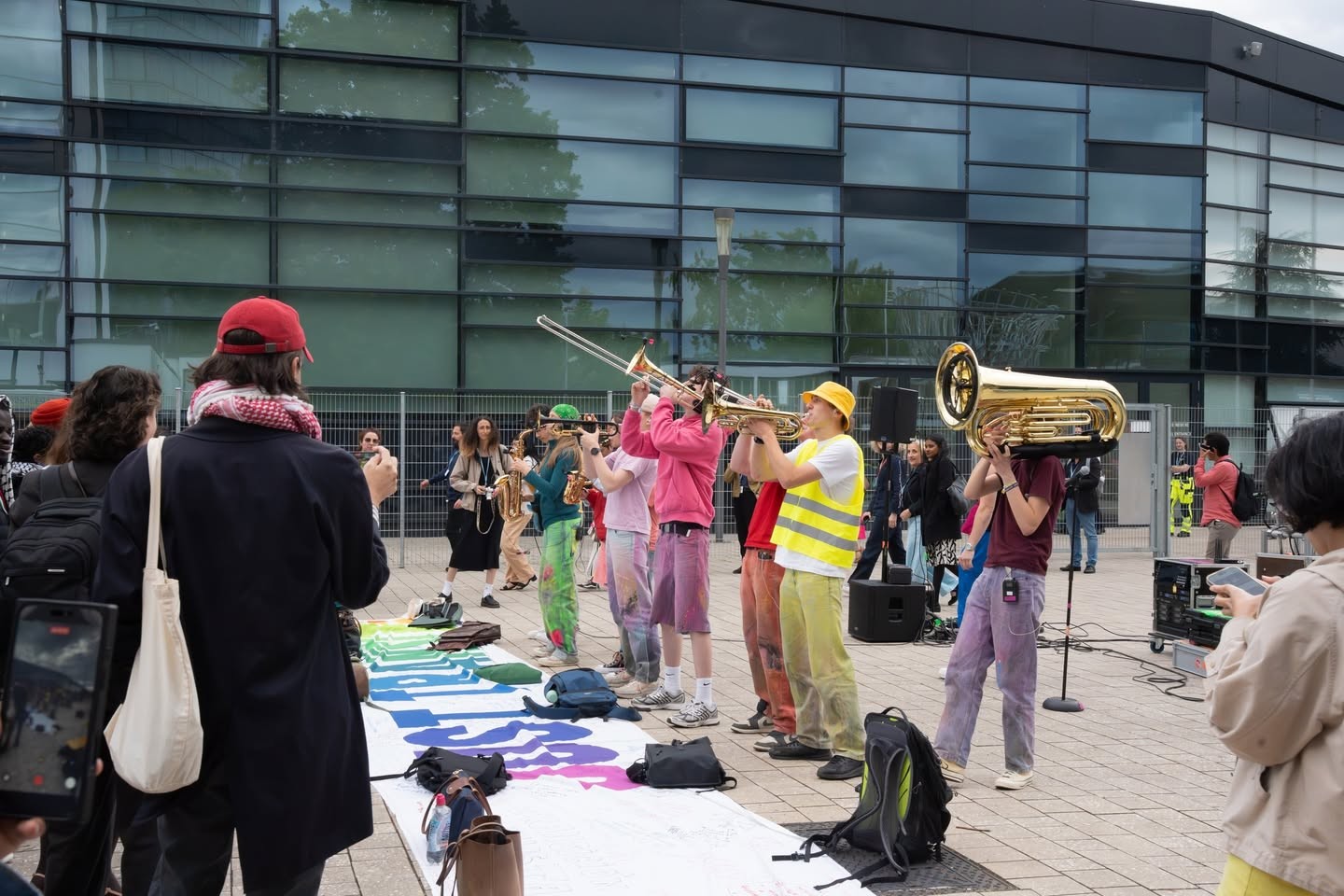
The Just Transition Rising Picket-Nic at SB64 brought together workers, Indigenous Peoples, youth, communities, and civil society in a vibrant demonstration of solidarity. Through music, dialogue, and collective action, participants reaffirmed that a just transition is about people—not just policies. The call was clear: climate action must create decent jobs, strengthen public services, protect communities, and ensure that no one is left behind.
SIDE EVENTS
Investments and Market Transformation for Higher Climate Ambition
and Just Transitions in South Asia
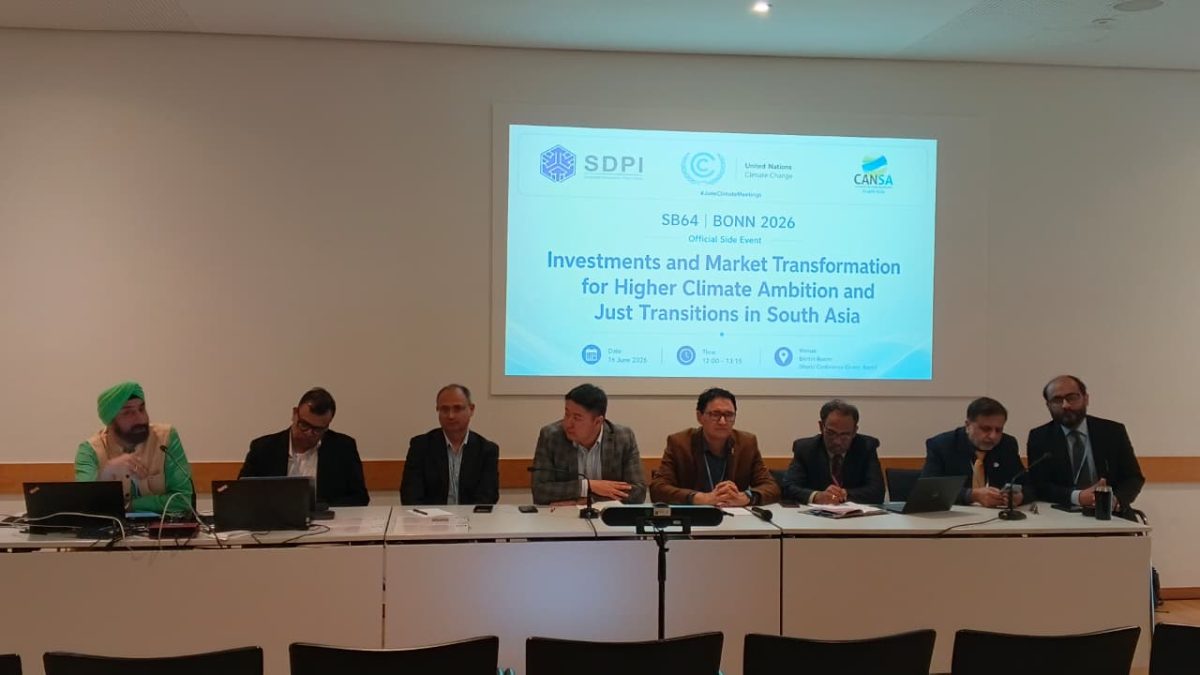
This side event, jointly organised by SDPI and Climate Action Network South Asia during SB64 in Bonn on 16 June 2026, explored how strategic investments and market transformation can accelerate climate ambition while supporting a just transition across South Asia. Discussions focused on mobilising finance, enabling supportive policy frameworks, and fostering inclusive, low-carbon development pathways that leave no one behind. The event highlighted the importance of aligning economic transformation with climate goals to build resilient, equitable, and sustainable societies.
Climate Diplomacy for Inclusive Climate Action
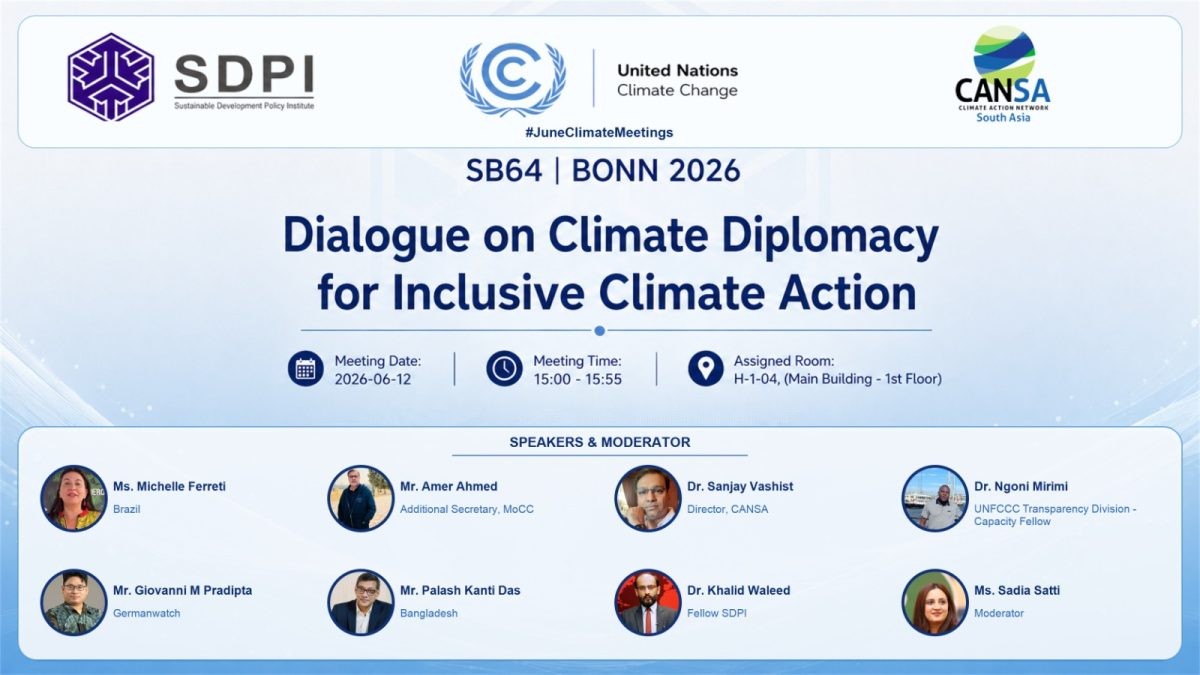
Held on 12 June during SB64, this side event brought together experts and practitioners to explore how climate diplomacy can support more equitable and inclusive climate action. Discussions highlighted the importance of collaboration and the meaningful participation of vulnerable communities in shaping effective climate solutions. Read more.
SAARC CIVIL SOCIETY DIALOGUE
Advancing Climate Justice and Resilient Communities in South Asia
26 May 2026 | Kathmandu, Nepal
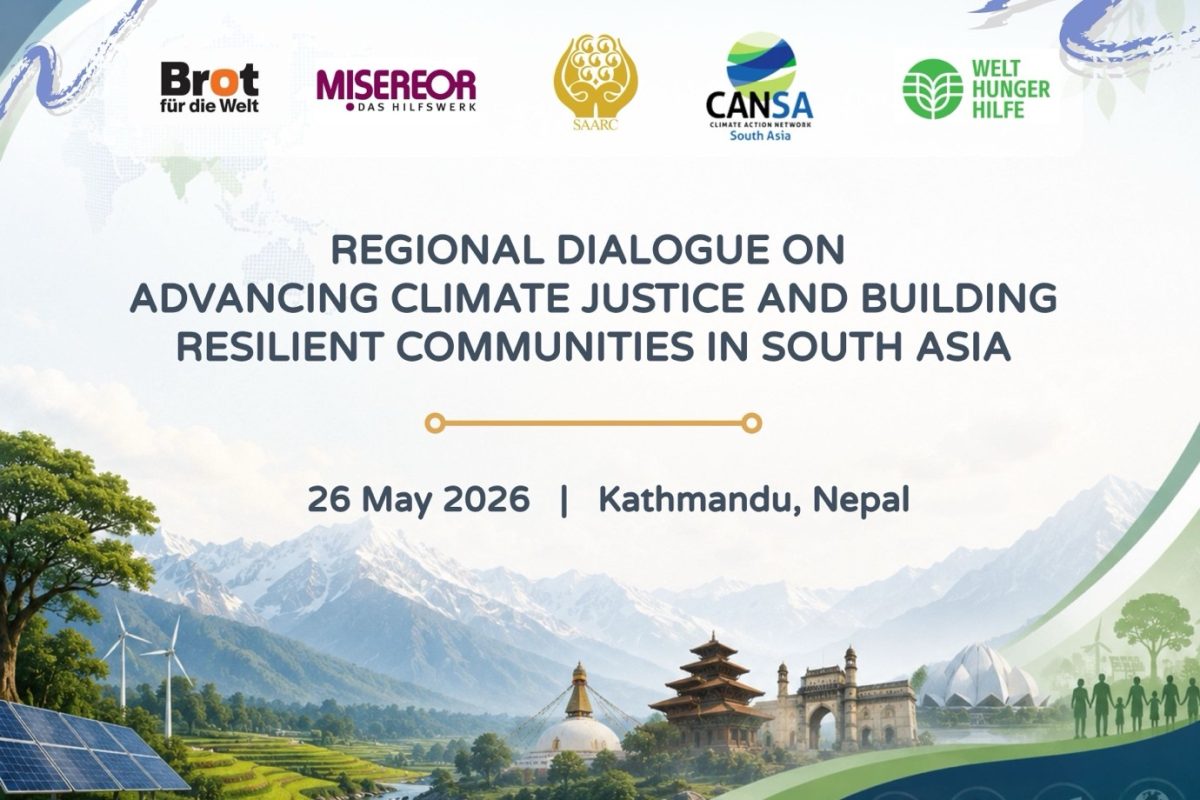
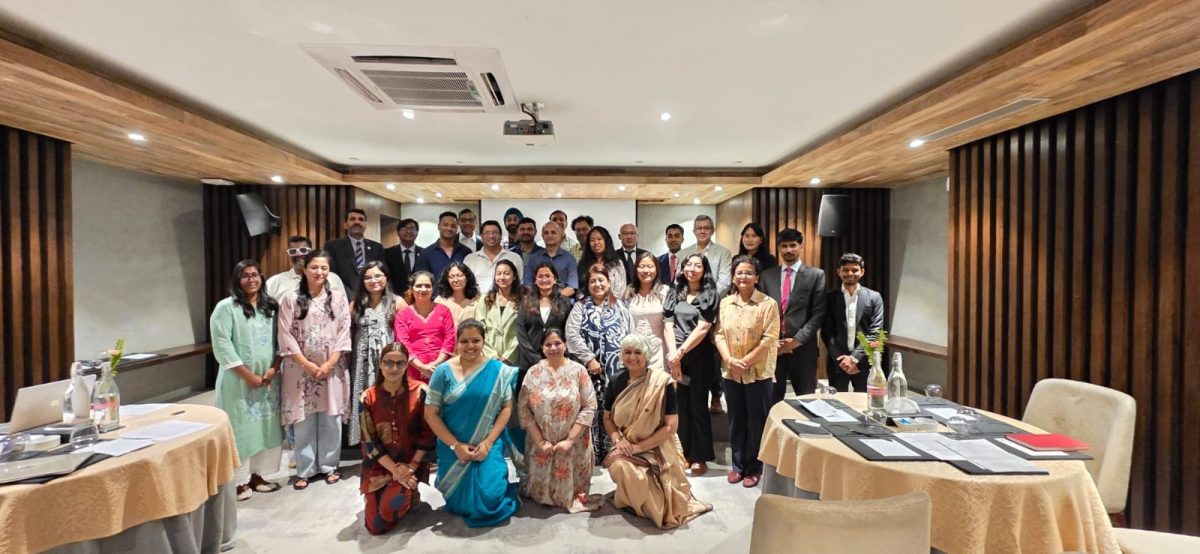
Civil society leaders from across South Asia came together in Kathmandu to exchange experiences, strengthen regional collaboration, and advance a shared agenda for climate justice and resilient communities. The dialogue underscored the importance of cross-border cooperation in addressing the region’s common climate challenges.
CANSA INDIA NSC
CANSA India Meeting on NDC 3.0 and Climate Policy
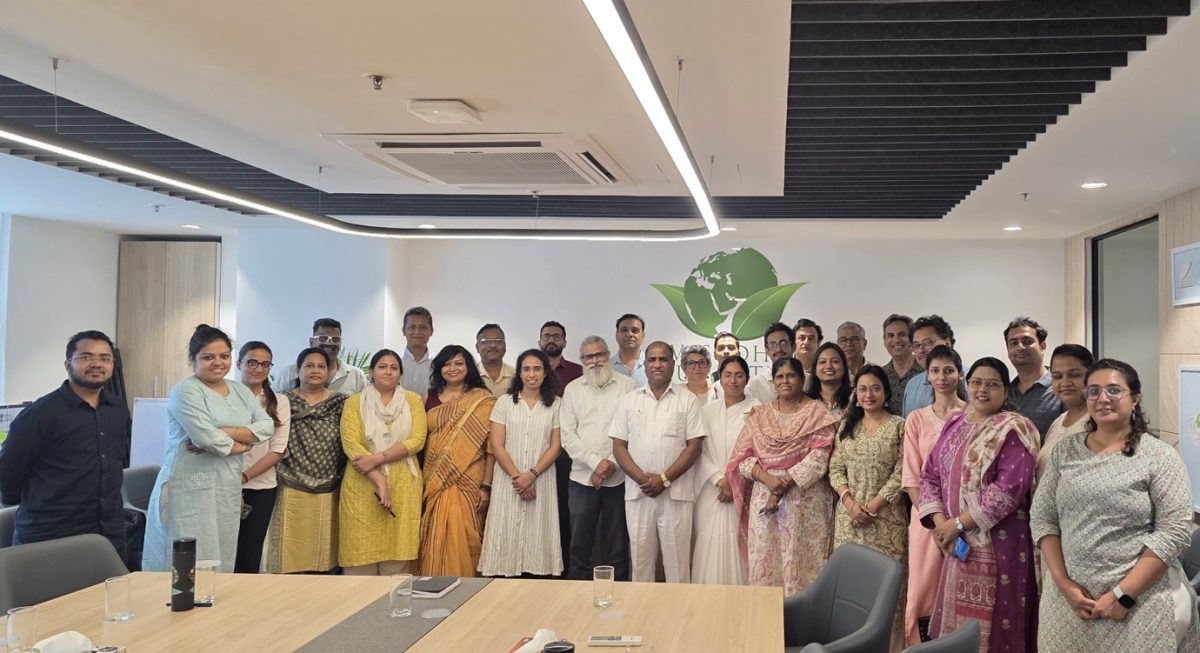
On 23 April 2026, CANSA convened civil society organisations and climate experts to discuss India’s NDC 3.0 and emerging climate policy priorities. The meeting explored adaptation, mitigation, climate finance, just transition, and global climate developments, including SB64, BRICS, and India’s withdrawal from hosting the COP presidency, culminating in a set of policy recommendations.
YOUTH4COP Edition 3
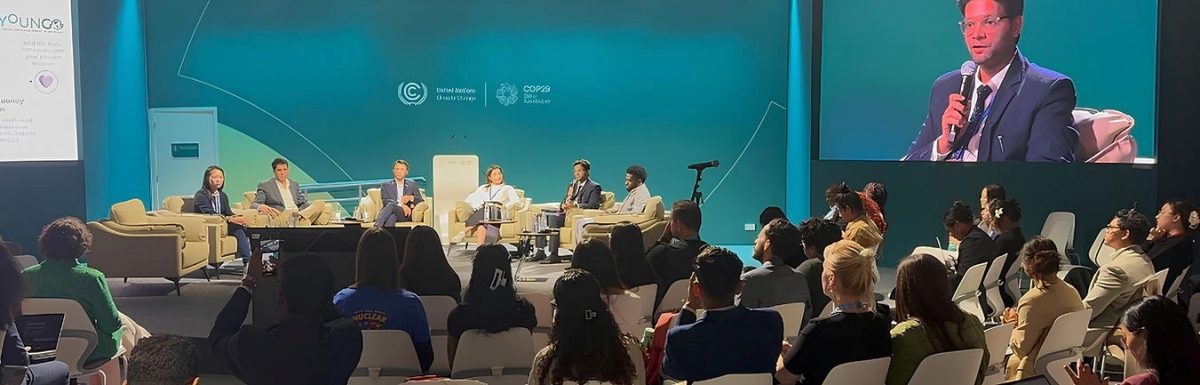
Youth for COP returned for its third edition, offering students, researchers, and young professionals an opportunity to deepen their understanding of international climate negotiations ahead of COP31. Led by climate experts and supported by a growing network of more than 80 mentors, the programme equips emerging climate leaders with the knowledge, skills, and networks needed to engage meaningfully in global climate processes. Stay tuned for more updates here.
WE’RE NOW ON INSTAGRAM!
CAN South Asia is now on Instagram!
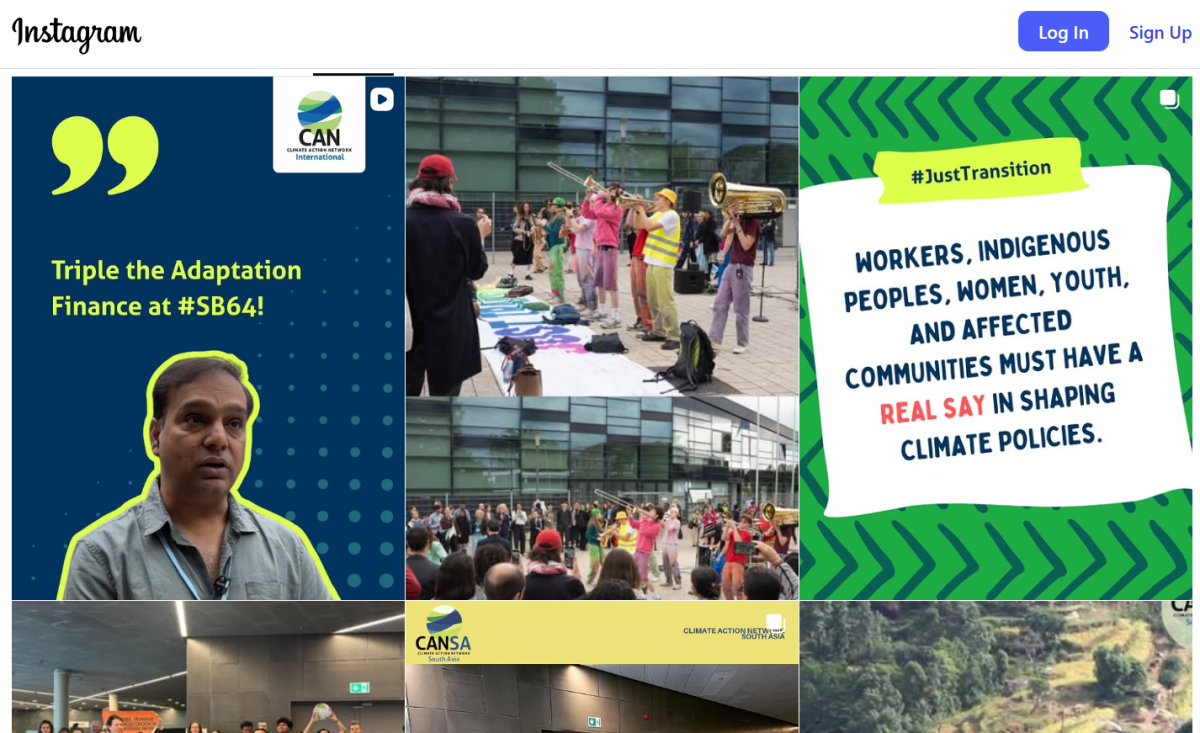
Follow us for stories, updates, and perspectives from across the region as we spotlight climate action, amplify community voices, and share insights from our members and partners.
Follow us: @can.southasia
International Court of Justice Advisory Opinion (ICJAO)–UNGA Campaign on Social Media
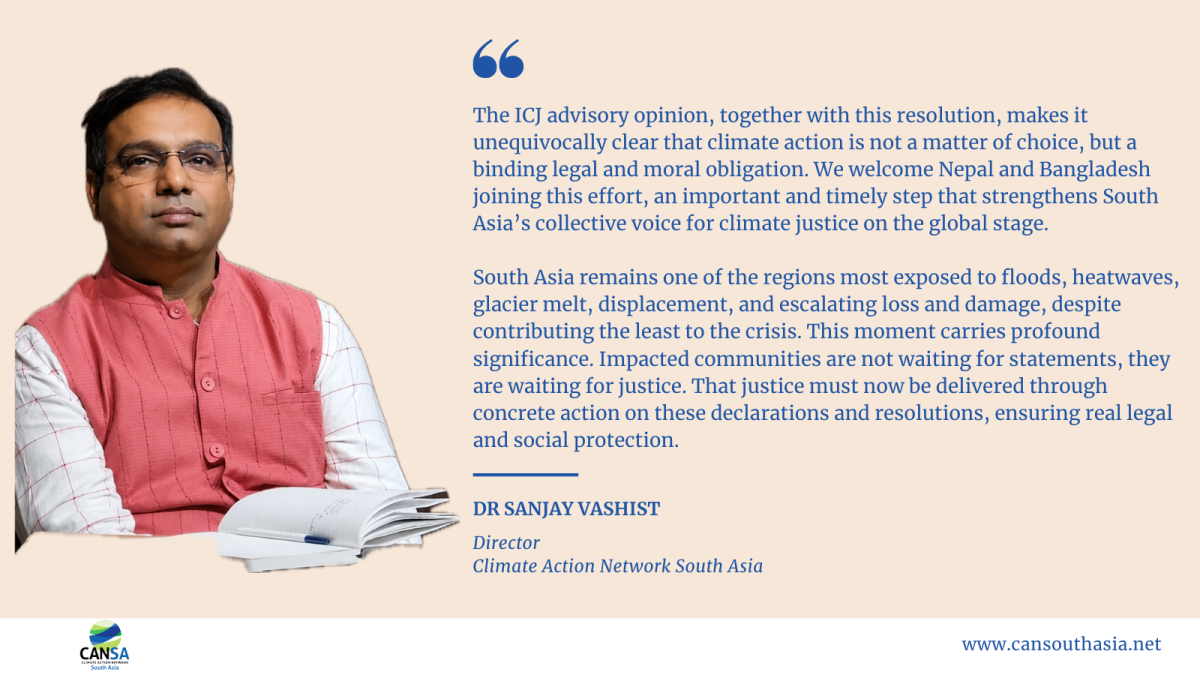
Amplifying South Asia’s Voice for Climate Justice
Ahead of the 20 May UN General Assembly vote on the International Court of Justice’s Advisory Opinion, CAN South Asia launched a coordinated social media campaign highlighting climate justice and community experiences from across the region.
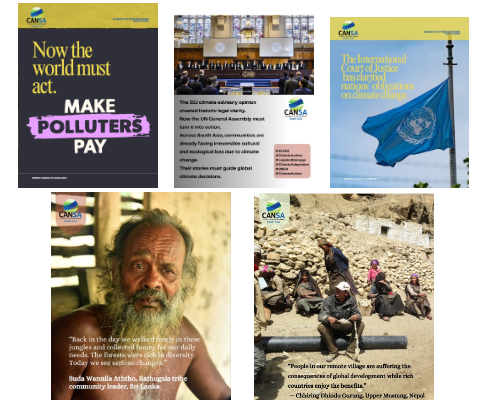
Through compelling visual storytelling, the campaign drew attention to non-economic loss and damage, cultural heritage, and the lived realities of climate-affected communities. The UNGA outcome marked an important step towards greater climate accountability, reinforcing that climate action is both a legal and moral responsibility.
EVENTS | WEBINARS | PUBLICATIONS
Expectations from SB64, Bonn
28 May 2026
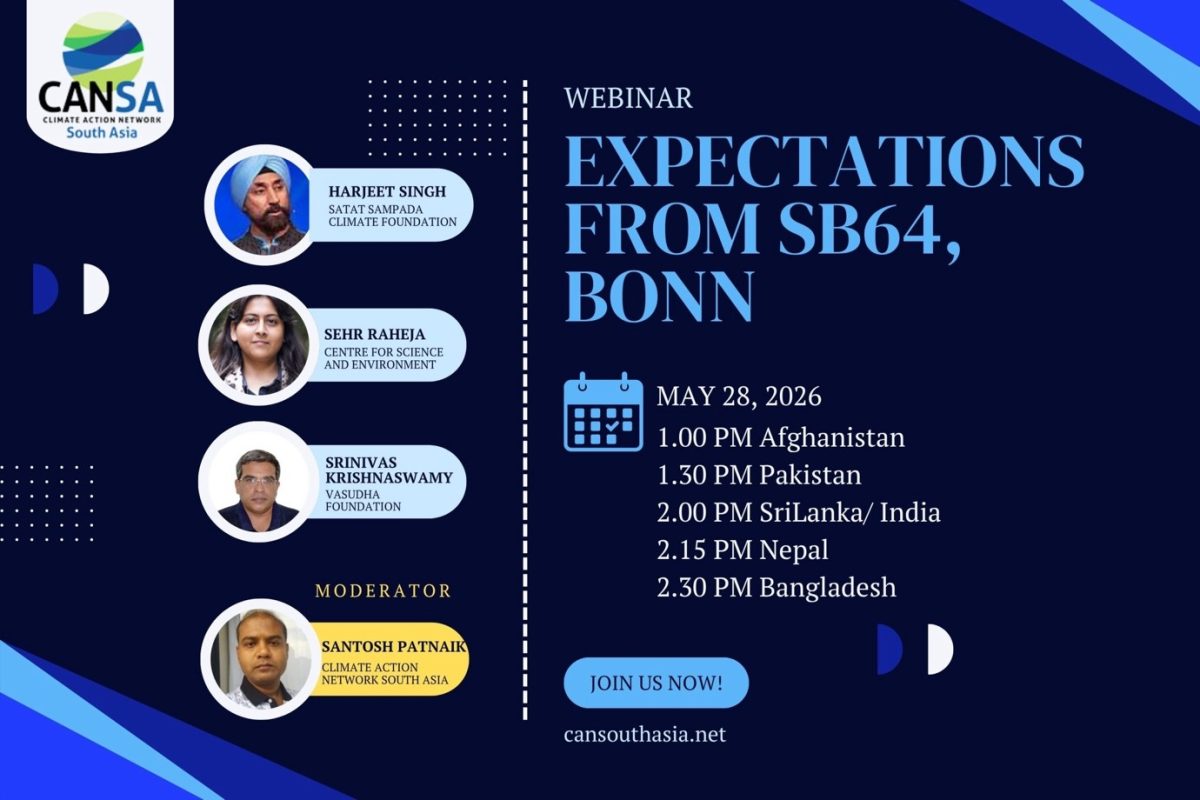
Ahead of the SB64 negotiations, CAN South Asia convened leading climate experts to unpack the key issues expected to shape the Bonn discussions. The webinar explored developments around the Global Goal on Adaptation, the Just Transition Work Programme, climate finance, and other critical agenda items, while examining what these negotiations mean for South Asia and the road to COP31. Read more.
Beyond Energy Security: Seizing
Renewable Opportunities
26 May 2026
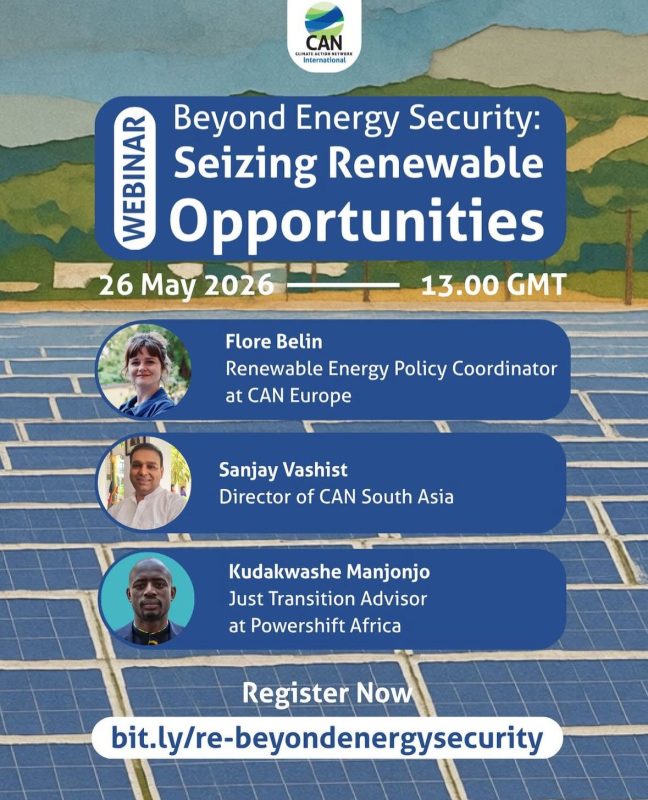
Renewable energy is about far more than reducing emissions—it is central to building resilience, strengthening economies, and advancing energy sovereignty.
In this webinar, Flore Belin, Renewable Energy Policy Coordinator at CAN Europe, Dr. Sanjay Vashist, Director CAMSA, and Kudakwashe Manjonjo, Just Transition Advisor at PowerShift Africa, explored how the clean energy transition can drive green industrialisation, empower communities, and create more equitable development pathways. The discussion reinforced that the transition to renewables is not only an energy imperative, but a transformative opportunity for sustainable development. Read more.
Climate Change Adaptation vs.
Climate Resilience
20 April 2026
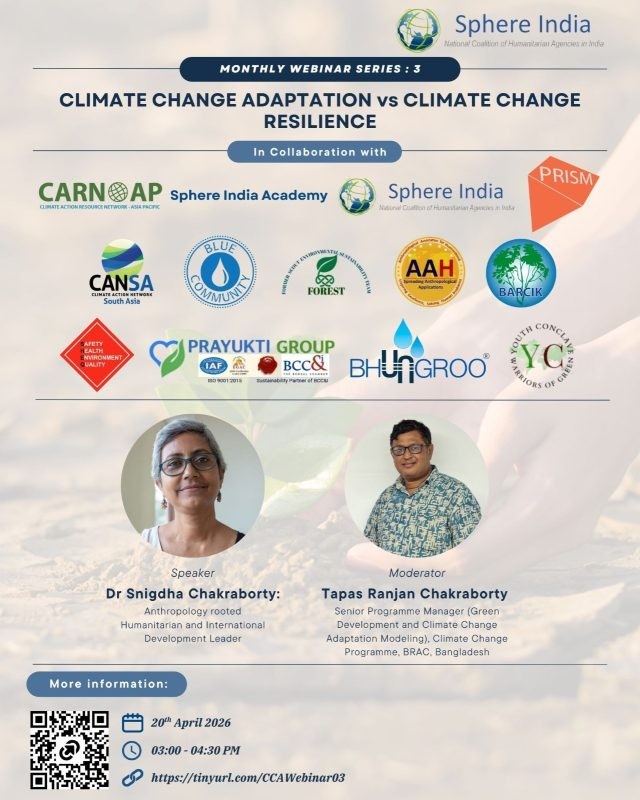
Climate adaptation and climate resilience are often used interchangeably, yet they represent distinct approaches to responding to climate change.
This webinar brought together experts from across the Asia-Pacific to explore the differences, identify policy gaps, and share practical experiences in designing long-term climate solutions. Organised with a broad coalition of regional partners, the discussion highlighted the importance of bridging adaptation and resilience to strengthen communities facing growing climate risks. Read more.
Post-SB64, Bonn, Debrief Webinar
29 June 2026
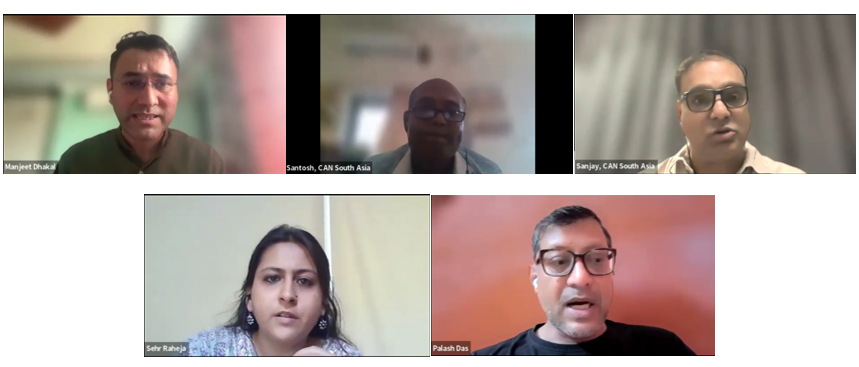
The post-SB64 debrief brought together climate experts to reflect on the key outcomes of the Bonn negotiations, unpack their implications for South Asia, and discuss priorities on climate finance, adaptation, and just transition as momentum builds towards COP31. The recording can be accessed here.
NEW REPORT
Broken Flows, Rising Losses:
The Unfinished Agenda of Climate Finance Justice in South Asia and Myanmar — From Belém to Antalya
As the world transitions from COP30 to COP31, this new CAN South Asia report examines the widening gap between climate finance commitments and the realities faced by vulnerable communities across South Asia and Myanmar.
The report highlights persistent challenges in delivering accessible, adequate, and equitable climate finance, while calling for stronger accountability and a renewed commitment to climate justice.
CANSA IN THE NEWS
Making Services Move With Migrants Facing Climate Risks
india.mongabay.com | May 01, 2026
India Pulls Out of Bid to Host Climate Conference; Disappointed Experts Say Global Conflicts May Have Driven Decision
www.dailyhunt.in | April 09, 2026
India has “withdrawn” its candidature to host COP33 in 2028, an offer made by PM Modi on the sidelines of COP28 in Dubai
www.downtoearth.org.in | April 09,2026
India withdraws bid to host COP33 in 2028
www.msn.com | April 08, 2026
India Pulls Out of Bid to Host Climate Conference; Disappointed Experts Say Global Conflicts May Have Driven Decision
www.thewire.in | April 08, 2026
PRESS RELEASE
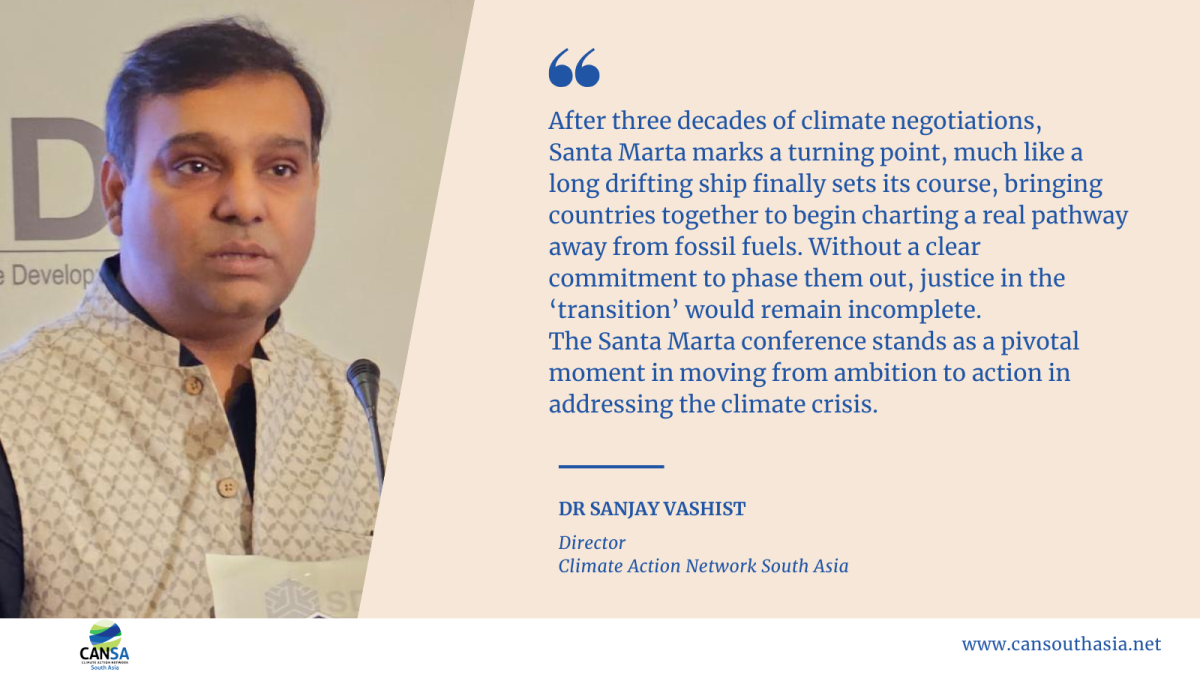
Civil Society Calls for a Fossil-Free Future
Ahead of COP31, civil society organisations reaffirmed their commitment to holding governments accountable for delivering a just and equitable transition away from fossil fuels.
The statement calls for accelerated action, stronger climate ambition, and policies that place people, equity, and climate justice at the centre of decision-making. Read more.
MEMBERS IN ACTION
Across South Asia, CANSA members continue to champion locally led climate action, strengthen community resilience, and advance climate justice. Here are some of the inspiring initiatives from across our network this quarter.
PRACTICAL ACTION NEPAL
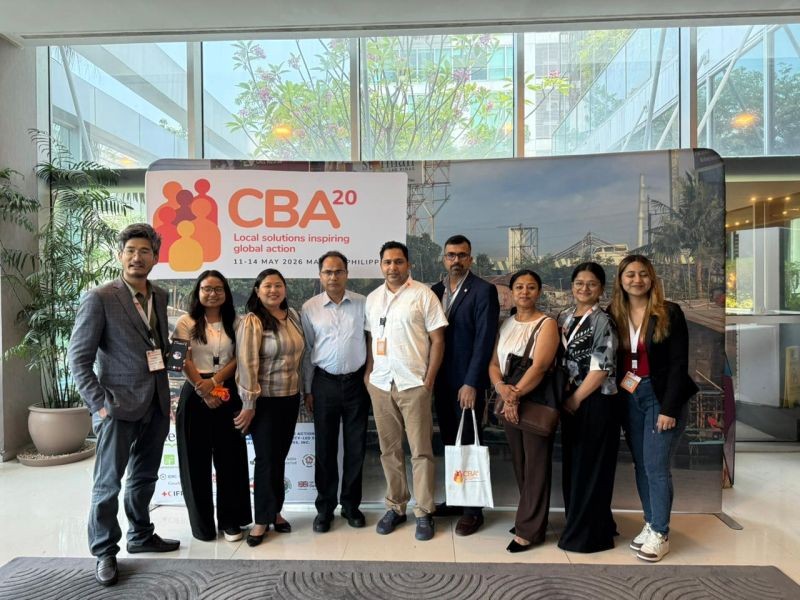
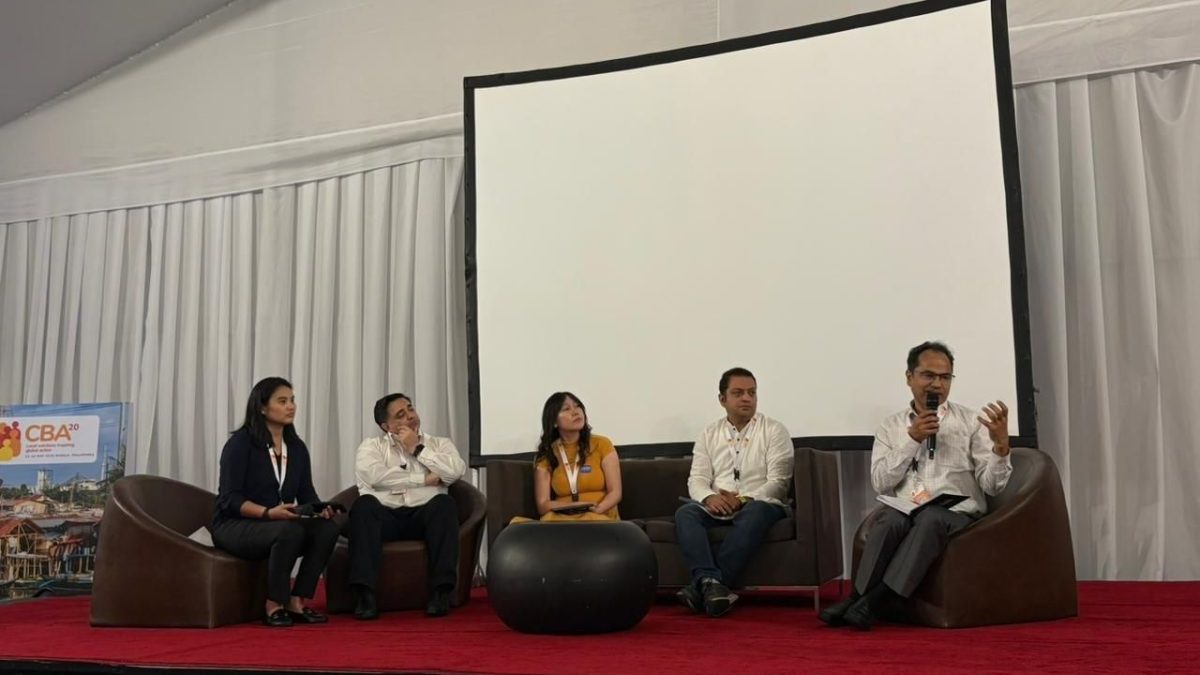
Local Action Takes Centre Stage at CBA20
At CBA20, Practical Action Nepal highlighted the growing importance of locally led adaptation in building climate resilience. Speaking on strengthening community resilience, Dharam Raj Uprety shared Nepal’s experience in advancing heat-risk governance through early warning systems, heat thresholds, and community standard operating procedures.
The discussion emphasised a critical challenge: moving beyond short-term projects to embed anticipatory climate action within long-term public policy and financing systems. Read more.
LABOUR EDUCATION FOUNDATION (PAKISTAN)
Climate Justice Means Protecting Workers
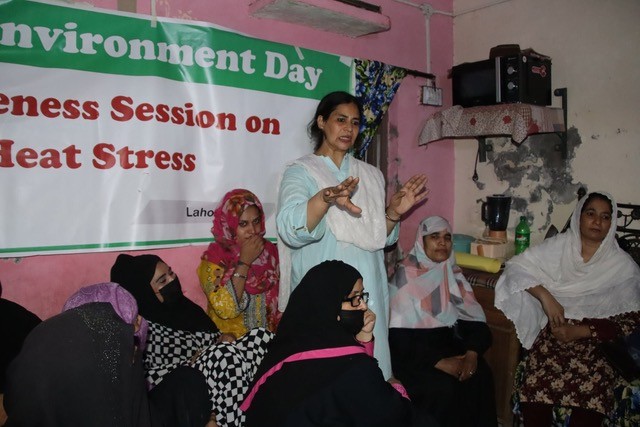
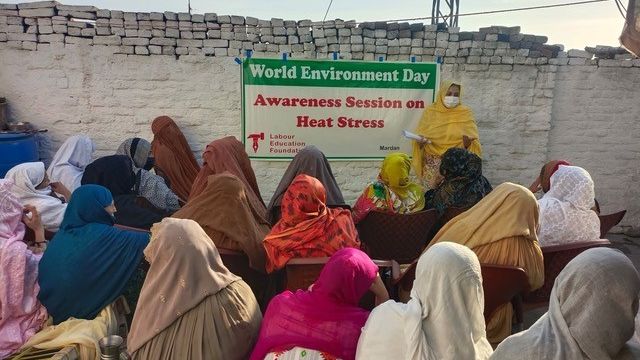
To mark World Environment Day 2026, the Labour Education Foundation (LEF) highlighted the escalating impact of extreme heat on Pakistan’s workforce.
Through awareness sessions with home-based workers, garment workers, and brick kiln workers, LEF drew attention to the growing occupational risks posed by rising temperatures. The campaign called for safer workplaces, access to drinking water, adequate rest breaks, and climate-responsive labour policies, reinforcing that climate justice must include workers’ rights.
MERCY CORPS NEPAL
Heat Action Day 2026: Addressing Indoor Heat
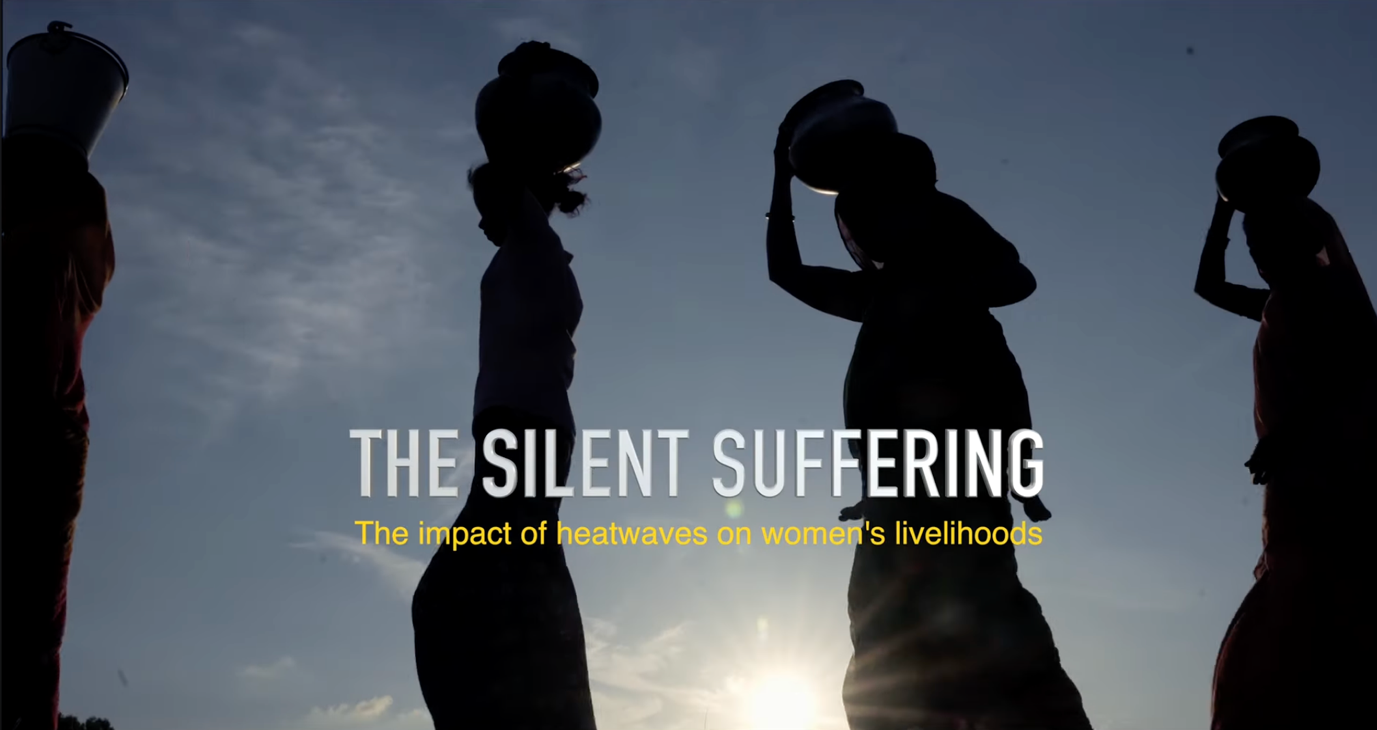
To mark Heat Action Day 2026, Mercy Corps Nepal, through the Zurich Climate Resilience Alliance, convened experts, practitioners, and community representatives to examine the often-overlooked risks of indoor heat.
The webinar highlighted practical solutions for protecting people in homes, schools, workplaces, and care facilities while strengthening preparedness for increasingly frequent heat extremes. See the video here.
WOMEN AND YOUTH LEADERSHIP AND EMPOWERMENT ORGANISATION (AFGHANISTAN)
Sahar’s Story: A Well of Hope
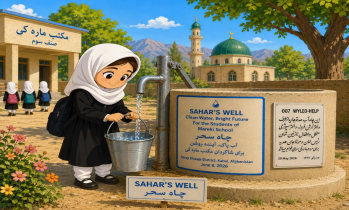
Sometimes climate resilience begins with a simple act of compassion. When Dr. Homaira met Sahar, a young student walking home thirsty from school, she learned there was no access to safe drinking water nearby. With support from her family, a new water well was built beside the school & local mosque, providing clean drinking water to hundreds of children & community members. Sahar’s story is a powerful reminder that small actions can create lasting change.
THE LIAISON OFFICE (TLO) & CECOP
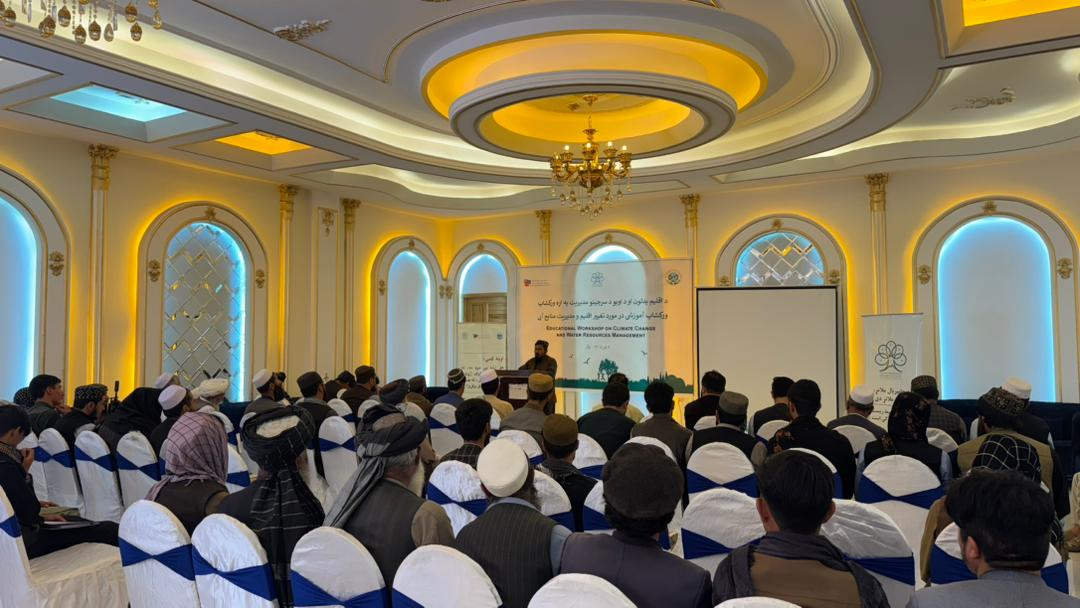
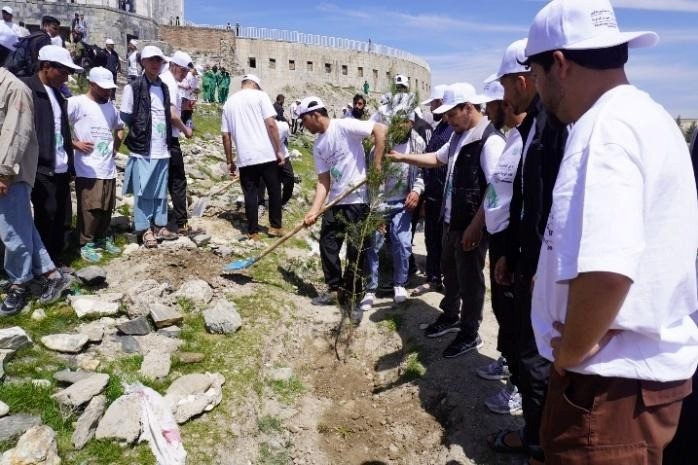
Communities Leading Climate Resilience
Across Kabul, Logar, Paktika, and Badakhshan provinces, TLO and CECOP engaged more than 500 participants through climate awareness and environmental education programmes.
The initiatives covered sustainable water management, climate adaptation, groundwater protection, rainwater harvesting, waste management, and community tree planting. Together, these activities strengthened local knowledge while encouraging practical action to build climate resilience.
Click here for details of the Logar program, and the Paktika program.
DACAAR (AFGHANISTAN)
Building Climate Champions
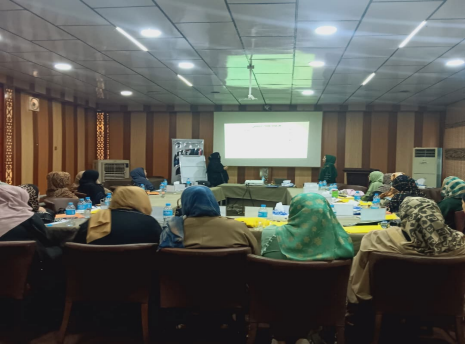
DACAAR continues to strengthen climate resilience by investing in the people working closest to communities.
In April, 23 female staff from headquarters and field offices received training on climate change, environmental protection, natural resource management, and community-based adaptation. The organisation also contributed to Afghanistan’s National Waste Management Conference, reinforcing its commitment to environmental stewardship and community resilience.
PEEDA (NEPAL)
Localising Climate Action
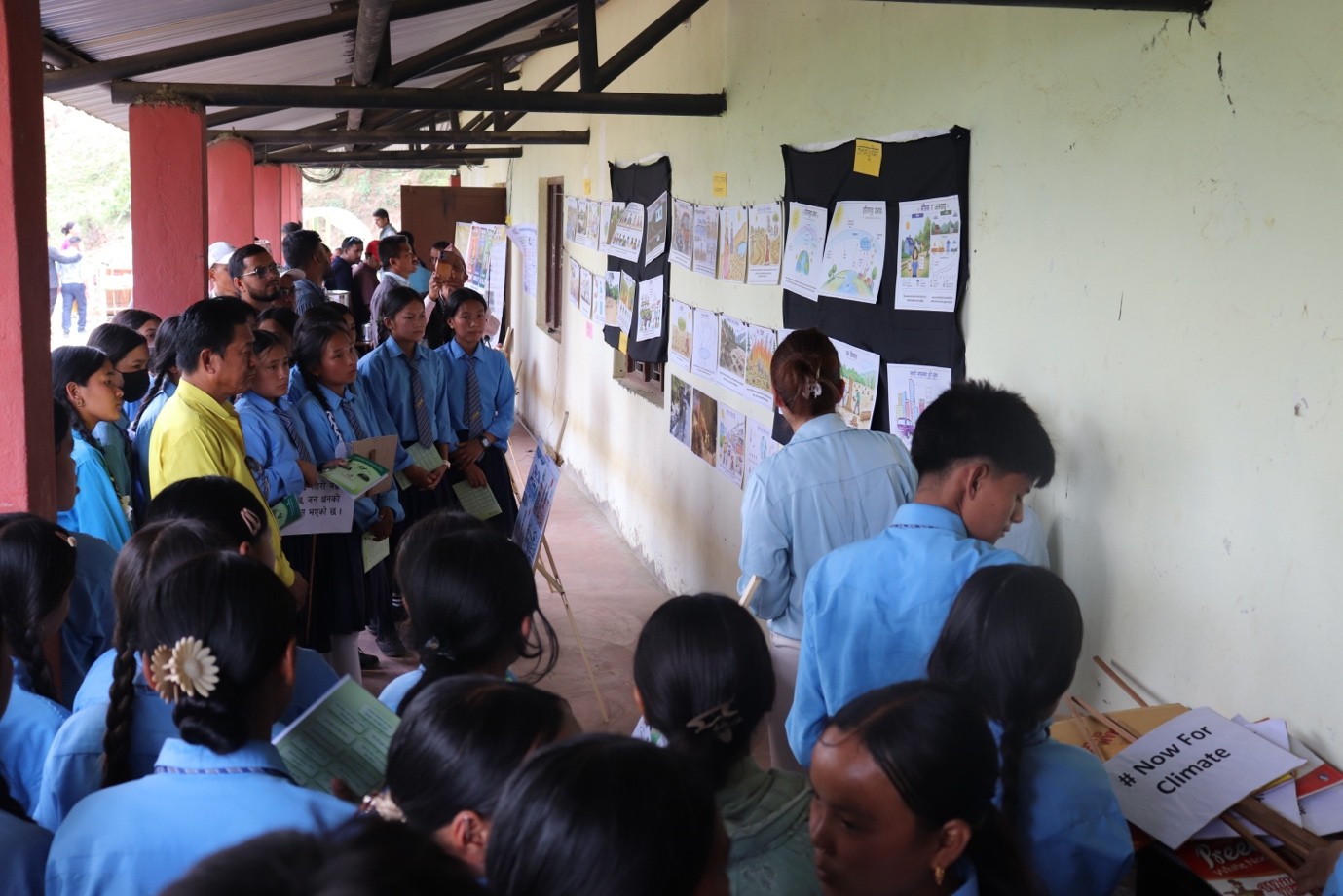
To mark World Environment Day, PEEDA partnered with Sarumarani Rural Municipality to organise a community-led climate action programme in Pyuthan.
The event brought together local government, schools, civil society, and citizens through awareness activities, exhibitions, clean energy demonstrations, and discussions on climate-smart agriculture, showcasing how local partnerships can build climate-resilient communities.
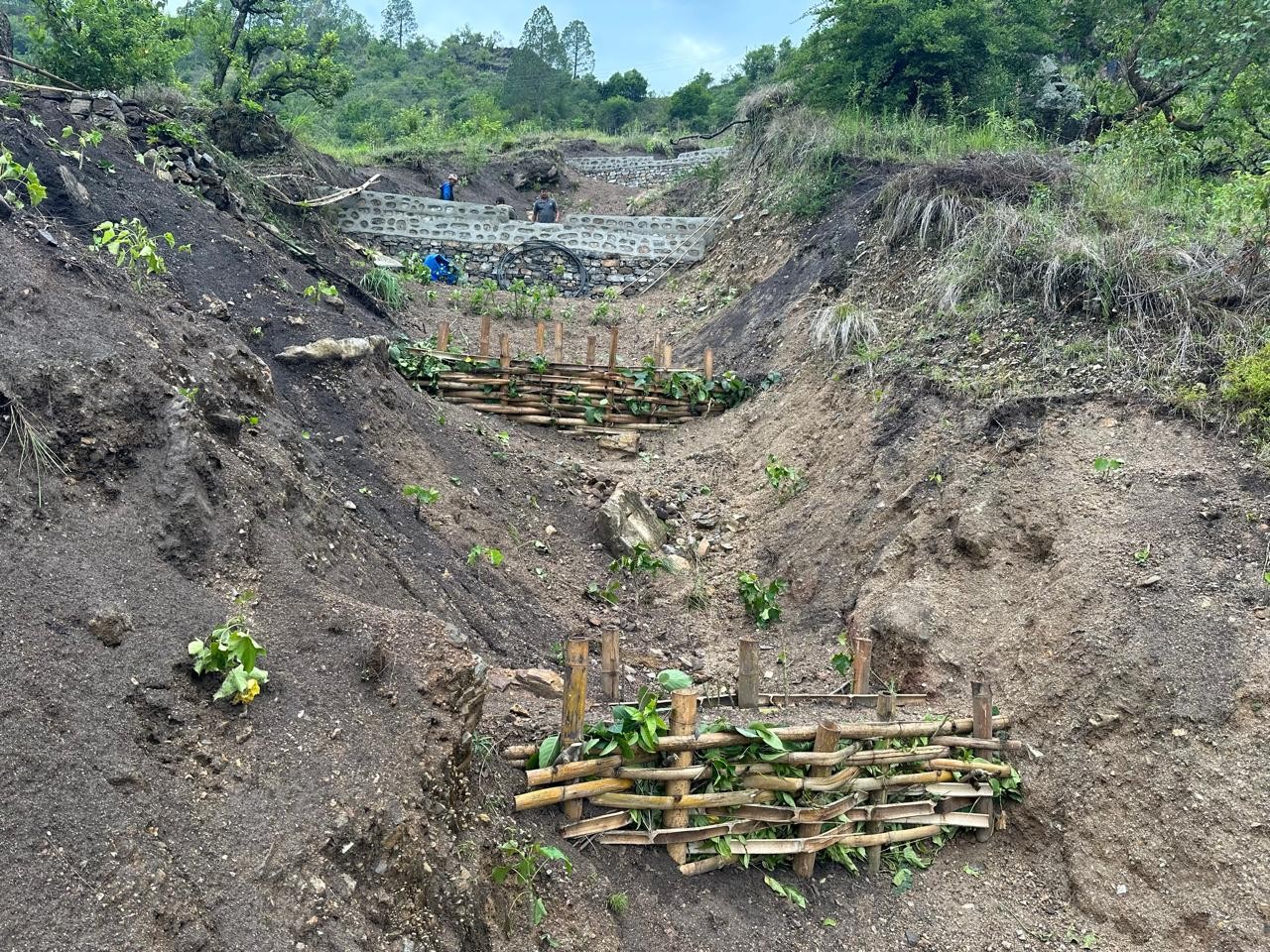
LoCAP / PRATIBADHA-3 (NEPAL)
Nature-Based Solutions for Safer Communities
Following the devastating 2022 landslide in Markabang, Pyuthan, community-led bioengineering interventions are helping restore vulnerable slopes and reduce future risks.
Supported by LoCAP and Pratibadha-3, the initiative combines slope stabilisation with the planting of native species, demonstrating how nature-based solutions can strengthen resilience while protecting lives and livelihoods.
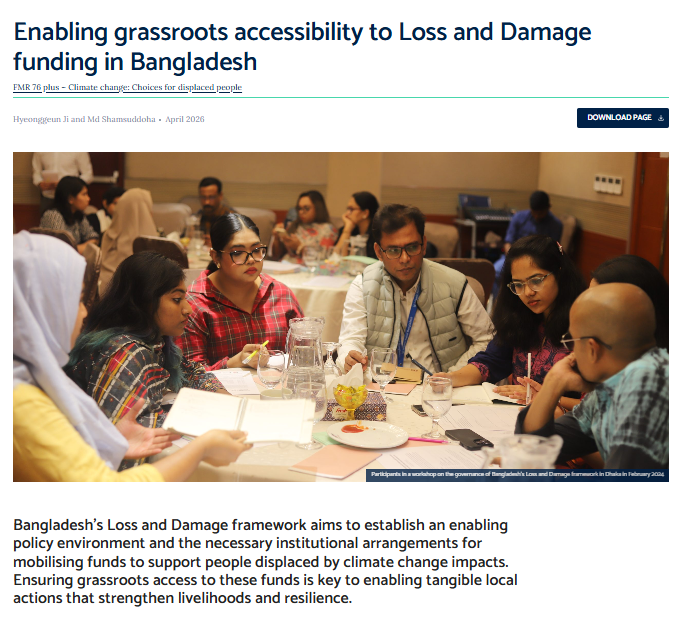
CPRD (BANGLADESH)
Expanding Grassroots Access to Climate Finance
As Bangladesh develops its national Loss and Damage framework, ensuring climate finance reaches communities on the frontlines remains a key priority.
Experts continue to advocate for stronger coordination between government and local organisations, simpler funding processes, and transparent monitoring systems that empower communities. By putting local actors at the centre, Bangladesh has an opportunity to create a more inclusive and equitable model for climate finance. Read
the article by CPRD Executive Director Mr Shamsuddoha here.
We hope you enjoyed this edition. Thanks to all those who submitted their stories. We look forward to hearing from more of you for our forthcoming issues.