By Purnima Joshi
Healthcare professionals join the fight against fossil fuels Climate trends website details Healthy Energy Initiative India, Health Care without Harm, Climate Trends and Climate Action Network South Asia (CANSA) recently […]
By Purnima Joshi
Over 30 groups representing those impacted by coal, oil and gas exploration and production from the 4 states of India, West Bengal, Tamil Nadu, Jharkhand and Chhattisgarh, on Monday joined […]
New Delhi/Dhaka/Kathmandu/Thimphu 21 April 2021 – 101 Nobel laureates, including Kailash Satyarthi, Muhammad Yunus and HH Dalai Lama have called upon world leaders gathering at the US-led Leaders Summit on Climate to foster international cooperation to end the expansion of fossil fuels and accelerate the transition to clean energy with no one left behind. In […]
#FossilFuel Exit Strategy finds that existing coal, oil and gas production puts the world on course to overshoot Paris climate targets. The report analyses global renewable energy potential, and finds that every region on Earth can replace fossil fuels with renewable energy to keep warming below 1.5ºC and provide reliable energy access to all. 10 […]
First-ever document designed to prepare healthcare workers for various conversations around climate change and subsequent health impacts 15 June 2021, New Delhi: Healthy Energy Initiative India in partnership with health organizations has launched a first of its kind guidance document – “No Vaccine for #ClimateChange – A Communication Guide on Climate and Health for the […]
Download Here Bangladesh has a unique topography. Situated on the Bay of Bengal Bangladesh’s topography and geographical location make it particularly vulnerable to extreme weather events including floods, cyclones and sea level rise. Its vulnerability is caused not only by its biophysical factors , but also its socio-economic factors such as high dependence on agriculture, […]
It is widely established that unemployment, political dissatisfaction among youth, lack of quality education and better payment in wages abroad are major factors that drive migration in Nepal, however, climate change is insufficiently recognized as one of the push factors driving migration in South Asia although there is evidence that it is happening.
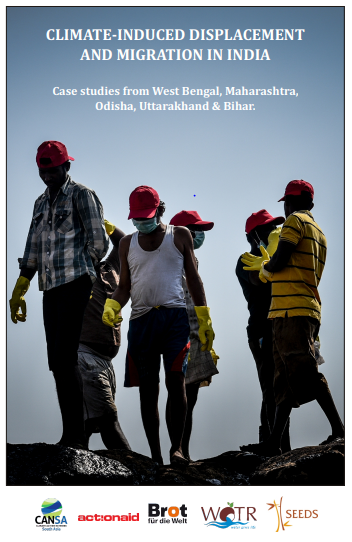
India is a large country, spread across several climatological and ecological zones, making its population particularly vulnerable to the worst impacts of climate change. 67% of India’s population of 1.3 billion people live in rural areas and depend on climate-sensitive sectors such as agriculture, fisheries, and forestry for their livelihoods.
Download Here PDF Climate change has deepened the severity and frequency of climate related hazards, pushing people to migrate at any cost, and subjecting them to the matter of humanitarian crisis. Migration has been a historic important feature of all communities across South Asia, but when migration is forced and migrants are asset less, they […]
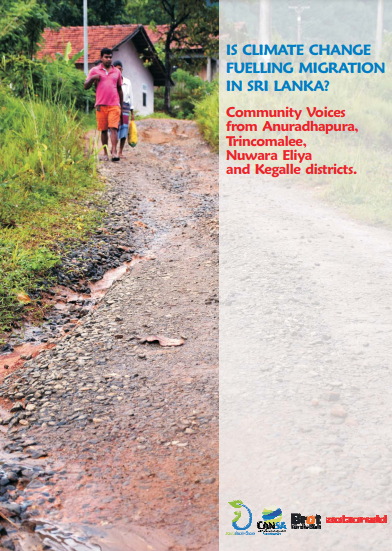
Climate change in Sri Lanka may lead to higher temperatures, storm surges and increased rainfall variability. These in turn impact agriculture and food security, water resources and human health. Extreme weather events and sea level rise lead to coastal erosion and loss of land, threatening livelihoods and forcing migration. “Is Climate Change Fueling Migration in Sri Lanka” report’s primary objective […]