By SLYCAN Trust
Women, who constitute the majority of the world’s poor, are subject to greater vulnerabilities and risks in the face of climate change impacts, mainly due to gender-based inequalities existing in society.
By Santosh Patnaik
In 1971, a cyclone strikes Bagapatia, a village close to Bay of Bengal in Kendrapada district in Odisha. The residents, mostly farmers were caught unaware of its ferocity and intensity.
By Priya Chawla
It’s a pretty existential question to ask sitting in this pavilion today, after having come all the way from India to Marrakech in Morocco (emitting much CO2) to attend this year’s Conference of the Parties (COP)
By Chandra Bhushan
I have been in Marrakech for over two days now to attend the UN climate conference (COP 22), and have heard nothing other than the word “Trump”. The discussions at Bab Ighli—the venue of the conference—are all about the Trump presidency and the chances of American withdrawal from the Paris Agreement.
By Priya Chawla
A real challenge is knowing roughly what’s going on in the big game at the COP negotiations proper. There are about four games going on here. First, the formal U.N.-style negotiations in vast rooms with thousands of credentialed delegates.
By Santosh Patnaik
Based on geographic location, socio-economic composition and resource endowments, climate change has profound impact on rural areas of developing countries in South Asia.
By Senashia Ekanayake
This “enforcement” is a result following the “adoption” that took place at the 21st session of the Conference of Parties (COP21) by the United Nations Framework Convention on Climate Change (UNFCCC) held in Paris last year.
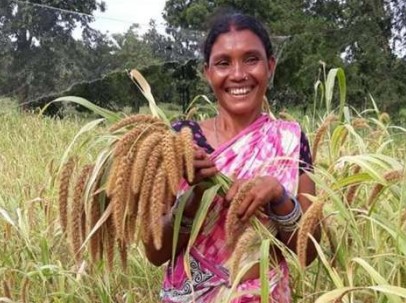
The fact that the weather risk has ruined rainfall agriculture. The uncertainty in weather conditions has put at risk the crop output, production and yield which contributes to the growing distress among the rain fed farmers in general and the marginal, small and resource poor farmers in particular resulting distress migration. Therefore, there is a […]
By Senashia Ekanayake
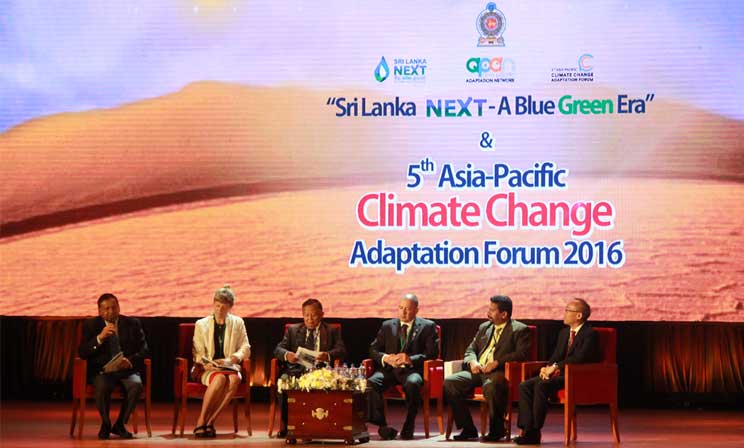
Sri Lanka was selected to be the first country in South Asia to host Asia Pacific Adaptation Network’s prestigious 5th Asia-Pacific Climate Change Adaptation Forum (APAN 2016) from October 17-19, 2016 that was hosted by the Ministry of Mahaweli Development and Environment as a side event of their own Sri Lanka NEXT Conference and Exhibition.
By Senashia Ekanayake
Climate change decision-making can be manoeuvred by policymakers no doubt, however, in a world where everything and all disciplines becomes linked to one another, it is not only important, but also imperative that all stakeholders are brought in to and made a part of this decision-making process.