By Patricia Espinosa
Climate change is at its heart about people and how to shape a future for humanity that promotes well-being while ensuring that the natural and nature-based services upon which we all depend—including our precious atmosphere—continue to function and support sustainable development for all.
By Shailendra Yashwant
With global heat records reaching new highs, extreme weather events and other natural disasters becoming more deadly, everyone is equally vulnerable to climate change.
By Senashia Ekanayake
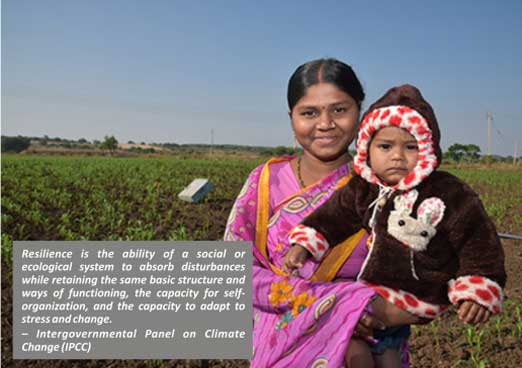
She looked around twenty-five. She carried a pot of water in one hand and a child in the other. I met her in Ogaplur village in the Puri district of Odisha on the Eastern Coast of India.
COP 23 marked the two years of negotiations since the Paris Agreement was struck in 2015 and later ratified in 2016. The two years of negotiations have been on technical issues on rule book that would be basis of implementation of Paris Agreement from 2020 onward. The significance of COP 23 was that it was first COP […]
2018 is a critical year in our ongoing battle to combat climate change. With the close of #COP23, we have the stage set before us. Substantial work lies ahead, and failure is not an option especially for the millions of people who are in the frontlines of climate impacts. We call on Parties to accelerate […]
By Rushati Das
The rains in India usually end in August. However, in 2017 they continued and lasted till early October. The change in monsoons has dampened the festive mood and shaken the cultural aspects, costs of celebrations and adoption of unsustainable practices.
By Harjeet Singh, Sven Harmeling and Julie-Anne Richards
Harvey, Irma, Ophelia. This year’s devastating and record-breaking hurricane season reminds us that storms turbo-charged by human-caused climate change are not a distant future threat, but a reality faced by people around the world.
By SLYCAN Trust
Women, who constitute the majority of the world’s poor, are subject to greater vulnerabilities and risks in the face of climate change impacts, mainly due to gender-based inequalities existing in society.
By Santosh Patnaik
In 1971, a cyclone strikes Bagapatia, a village close to Bay of Bengal in Kendrapada district in Odisha. The residents, mostly farmers were caught unaware of its ferocity and intensity.
By Priya Chawla
It’s a pretty existential question to ask sitting in this pavilion today, after having come all the way from India to Marrakech in Morocco (emitting much CO2) to attend this year’s Conference of the Parties (COP)